
Lieferung heute & morgen

Qualitätsgarantie

Willkommens-Angebote freischalten: KOSTENLOSE Lieferung | Bis zu 80 % RABATT | Kostenlose 30-Tage-JoyPlus-Testphase
App herunterladen
A new freestanding shelf should create order and make a statement. But reality often looks different: after just a few months, the first shelf starts to sag, the surface gets scratched, or the entire structure wobbles precariously. As a Joybuy Product Recommendation Officer, I analyze product information and customer feedback daily. In doing so, I consistently see the same pitfalls that lead to disappointing purchases. This guide will help you avoid them and make an informed decision.
Many products look appealing online but only reveal their weaknesses in everyday use. Pay close attention to these three points to avoid a bad investment:
To separate quality from the clutter, you should check three core technical aspects before buying. These determine the longevity, safety, and functionality of your new freestanding shelf.
The foundation of any good shelf is its material. A wood and metal shelf is a popular choice, but the details are crucial.
The specified load capacity per shelf is a critical value, especially if you plan to store heavy items like books. Unrealistically high ratings without a solid frame are a red flag. Additional stability features are essential:
The shelf must fit your needs and your space. Think carefully about what you want to store.
Here are some models that are particularly well-suited for specific use cases based on their specifications.
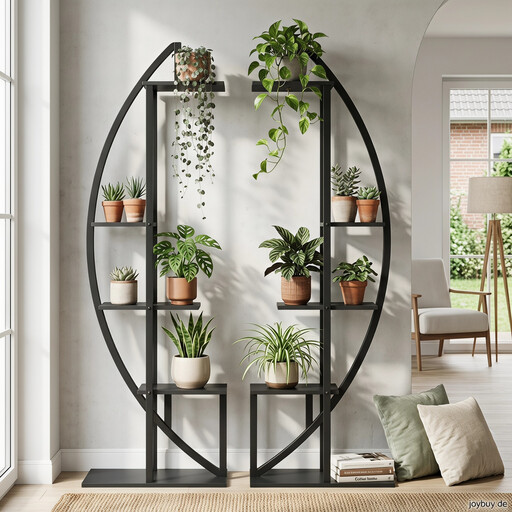
Why This Fits Their Persona: Ideal for anyone wanting to create a green oasis in a small space on their balcony or in their living room. The vertical design utilizes height, while the two separate parts allow for flexible arrangement.
The painted metal frame and solid wood legs provide a stable base that can support the weight of several filled flower pots without wobbling—a counterpoint to unstable, purely decorative plant stands.
The set of two stands and integrated hooks offer versatile design options. The combination of E1 particleboard and metal is suitable for indoor and sheltered outdoor use.
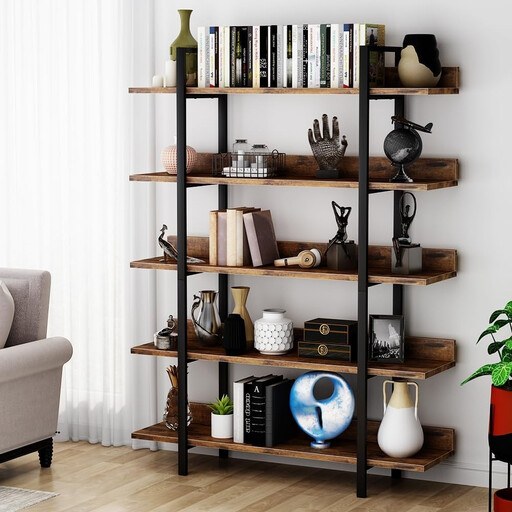
Why This Fits Their Persona: Perfect for someone looking for a functional piece of furniture with a strong design character. The unique half-moon silhouette makes it an eye-catcher that also works as an elegant room divider in the living room.
The powder-coated iron frame provides a solid core structure. The scratch- and stain-resistant laminated surface of the shelves is more durable than simple foil coatings.
The 9 open compartments in an asymmetrical arrangement offer versatile storage for books and decor. The design is modern and blends well with various interior styles.
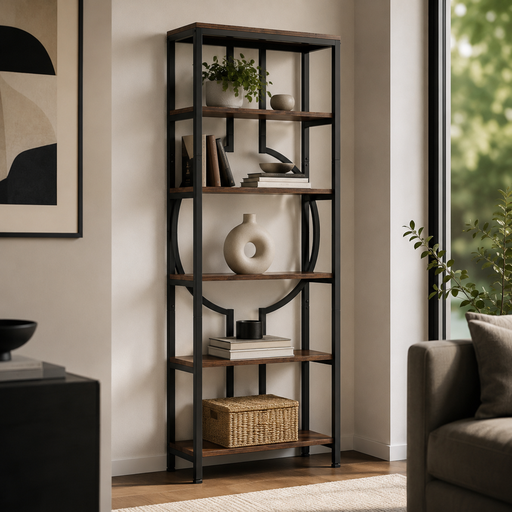
Why This Fits Their Persona: This tall shelf is designed for users who need to accommodate an extensive library, record collection, or other heavy items. With 6 tiers and a height of 180 cm, it maximizes vertical storage space.
The combination of a robust metal frame and 15 mm thick E1-MDF boards allows for a high load capacity of up to 27 kg per shelf, according to the manufacturer. Adjustable feet ensure a solid stance and counteract wobbling.
Very high storage capacity on a small footprint. The classic industrial design is timeless and versatile for use in the living room, office, or kitchen.
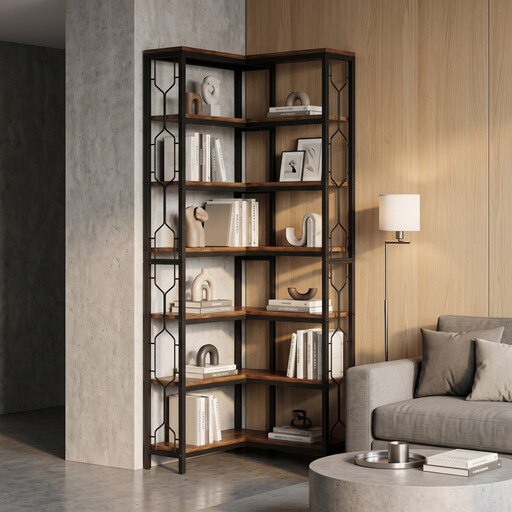
Why This Fits Their Persona: This shelf is the solution for anyone looking to transform unused corners in the living room, kitchen, or home office into valuable storage space. The L-shaped design is specifically conceived for this purpose.
Corner shelves are prone to instability. This model counters that with a reinforced metal frame, adjustable feet, and an included anti-tip kit for secure wall mounting.
Maximum space utilization with 7 tiers on a corner footprint. The side grids prevent items from falling off. According to the manufacturer, it has a high load capacity of up to 45 kg per shelf.
We've compiled a complete, up-to-date list of products that fully meet these strict selection criteria and relevant safety regulations.
1. How do you ensure a tall freestanding shelf doesn't tip over? For any shelf that is taller than it is wide, a wall anchor is essential. Always use the provided anti-tip kit. Additionally, place the heaviest items on the bottom shelves to lower the center of gravity. Position the shelf on a level surface and adjust the feet, if available.
2. What is the difference between MDF and particleboard in shelves? MDF (Medium-Density Fiberboard) is made from finer wood fibers pressed under high pressure. This makes it denser, heavier, and more resistant to bending than particleboard, which is made from coarser wood chips. For shelves intended to bear heavy loads, MDF is often the more stable choice.
3. Can a freestanding shelf be used as a room divider? Yes, open-back shelves are well-suited as visual room dividers. Look for a model that is explicitly declared as freestanding and has high inherent stability. Since it will be visible from both sides, the back should also be attractively finished. For safety reasons, a shelf used as a room divider should not be overloaded.