
Lieferung heute & morgen

Qualitätsgarantie

Willkommens-Angebote freischalten: KOSTENLOSE Lieferung | Bis zu 80 % RABATT | Kostenlose 30-Tage-JoyPlus-Testphase
App herunterladen
A freestanding shelf is more than just a piece of furniture; it's a solution for organisation and a way to give rooms structure and personality. However, the search for the right model can quickly become overwhelming. Tempting bargains or appealing product photos often lead to disappointment when the shelf sags after a few months or proves impractical for daily use.
This guide will show you which critical features to look for and how to avoid the most common pitfalls when buying a freestanding shelf. This way, you'll find a durable and functional solution that perfectly matches your needs.
Before we dive into the important parameters, let's look at the three most common problems that lead to a bad purchase.
To avoid these pitfalls, focus on three verifiable criteria. These will help you objectively evaluate the quality and suitability of a shelf.
The material is crucial for the stability and longevity of your shelf.
A crucial, objective value is the maximum load capacity per shelf. This information should be in the product description and indicates how much weight each individual shelf can hold without deforming.
Think carefully about what you want to store.
Measure the available space carefully—in height, width, and depth. Also, consider baseboards or light switches. For narrow hallways or small bathrooms, a narrow shelf is often the only option.
An indispensable safety feature is the anti-tip kit. Especially in households with children or pets, a tall freestanding shelf must be securely fastened to the wall to prevent it from tipping over. Reputable manufacturers include the necessary mounting hardware.
Here are some models tailored to specific use cases that take the above criteria into account.
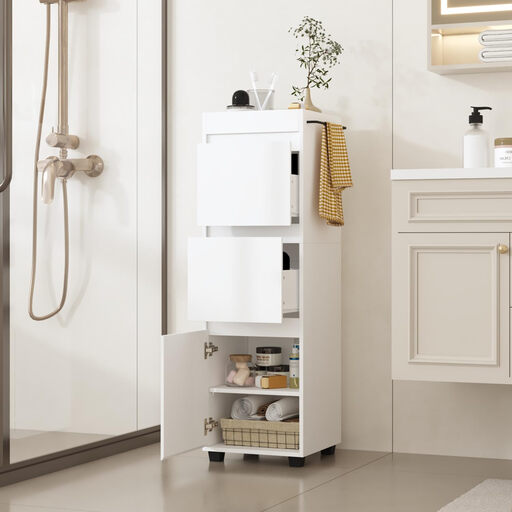
Why This Fits Their Persona: Ideal for those needing to maximise storage in typically compact bathrooms with a small footprint. The combination of open shelves, drawers, and a door caters to various storage needs—from towels to small cosmetic items.
The easy-care surface is designed for humid environments, preventing swelling. Its compact yet thoughtful dimensions make it a practical solution that avoids the "impractical dimensions" pitfall.
Combination of open and closed storage; adjustable shelves for greater flexibility.
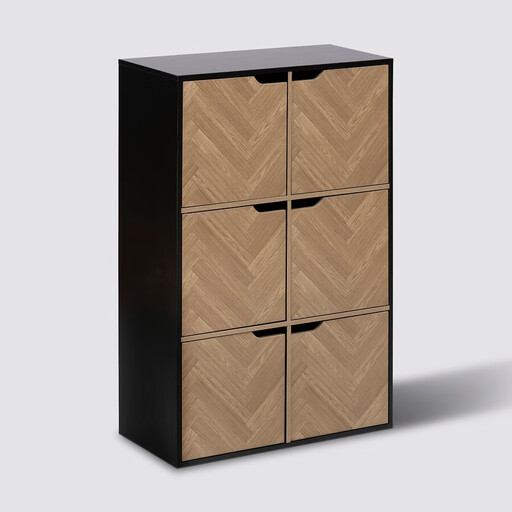
Why This Fits Their Persona: For users in a home office or living room who value a clean aesthetic. The shelving unit with doors conceals binders, tech, and everyday items, creating a calm, minimalist atmosphere. The black shelving unit with a chevron pattern makes a stylish statement.
The closed front solves the problem of visual clutter. The included anti-tip kit directly addresses the safety and stability issues common with many freestanding shelves.
Stylish design that hides clutter; FSC-certified materials for enhanced sustainability.
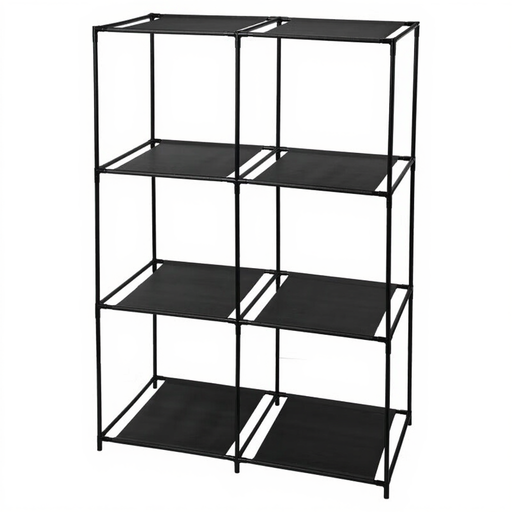
Why This Fits Their Persona: Perfect for students, first-time renters, or anyone looking for a straightforward and affordable storage solution. As a classic bookshelf or file rack, it offers ample space with a small footprint and fits into almost any environment thanks to its simple design.
This unit focuses on its core function: storage space. The construction, described as robust, aims to minimise the instability problem found in budget-friendly shelves. The standard compartment dimensions are practical for books and binders.
Excellent value for money; versatile for use with books, files, or decor.
If you're looking for modular solutions that flexibly adapt to your needs, we've curated a suitable selection for you. Discover systems that can grow with you and be combined in versatile ways.
Most taller freestanding shelves come with an anti-tip kit. This usually consists of a bracket or strap that is screwed to the shelf and the wall. Use wall plugs and screws appropriate for your wall type (e.g., hollow-wall anchors for drywall, universal plugs for concrete). The manufacturer's assembly instructions will provide specific guidance.
The ideal depth depends on what you want to store. For paperbacks, 20-25 cm is often sufficient. For larger hardcovers, coffee table books, or standard binders, you should plan for a depth of at least 30 cm. Before buying, measure the largest items you intend to place on the shelf.
Yes, but only under certain conditions. A wooden shelf made of particleboard or MDF must have a completely intact and water-resistant coating to prevent moisture from penetrating and causing the material to swell. Solid wood should be treated with a special oil or varnish for humid environments to protect it from water vapour. A white lacquered shelf is often a good choice, as the layer of lacquer seals the material.