
Lieferung heute & morgen

Qualitätsgarantie

Willkommens-Angebote freischalten: KOSTENLOSE Lieferung | Bis zu 80 % RABATT | Kostenlose 30-Tage-JoyPlus-Testphase
App herunterladen
A well-chosen freestanding shelf can transform unused corners into valuable storage and bring order to any room. However, the market is flooded with products that look great at first glance but prove to be impractical or unstable in daily use. As your Joybuy Product Recommendation Officer, I'll help you identify the common pitfalls and make an informed decision that perfectly suits your needs.
Many buyers focus on design while overlooking critical functional flaws. Pay close attention to these three points to avoid a purchase you'll regret:
To find the right freestanding shelf, you should focus on objective and measurable features. These three parameters are essential for the longevity and functionality of your new furniture.
The material determines not only the look but also the durability and maintenance requirements.
Stability is the most important safety feature. Check the manufacturer's specifications for the maximum load capacity per shelf. Additional stability features are a clear sign of quality:
Standard shelves are often a compromise. For specific needs, there are optimised solutions that make everyday life easier. A freestanding wine rack, for example, not only provides space for bottles but often includes holders for glasses. A slim storage cart as a rolling trolley utilises narrow gaps while remaining mobile, which simplifies cleaning and access. Such specialised storage furniture is often the more efficient choice.
Here are three models tailored to different user profiles and room situations.
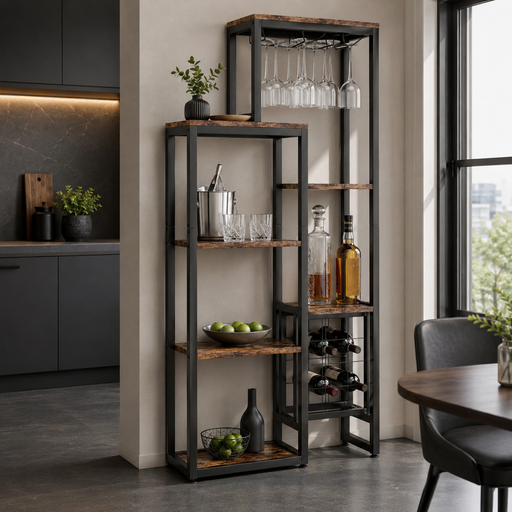
Why This Fits Their Persona: Ideal for anyone seeking a functional and visually appealing solution for their home bar. This home bar unit combines wine storage, glass holders, and open shelving in the popular industrial style, making it a centrepiece in the dining or living room.
The reinforced metal frame and adjustable feet counteract the problem of instability. According to the manufacturer, the rack is designed for a high load capacity and stands securely even on uneven floors.
Multifunctional 3-in-1 design: Holds 12 wine bottles and 6-9 stemmed glasses. The assembly is flexible (left/right) and allows for combining multiple units.
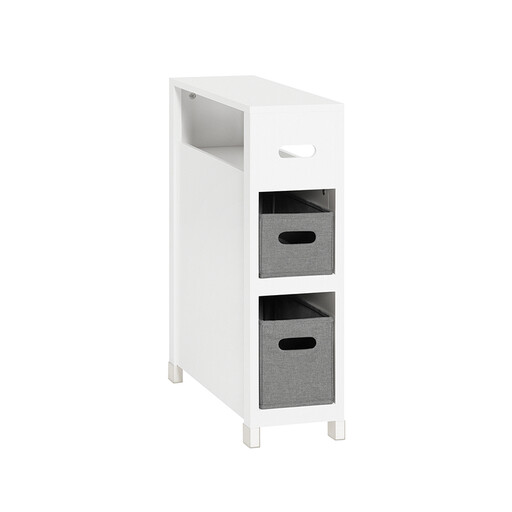
Why This Fits Their Persona: Perfect for anyone looking to make smart use of an unused niche in the bathroom or kitchen. This narrow shelf provides discreet storage for toiletries or cleaning supplies with its removable baskets.
This unit addresses the problem of using the wrong material in damp rooms. The lacquered MDF surface and feet that lift the furniture off the floor offer better protection against moisture than simple particle board.
The combination of an open shelf and two opaque baskets ensures a tidy look. A separate compartment at the back is specially designed for storing a toilet brush.
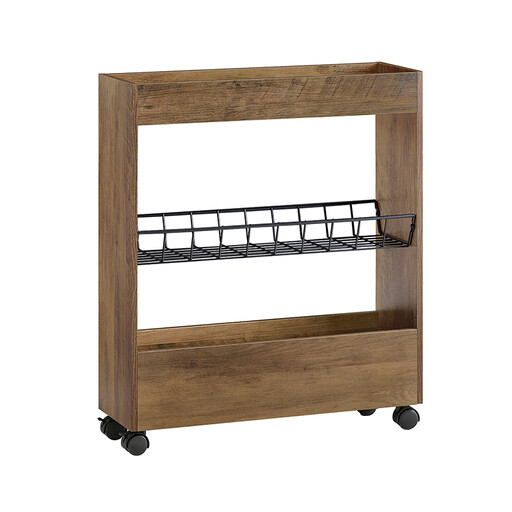
Why This Fits Their Persona: This rolling cart is the solution for anyone needing flexible storage in the kitchen or bathroom. It fits into narrow gaps and can be easily pulled out when needed to access supplies, spices, or utensils.
With a precise width of 20 cm, this slim storage cart is designed specifically for narrow gaps, thus avoiding the problem of ill-fitting dimensions. The locking brakes on two of the four wheels ensure it stays securely in place.
Maximum flexibility through mobility. The open tiers provide a quick overview and easy access to contents. The design is minimalist and integrates well into various interior styles.
We've compiled a complete, up-to-date list of products that fully meet these strict selection criteria and safety requirements.
1. How much weight can a freestanding shelf hold? The load capacity varies greatly depending on the model and material. The crucial information is the manufacturer's specification for the maximum load capacity per shelf. You can find this in the product details. Do not exceed this value to ensure the shelf's stability and longevity. For heavy items like books or kitchen appliances, you should choose a shelf with a metal frame and a high stated load capacity.
2. Do I need to anchor a freestanding shelf to the wall? For shelves that are taller than they are wide, wall anchoring is strongly recommended to prevent tipping. Many manufacturers include a corresponding anti-tip kit. This is an essential safety measure, especially in households with children or large pets. Lower, wider shelves are inherently more stable and do not necessarily require wall mounting.
3. How do I properly care for a metal or wood shelf? Proper care depends on the material. Powder-coated metal shelves are very low-maintenance; simply wipe them with a dry or slightly damp cloth. Avoid harsh cleaning agents. For shelves made of MDF or particle board, be sure to wipe up spills immediately to prevent swelling. Depending on the type of wood, solid wood shelves should occasionally be treated with a suitable care oil to protect the material.