
Lieferung heute & morgen

Qualitätsgarantie

Willkommens-Angebote freischalten: KOSTENLOSE Lieferung | Bis zu 80 % RABATT | Kostenlose 30-Tage-JoyPlus-Testphase
App herunterladen
A well-chosen freestanding shelving unit can tame chaos in the living room, create structure in the office, or act as a stylish room divider. However, finding the right model is often more difficult than it seems. Many buyers only realise after assembly that their new furniture wobbles, the compartments are impractically sized, or the material is of poor quality. As a Joybuy Product Recommendation Officer, I'll help you navigate these pitfalls and make an informed decision.
Before you invest, you should be aware of the typical problems that often only become apparent at home. Knowing these allows you to search for solutions proactively and avoid disappointment.
office shelf with compartments too shallow for standard A4 binders, or a cube storage unit that doesn't fit common storage boxes, fails to serve its purpose and creates more frustration than order.To avoid a bad purchase, focus on three objective parameters. These will help you realistically assess the quality and functionality of a shelving unit.
The material determines longevity and appearance. The most common materials are:
bookcase that needs to support heavier loads. Pay attention to the quality of the coating (e.g., melamine resin), which protects against scratches and moisture.A tall storage shelf must be stable. Check the following points:
Think carefully about how you want to use the shelf to create more storage space.
cube storage unit can be flexibly expanded and adapted. They are excellent as a room divider in a living room or for use under sloped ceilings.Here are some models that represent a considered choice for specific user profiles, based on objective criteria.
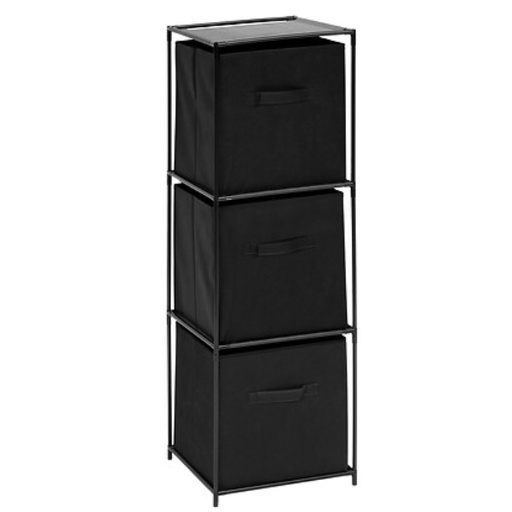
Why This Fits Their Persona: Ideal for students or a first apartment, where a quick, straightforward, and very affordable solution is needed for organising light items like clothing, toys, or office supplies. Its low weight makes it easy to transport and move.
The problem of impractical compartment sizes is solved out of the box, as matching storage bins are already included. The lightweight polypropylene and steel construction is designed for its intended purpose (light items) and doesn't create false expectations of stability.
All-in-one solution including three boxes; very low product weight (1.89 kg) and simple self-assembly.
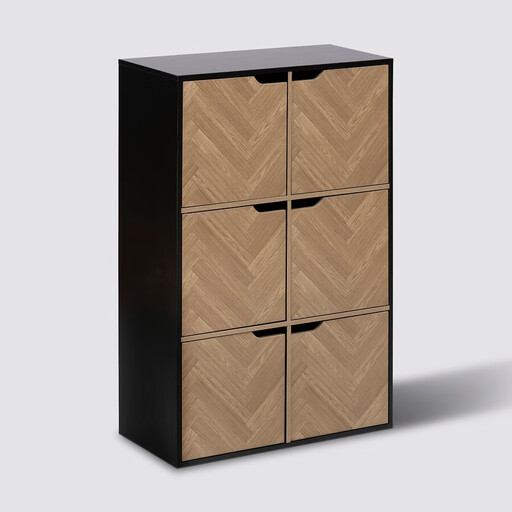
Why This Fits Their Persona: For anyone seeking a functional `black shelving unit` that not only provides storage but also makes a strong visual statement. Perfect for the living room or home office to elegantly hide clutter behind closed doors and create a tidy, uncluttered look.
The six doors create a calm aesthetic and conceal the contents, solving the problem of messy-looking open shelves. The product description explicitly points out the need for wall mounting with the included anti-tip kit, proactively addressing the stability issue.
Closed compartments for a tidy aesthetic; modern chevron design as an eye-catcher; FSC-certified materials.
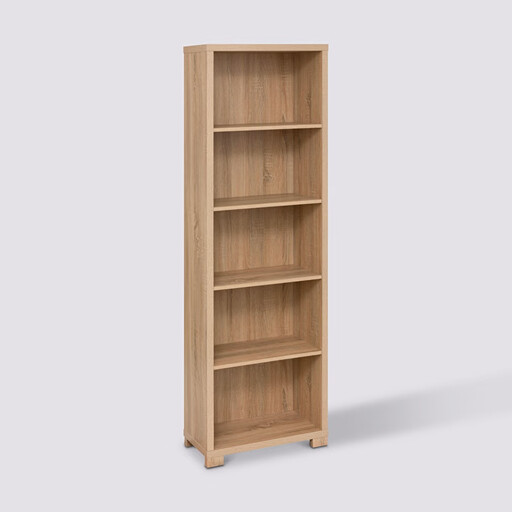
Why This Fits Their Persona: For families and home office users who need to store a large quantity of books, binders, or supplies. The tall design makes optimal use of vertical space, offering plenty of room on multiple levels without taking up much floor space.
This shelf counters the stability problem with a clear specification of its high total maximum load of 120 kg. The combination of MDF and particleboard in the vertical structure and shelves offers a solid compromise between stability and cost for everyday use.
Very tall design (180.8 cm) for maximum vertical storage utilisation; high specified total load capacity of 120 kg.
We have compiled a complete, up-to-date list of products that fully meet these strict selection criteria and safety regulations.
Do I have to mount a freestanding shelf to the wall? Yes, it is strongly recommended. For shelves taller than 1 metre or in households with children or pets, wall mounting with an anti-tip kit is essential. Most manufacturers include the necessary hardware. Mounting prevents the shelf from tipping forward due to uneven weight distribution or if someone tries to climb it.
What is the difference between MDF and particleboard? MDF (Medium-Density Fibreboard) is made from finer wood fibres pressed under high pressure, making it denser, heavier, and more dimensionally stable than particleboard. Particleboard consists of coarser wood chips and is lighter and more affordable. For a bookcase intended to hold heavy loads, MDF is often the more robust choice. For lighter decorative or storage purposes, a good quality particleboard is sufficient.
How do I find the right size for my shelf? First, accurately measure the available space (width, height, depth). Then, consider what you primarily want to store. For office binders, you need a shelf depth of at least 29 cm and a height of 32 cm. For books, dimensions vary, but a depth of 25-30 cm is a good benchmark. Also, consider whether the shelf will stand freely or serve as a room divider, which affects the requirements for appearance and stability.