
Lieferung heute & morgen

Qualitätsgarantie

Willkommens-Angebote freischalten: KOSTENLOSE Lieferung | Bis zu 80 % RABATT | Kostenlose 30-Tage-JoyPlus-Testphase
App herunterladen
A freestanding shelving unit creates additional storage space, showcases books or makes unused corners more functional. However, many models look larger, sturdier or more versatile in product photos than they actually are in everyday use. If you decide based only on colour and price, you may not notice important limitations until assembly.
This guide explains which details matter before you buy and which shelving unit could suit your living room, office, bedroom, kitchen, cellar or garage.
The external dimensions are crucial. A tall bookcase may require little floor space, but it still needs sufficient room above it. In narrow storage areas, you should also take skirting boards, door openings and the distance from radiators into account.
Pay attention to:
A statement such as “600 kg load capacity” does not automatically describe the capacity of each individual shelf. Check whether the figure applies to the entire shelving unit or to one shelf. You should also distinguish between static load and dynamic loads caused by frequently putting items in and taking them out.
Heavy items should ideally be placed at the bottom. The permitted load must not be exceeded, and the weight should be distributed evenly.
A freestanding shelving unit is not automatically tip-proof. Depending on the room and how it is used, tall, narrow models may need to be secured to the wall. In particular, households with children or pets should use an anti-tip kit where provided and follow the assembly instructions.
An uneven floor can also affect stability. Adjustable feet or a level surface are therefore practical features.
A metal shelving unit is often suitable for a cellar, workshop or garage, provided the manufacturer specifies the appropriate load capacity. Coated or galvanised steel can be practical for utility areas. In living spaces, many models combine metal frames with chipboard or MDF. This creates an industrial look while providing closed, level storage surfaces.
With an industrial shelving unit, you should look beyond its appearance and check the frame construction, fittings and permitted load. Wood-based board is easy to maintain, but should be protected from prolonged exposure to moisture.
A multi-tier shelving unit makes efficient use of vertical space. Six fixed shelves, for example, are useful for books, decorations or smaller storage boxes. Adjustable shelves, on the other hand, are advantageous when you need to store items of different heights.
For a shelving unit with storage boxes, the dimensions of the compartments are also important. The boxes should not only fit inside, but also slide in and out easily.
A shelving unit for the living room or bedroom can be chosen to complement the décor more closely. In an office, file dimensions and sufficient shelf height are important. A kitchen shelving unit should fit alongside your worktop, cupboards and existing appliances. For a garage, workshop or cellar, load capacity, corrosion protection and assembly are the priorities.
For all intended uses, the shelving unit must stand on a stable, level surface. The manufacturer’s care instructions should be followed, particularly for wood-based board and coated surfaces.
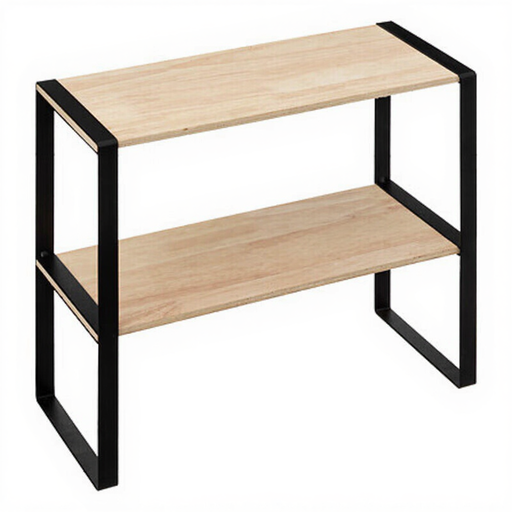
Why this product suits this profile: This compact two-tier model is suitable for small storage areas, for example as a kitchen shelf, bedside table or additional level in the office.
The manageable dimensions and two tiers reduce the risk of misjudging the required floor space or shelf height.
40 × 30 × 35 cm according to the product details; composite wood and metal fittings; maximum total load 10 kg.
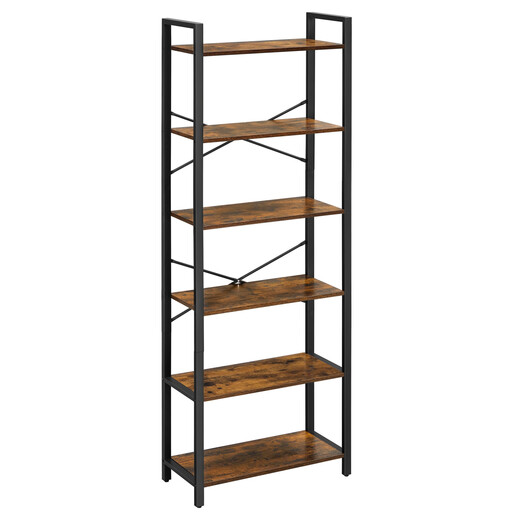
Why this product suits this profile: For living rooms, bedrooms or studies, this tall bookcase provides vertical storage with a combination of steel and chipboard.
The specifications state the overall dimensions, total load, adjustable feet and an anti-tip kit. This makes it easier to plan the space required and safe wall mounting.
30 × 66 × 186 cm; six tiers; steel and chipboard; maximum total static load 60 kg according to the product description.
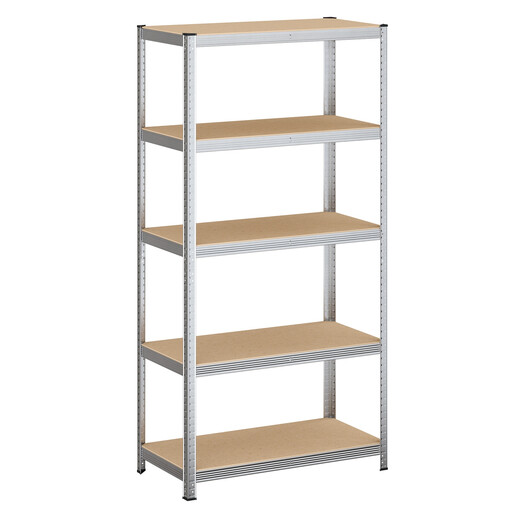
Why this product suits this profile: This heavy-duty shelving unit is designed for homes, workshops and garages where tools, supplies or seasonal items need to be organised.
The load capacity is specified separately for each tier and for the shelving unit as a whole. An anti-tip kit and height-adjustable shelves are also included.
50 × 100 × 200 cm; up to 120 kg per tier and 600 kg in total; steel frame with MDF shelves; tool-free assembly according to the description.
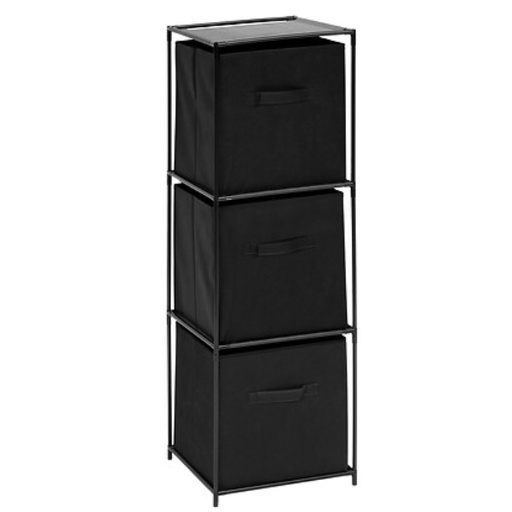
Why this product suits this profile: This vertical model is suitable for hallways, bedrooms, offices or living rooms when you want to combine open shelving with concealed storage.
The three compartments and three boxes are clearly specified. This lets you decide in advance which items should be displayed and which should be stored out of sight.
34 × 34 × 99 cm; polypropylene and steel; three storage boxes; designed for a level, stable surface.
We have put together a complete, regularly updated list of products that fully meet these strict selection criteria and the safety regulations applicable in the EU.
First place the shelving unit on a level, stable surface and make sure it is straight. Tall or narrow models should be secured to the wall using the supplied anti-tip kit, in accordance with the instructions. Check that the wall plugs and screws are suitable for the wall material. Heavy items should be placed on the lower tiers.
That depends on the model. The key point is whether the stated capacity applies per shelf or to the shelving unit as a whole. For example, the JOYFURNOS heavy-duty shelving unit mentioned above is specified as holding up to 120 kg per tier and 600 kg in total. According to the product description, these figures apply to static loads and must not be exceeded.
Its lifespan depends on the material, load, moisture, assembly and care. A metal shelving unit for a garage or cellar should be protected from permanently damp conditions unless it is expressly designed for them. For shelving units made from chipboard or MDF, avoid standing water and clean the surface with a dry or slightly damp cloth. Regularly checking the fittings and wall fixings can help ensure safe use.