
Lieferung heute & morgen

Qualitätsgarantie

Willkommens-Angebote freischalten: KOSTENLOSE Lieferung | Bis zu 80 % RABATT | Kostenlose 30-Tage-JoyPlus-Testphase
App herunterladen
A tidy bathroom is essential for a sense of well-being. But where do you put damp towels when drilling isn't an option or the wall hooks are already full? A freestanding towel rack is a practical and flexible solution. It creates order without altering your home's structure and can be easily moved whenever needed.
However, the market is vast, and not every model lives up to its promises. Before you make a decision, it's crucial to understand the most common flaws that can quickly turn a helpful accessory into a daily nuisance.
Many models look appealing in product photos but only reveal their shortcomings during daily use. Pay close attention to these three points to avoid a purchase you'll regret:
To ensure your new towel rack serves its purpose for the long term, you should carefully examine three core parameters. These will help you find a stable, durable, and functional product.
The choice of material is crucial for longevity in the bathroom.
A good no-drill towel holder must derive its stability from its own design.
Consider what additional requirements you might have.
To help you make your decision, we have selected a few models based on different user profiles and their specific features.
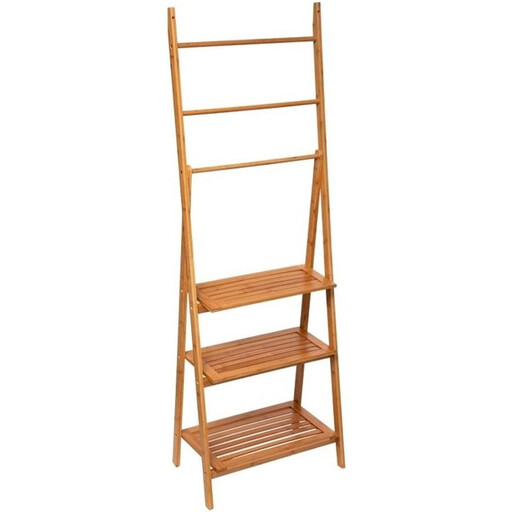
Why This Fits Their Persona: Ideal for users looking to maximise storage in smaller bathrooms. This model combines towel bars with three shelves, making excellent use of vertical space.
The shelf structure provides a wide, stable base, counteracting the risk of tipping. The bamboo material is suitable for damp environments, and the open bars allow for good air circulation.
Combines 3 towel bars and 3 shelves. Made from FSC-certified bamboo for a natural look.
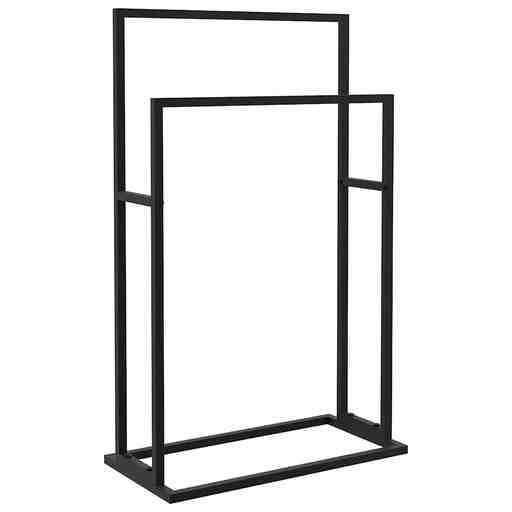
Why This Fits Their Persona: Perfect for those who prefer a clean, modern aesthetic. Its minimalist design and matte black finish blend seamlessly into contemporary bathroom decor.
The solid iron construction ensures high stability. The matte finish protects the metal from moisture. The generous spacing between the two bars guarantees good drying.
Sturdy iron construction for durability. The two-tier design provides space for multiple towels.
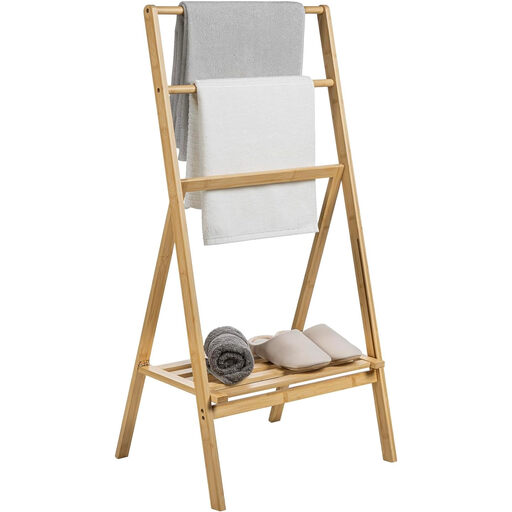
Why This Fits Their Persona: For users who value flexibility and appreciate natural materials. This model can be easily folded and stored when not in use, making it ideal for guest bathrooms or small apartments.
The A-frame design is inherently stable. The lightweight yet robust bamboo material is suitable for the bathroom climate. The ladder-like arrangement of the bars ensures excellent air circulation.
Collapsible design for space-saving storage. No assembly required and easy to transport.
We've compiled a complete, up-to-date list of products that meet these strict selection criteria.
Good air circulation is essential for effective drying. A distance of at least 5 to 10 centimetres (2 to 4 inches) between individual bars is recommended. For models with staggered or ladder-style bars, the vertical distance can be smaller as long as air can circulate freely.
Untreated wood is susceptible to moisture and can develop mould with prolonged exposure to dampness and poor ventilation. However, models specifically designed for the bathroom are typically made from moisture-resistant woods like bamboo or are sealed with a protective layer of lacquer or oil. Good bathroom ventilation and regular wipe-downs of the rack will also contribute to its longevity.
When purchasing, look for a model with a heavy, wide base or a sturdy frame. Place the towel rack on a flat, solid surface. Distribute the weight of the towels as evenly as possible across the different bars to avoid one-sided loading. Do not overload the rack beyond the manufacturer's specified maximum capacity.