
Lieferung heute & morgen

Qualitätsgarantie

Willkommens-Angebote freischalten: KOSTENLOSE Lieferung | Bis zu 80 % RABATT | Kostenlose 30-Tage-JoyPlus-Testphase
App herunterladen
Freezing food is an effective way to preserve freshness, reduce food waste, and plan meals in advance. However, choosing the wrong freezer bag can negate these benefits. Many consumers invest in high-quality food, only to find it has been rendered inedible by freezer burn or that their freezer has been contaminated by leaks.
To help you make the right choice, we will highlight the most common pitfalls and the critical features you should look for.
Some product features that seem practical at first glance prove inadequate in daily use. Watch out for these three common problems to avoid a bad investment:
To best protect your food, you should base your purchasing decision on objective criteria. The following three parameters are crucial for functionality and reliability.
The most important quality of a good freezer bag is its resilience. Tear-resistant freezer bags are essential to protect the contents from damage and freezer burn. Look for products made from a thicker film. Some manufacturers use a 3-layer film, which provides an enhanced barrier against oxygen and moisture while remaining flexible enough not to break at sub-zero temperatures. A robust material is the foundation for successfully freezing food.
The seal must close the bag hermetically to lock in flavour and prevent leaks. There are several systems, each with specific pros and cons:
The size of the bag should match its intended use. Common sizes include:
A practical labelling area on the bag is also a plus. It allows for clear marking of the contents and freezing date, which significantly simplifies freezer organisation. For special applications, such as making ice cubes, dedicated ice cube bags are often the most practical solution.
Based on the criteria above, we have compiled a selection of products suitable for different needs and households.
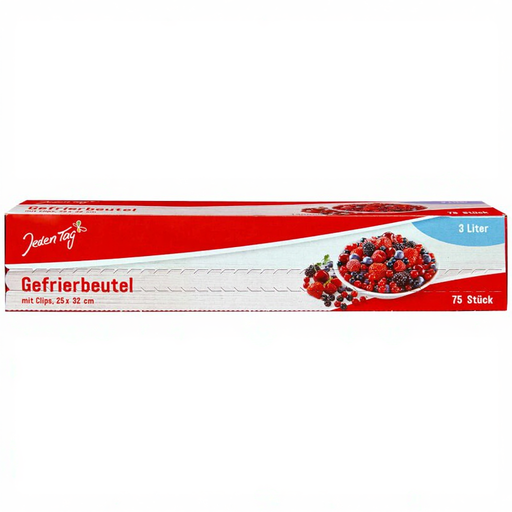
Why This Fits Their Persona: Ideal for families or bulk shoppers who need a large volume at an affordable price. Perfect for bread, large cuts of meat, or pre-cooked meals where functionality and economy are the priority.
Offers a reliable standard product that meets the basic requirements for freezing food, avoiding the uncertainty of no-name products with unclear material thickness.
Large 3-litre capacity; great value for everyday needs.
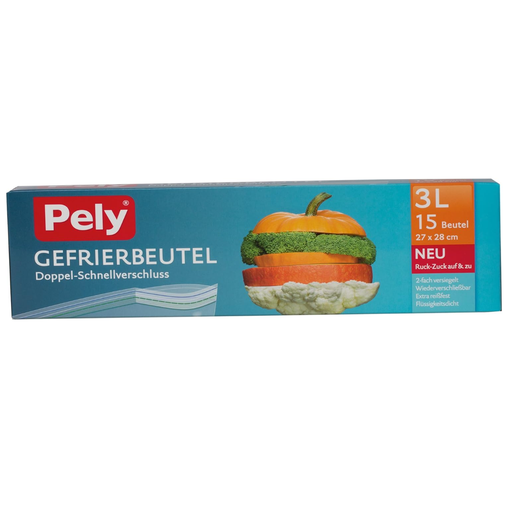
Why This Fits Their Persona: For users who refuse to compromise on leak protection, especially when freezing soups, sauces, or marinated meat. The labelling area supports organised food storage.
The double-closure mechanism directly addresses the weak point of leaky seals, offering a verifiable, technical solution for maximum tightness.
Double sealing track for enhanced leak protection; extra-strong film for protection against tears.
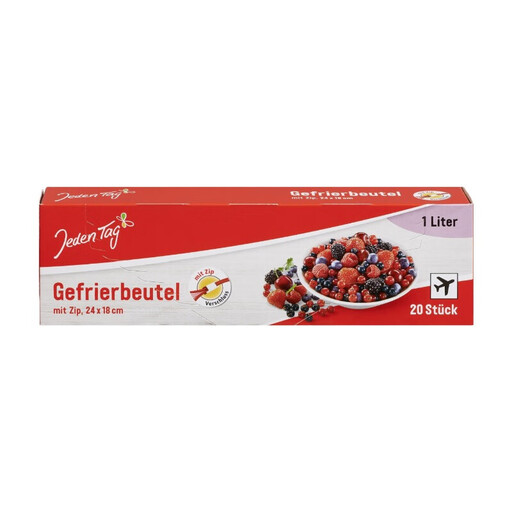
Why This Fits Their Persona: Perfect for meal prep, portioning snacks, or freezing smaller quantities of fruit and vegetables. The zip closure allows for quick and easy access.
The freezer bag with a zip closure is more practical and secure than simple clip-on bags, making it ideal for repeated use and organising smaller portions.
Convenient zip closure for easy opening and closing; 1-litre size is ideal for single servings.
The protection of your food doesn't end at the freezer door. Whether you're transporting frozen groceries home or taking pre-made meals to a picnic, maintaining the cold chain is crucial. Even a short trip without insulation can cause items to start thawing, which compromises quality and shelf life. An insulated shopping bag, like the 16L Insulated Shopping Bag, is a smart addition to keep the temperature of your food stable.
We have compiled a complete, up-to-date list of products that fully meet these strict selection criteria and all relevant safety regulations.
How do I properly prevent freezer burn? Freezer burn occurs when air comes into contact with the surface of frozen food, drawing out its moisture. To prevent this, you should squeeze as much air as possible out of the bag before sealing it. Additionally, use tear-resistant freezer bags with an airtight seal to minimise contact with the dry, cold air in the freezer.
Can you reuse freezer bags? Whether a freezer bag is reusable depends on the material and its previous use. For hygiene reasons, bags that held raw meat, fish, or poultry should not be reused. Bags that stored dry foods like bread or vegetables can be used again after being thoroughly cleaned and completely dried. Special reusable models, often made of thicker plastic or silicone, are designed for multiple uses.
What is the difference between freezer bags and regular food storage bags? Freezer bags are specifically designed for use at sub-zero temperatures. Their material is thicker and more resistant to cold, so it remains flexible at -18°C or colder and doesn't become brittle or tear. They also provide a better barrier against air and moisture than conventional food storage bags, whose thinner material is unsuitable for long-term storage in the freezer.