
Lieferung heute & morgen

Qualitätsgarantie

Willkommens-Angebote freischalten: KOSTENLOSE Lieferung | Bis zu 80 % RABATT | Kostenlose 30-Tage-JoyPlus-Testphase
App herunterladen
Freezing food is a practical way to build up supplies, use leftovers, and prepare meals. But choosing the wrong freezer bag can quickly lead to freezer burn, loss of flavour, and a messy freezer. Many products promise more than they deliver, leading to unnecessary expenses and food waste.
This guide will show you the crucial features to look for and how to avoid the most common mistakes when buying freezer bags. This way, you'll protect not only your food but also your wallet.
Before you decide on a product, you should be aware of the typical weaknesses that often only become apparent after you start using them.
To avoid these issues, you should base your choice on objective criteria. The following three parameters are crucial for effective protection against freezer burn and organised food storage.
The most important feature for safely freezing food is a robust material. Look for information on material thickness or terms like "extra strong" or "multi-layered." Particularly tear-resistant freezer bags often consist of a 3-layer special film. This structure provides a significantly better barrier against oxygen and moisture, which effectively prevents freezer burn—the greyish-white, dried-out spots on frozen goods. A thicker material also remains flexible and won't crack at low temperatures down to -40 °C.
The seal is the critical weak point of any bag. There are significant differences in handling and airtightness:
Choose the size that fits your needs. Common sizes are 1 litre for single portions, 3L freezer bags for family meals or larger cuts of meat, and 6 litres for whole loaves of bread or poultry. A practical detail that is often overlooked is an integrated labelling area. It allows you to note the contents and freezing date directly on the bag, ensuring an organised and fully traceable inventory of your supplies.
Based on these criteria, we have put together a selection of products suitable for different needs and households.
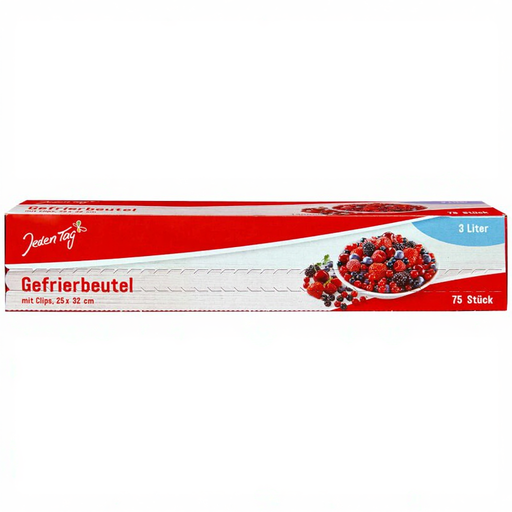
Why this product fits: A straightforward and functional solution for households that freeze a large quantity of food without special requirements. The 3-litre format is versatile for soups, bread, or larger portions of vegetables.
Solves the issue of improper sizing by offering a versatile 3-litre volume for common family portions, thus avoiding material waste from oversized bags.
Offers solid value for money for everyday use. The material is designed for standard applications and provides reliable protection when sealed correctly.
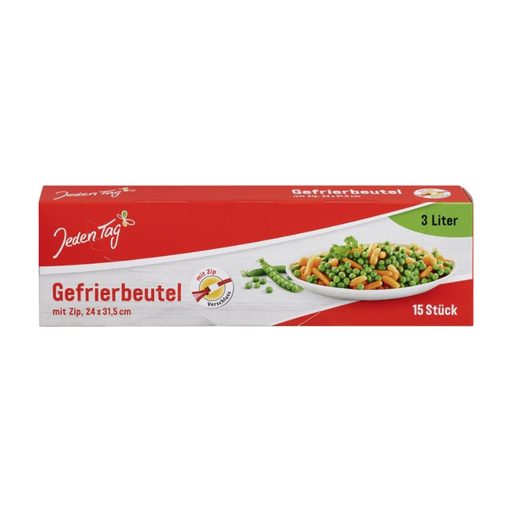
Why this product fits: Ideal for people who regularly prepare meals and value quick, secure, and repeatable handling. The integrated closure saves time and ensures organisation.
Directly addresses the problem of unreliable seals. The robust freezer bag with a zip closure ensures an airtight seal, effectively preventing flavour loss and freezer burn.
The slider closure allows for effortless and secure sealing. The integrated labelling area supports structured inventory management.
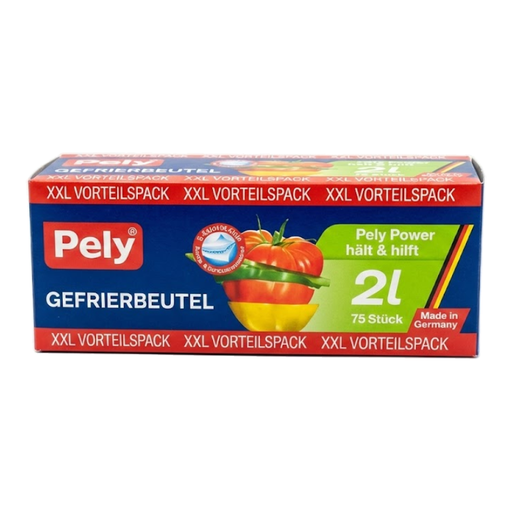
Why this product fits: For anyone who freezes high-quality foods like butcher's meat or fresh garden vegetables and wants to make no compromises on protection. The Pely freezer bag brand is known for its material quality.
Counteracts the problem of thin, tearing bags. According to the manufacturer, the optimised 3-layer special film ensures high tear resistance and reliably protects the contents.
Offers superior flavour protection and prevention of freezer burn thanks to the special film. The XXL value pack (bulk freezer bag pack) is ideal for regular needs.
We have compiled a complete, up-to-date list of products that fully meet these strict selection criteria and German safety regulations.
Freezer burn occurs when air comes into contact with frozen food and draws out its moisture. To prevent this, you should press as much air as possible out of the bag before sealing it. Use a bag that is the right size for the contents and ensure it has a completely airtight seal. High-quality, tear-resistant freezer bags with a good material barrier are essential for this.
Reusability depends on the previous contents and the condition of the bag. Bags that held dry foods like bread or vegetables can often be reused after a thorough cleaning. For hygiene reasons, bags that contained raw meat, fish, or poultry should be discarded. Models with a sturdy zip-lock freezer bag closure are generally better suited for multiple uses.
Freezer bags are specifically designed for use at very low temperatures (down to -40 °C). Their material is thicker, more durable, and less permeable to air than that of conventional food storage bags. These properties are necessary to protect food from drying out and losing flavour over a long period. Food storage bags are thinner and primarily intended for short-term storage in the refrigerator or at room temperature.