
Lieferung heute & morgen

Qualitätsgarantie

Willkommens-Angebote freischalten: KOSTENLOSE Lieferung | Bis zu 80 % RABATT | Kostenlose 30-Tage-JoyPlus-Testphase
App herunterladen
By the Joybuy Product Recommendation Officer, August 29, 2026
A well-organised freezer is the heart of many kitchens. It helps keep food fresh for longer, simplifies meal prep, and reduces waste. But choosing the right freezer bag can be surprisingly complicated. A leaky seal that leaves a sticky pool of marinade, or freezer burn that renders an expensive cut of meat inedible, are common frustrations. These problems often stem from subtle flaws in product design that are easy to overlook at the time of purchase.
This guide highlights the three most common pitfalls when buying zip-top freezer bags and explains the crucial features you should look for to find a reliable and practical solution for your household.
To avoid these problems, you should base your choice on three objective criteria. These features determine whether a zip-top freezer bag will perform its job reliably.
The seal is the most critical component. A simple press-to-seal closure (often referred to as a "Ziploc bag") is sufficient for dry, solid foods. For liquids or to ensure maximum protection, more advanced systems are the better choice.
Preventing freezer burn is one of the main goals when freezing food. It occurs when air reaches the surface of the frozen item, causing it to dry out. The quality of the bag's material is crucial here.
Look for bags made of robust, sufficiently thick polyethylene (PE). This material should be specifically designed for use at low temperatures (e.g., down to -40 °C) to maintain its flexibility and prevent tearing. A tear-resistant, thicker material forms a more effective barrier against air, thus protecting the flavour and texture of your food.
Practical design features make handling in the kitchen significantly easier.
Based on the criteria above, we have identified a few products that are particularly well-suited for specific user profiles.
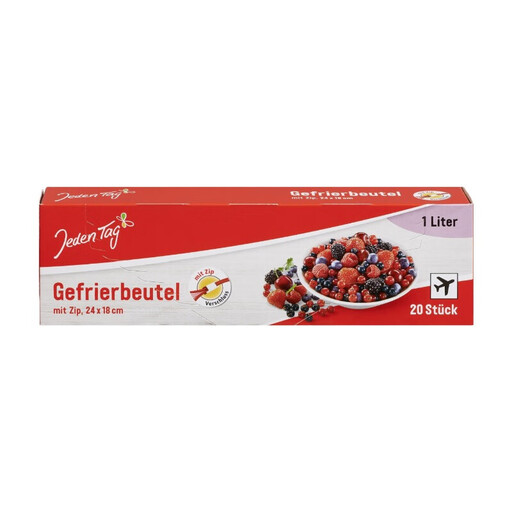
Why This Fits Their Persona: Ideal for daily portioning of solid foods like vegetables, fruit, or baked goods. This model offers a functional and cost-effective solution for basic freezer organisation.
The integrated slider closure is more reliable than simple press-to-seal closures, minimising the risk of an accidentally incomplete seal.
Easy to handle thanks to the slider; practical write-on panel for organisation.
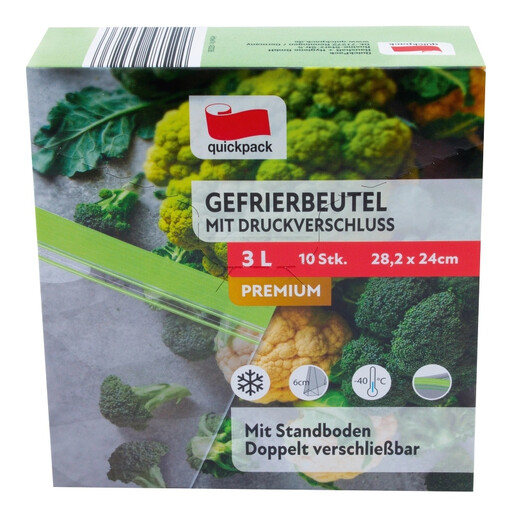
Why This Fits Their Persona: Perfect for anyone who regularly pre-cooks large batches of soups, stews, or sauces. The stand-up base makes filling a breeze, and the double-zip provides security for liquid contents.
Completely solves the "lack of a stable base" problem. The bag stands securely on the countertop, allowing for clean, one-handed filling.
Freezer bag with stand-up base for maximum stability; double-zip for enhanced leak protection.
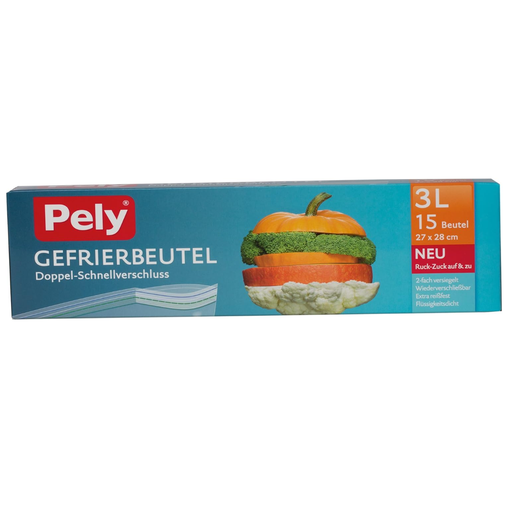
Why This Fits Their Persona: For users who want to take absolutely no risks, whether marinating meat or freezing valuable liquids. Here, a leak-proof seal is the top priority.
Addresses the "unreliable seal" pitfall with maximum effectiveness. The double-zip provides a redundant seal for the highest level of leak protection.
Two sealing lines for double the security; extra-strong, tear-resistant material for demanding contents.
We have compiled a complete, up-to-date list of products that fully meet these strict selection criteria and comply with current regulations.
The key to preventing freezer burn is to remove as much air as possible from the bag before sealing it. Press the bag flat on a level surface and smooth the air towards the opening before you completely close the zip. Also, always use a bag made of thick, durable material and ensure the seal is absolutely airtight.
Whether a resealable freezer bag is also reusable depends on the material and its previous contents. Bags that held dry foods like bread or vegetables can often be hand-washed with warm, soapy water, dried thoroughly, and reused. For hygiene reasons, it is not recommended to reuse bags that contained raw meat, fish, or very greasy foods.
A press-to-seal closure consists of two interlocking plastic tracks that are closed by pressing them together with your fingers. A slider closure has a small slider that mechanically joins the two sides. Slider closures are often considered easier to handle, especially for people with limited dexterity, and provide a more definite confirmation that the bag is securely sealed. Both can be very effective as long as they are of high quality.