
Lieferung heute & morgen

Qualitätsgarantie

Willkommens-Angebote freischalten: KOSTENLOSE Lieferung | Bis zu 80 % RABATT | Kostenlose 30-Tage-JoyPlus-Testphase
App herunterladen
By Joybuy Product Recommendation Officer, August 28, 2026
Freezing food is a smart and convenient way to stock up and extend its shelf life. But choosing the wrong freezer bag can quickly lead to disappointment: leaky bags that leave a sticky puddle in your freezer, or precious food ruined by freezer burn. Many products overpromise and underdeliver. Before you make a decision, it's crucial to understand the common pitfalls that lead to unnecessary expense and food waste.
The three most common problems when selecting freezer bags are:
To avoid these problems, you should check three key product features before buying. These characteristics determine whether a freezer bag is suitable for your specific needs.
The type of seal is the most important criterion, especially if you're looking for freezer bags for liquids.
A freezer bag's durability depends directly on the strength and composition of its material.
The right size and shape make handling easier and optimise freezer space.
Based on these objective criteria, we have identified a few products that are well-suited for specific user profiles and their needs.
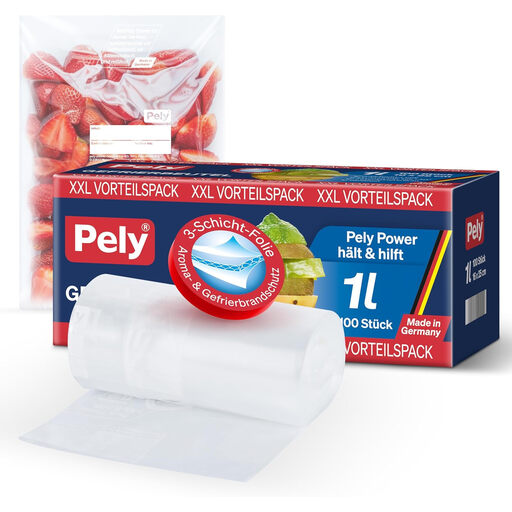
Why this product is a great fit: Ideal for households that regularly freeze large quantities of food in standard portions. The bulk pack of freezer bags offers excellent value for money for everyday needs.
Despite its affordable price, this product doesn't skimp on material. According to the manufacturer, the 3-layer film provides reliable protection against freezer burn and tears, thus avoiding the pitfall of using material that is too thin.
Large quantity of 100 bags in the practical 1-litre size. Includes a labelling panel for easy organisation.
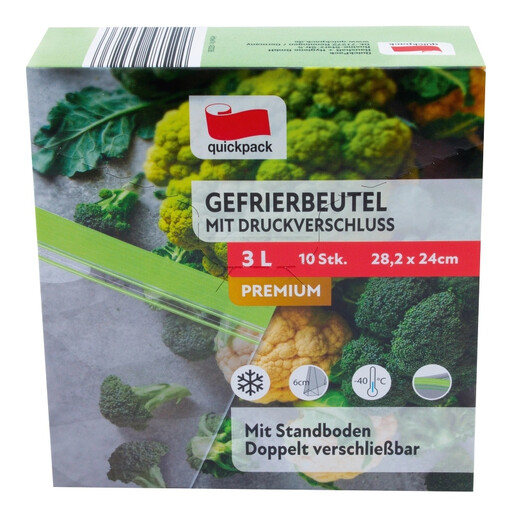
Why this product is a great fit: The combination of a stand-up bottom and a double-press seal makes this bag the top choice for mess-free filling and secure storage of soups, sauces, and other liquids.
This product solves two problems at once: The double-press seal prevents leaks (pitfall #1), and the stand-up bottom provides stability during filling, which prevents spills (addressing pitfall #3 regarding impractical shapes).
Innovative stand-up bottom for easy filling and high leak-proof security thanks to the double seal.
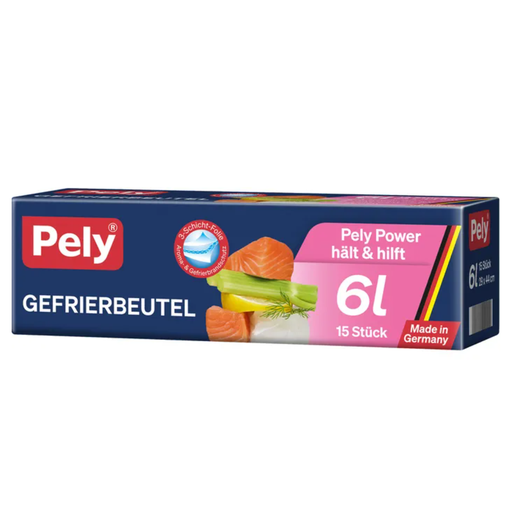
Why this product is a great fit: With a 6-litre capacity, this bag is designed for tasks where standard sizes just won't do. It's perfect for freezing poultry, large cuts of roast, or the seasonal vegetable harvest.
This product solves the problem of the wrong size (pitfall #3) for bulky frozen goods. The robust 3-layer film also prevents the bag from tearing under the weight or from sharp edges (pitfall #2).
Extra-large 6-litre capacity and a cold-resistant, tear-proof film that, according to the manufacturer, remains flexible down to -40°C.
We have compiled a complete, up-to-date list of products that fully meet these strict selection criteria and rigorous safety standards.
1. How do I effectively prevent freezer burn? Freezer burn occurs when air comes into contact with the surface of frozen food, drawing out its moisture. To prevent this, you should press as much air as possible out of the bag before sealing it. A tight seal (e.g., a double-zip) and a tear-resistant freezer bag made of thick material are crucial, as they prevent air from getting in.
2. Can you reuse freezer bags? Reuse is possible under certain conditions. Bags that have only stored dry foods like bread or pastries can be reused after a thorough cleaning. However, for hygienic reasons, it is strongly advised not to reuse bags that have contained raw meat, fish, or eggs, as completely removing bacteria is difficult. Sturdy, resealable bags are better suited for multiple uses than thin, single-use bags.
3. What is the difference between a regular freezer bag and an ice cube bag? A regular freezer bag is designed for storing food of various shapes and sizes. An ice cube bag, on the other hand, is a specialty product used exclusively for making ice cubes. It has separate chambers that can be filled with water and, after freezing, allow for the easy removal of individual ice cubes. They are typically self-sealing and intended for single use.