
Lieferung heute & morgen

Qualitätsgarantie

Willkommens-Angebote freischalten: KOSTENLOSE Lieferung | Bis zu 80 % RABATT | Kostenlose 30-Tage-JoyPlus-Testphase
App herunterladen
Properly freezing food not only saves money but also preserves nutrients and flavour. However, choosing the wrong freezer bag can quickly lead to disappointment: torn bags, leaky seals, and inedible food covered in freezer burn. Many products don't live up to their packaging's promises. This guide will show you what to look for to avoid common purchasing mistakes and find a practical solution for your household.
On the supermarket shelf, many freezer bags look alike, but in practice, significant quality differences quickly become apparent. Three weaknesses are particularly common:
To avoid these problems, you should base your purchasing decision on objective criteria. Pay close attention to the following three features.
The quality of the film is the most important criterion. An extra-strong freezer bag isn't just a marketing claim; it refers to a specific material construction. Models with a 3-layer film, like those used in many Pely freezer bags, offer significantly higher tear resistance and a better barrier against oxygen. This is the fundamental requirement for effectively protecting food from freezer burn and preserving its flavour. Also, look for a "BPA-free" label to ensure no unwanted substances are transferred to your food.
The seal determines whether a bag is also suitable for liquids or marinades.
The volume of a freezer bag should match its intended use. Common sizes include:
Some models feature a practical stand-up base, which makes filling much easier and helps keep the freezer more organised.
Based on these criteria, we have identified some products that represent a suitable solution for specific user profiles.
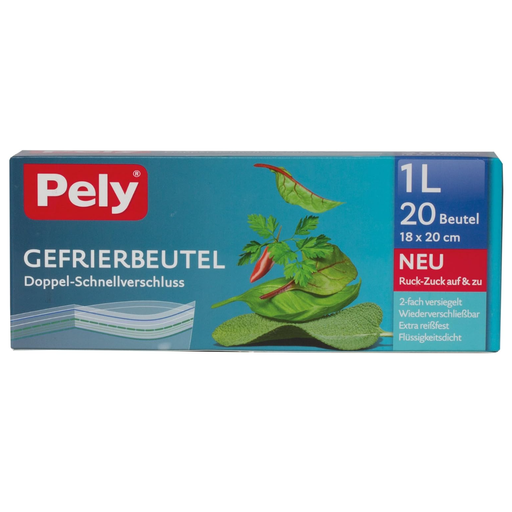
Why it's a good fit: Ideal for portioning meals, freezing sauces, or securely storing liquids for travel. The 1-litre size is versatile for everyday use.
The double seal provides dual protection against leaks, overcoming the weakness of unreliable standard closures.
Maximum leak-proof security, meets the requirements for liquids in carry-on luggage, and is made from extra-strong film.
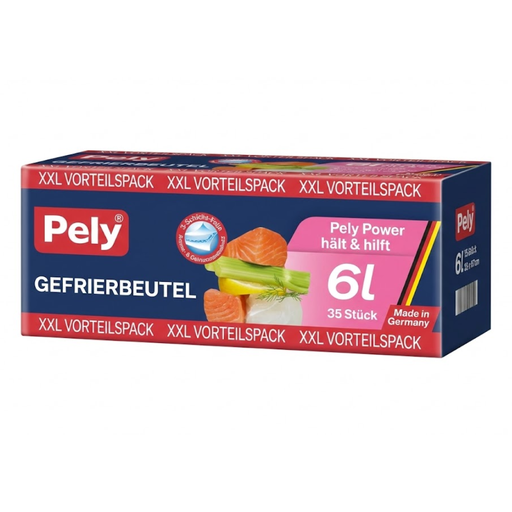
Why it's a good fit: The large 6L capacity is ideal for storing whole roasts, poultry, large loaves of bread, or a harvest from your own garden.
The extra-strong 3-layer film is extremely tear-resistant and prevents rips from bulky or sharp-edged items—a common problem with flimsy bags.
Large volume combined with high material stability and a wide opening for easy filling.
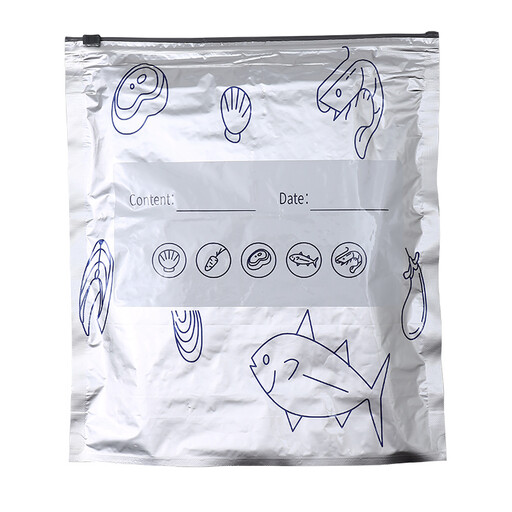
Why it's a good fit: For anyone looking for a durable and reusable alternative. The material blocks light and odours, which is particularly beneficial for fish or meat.
This product is designed as a reusable solution, thus avoiding the constant repurchasing and waste generation of single-use bags.
Reusable, washable, and thanks to its aluminium layer, light-proof and odour-proof. The stand-up base makes filling easier.
We have compiled a complete, up-to-date list of products that fully meet these strict selection criteria and German safety regulations.
Freezer burn occurs when air comes into contact with the surface of the frozen food, drawing out its moisture. To prevent this, you should use an extra-strong freezer bag made from a multi-layer film. Squeeze as much air as possible out of the bag before sealing it. A secure freezer bag with a double seal or a high-quality zipper seal minimises the risk of air re-entering.
Standard freezer bags are generally designed for single use. For hygiene reasons, it is not recommended to reuse bags that have stored raw meat or fish. However, there are special reusable freezer bags, such as the models from Maxcook, which are made from more robust materials and are designed to be cleaned and used multiple times. These should be thoroughly washed with warm water and soap and completely dried after each use.
For safely freezing food like soups, broths, or sauces, an absolutely airtight seal is essential. For this purpose, freezer bags with a double seal are the most reliable choice. A high-quality freezer bag with a zipper (slider seal) can also provide a good seal, provided it is closed carefully. Models with simple clips or those that require tying are not recommended for liquid contents.