
Lieferung heute & morgen

Qualitätsgarantie

Willkommens-Angebote freischalten: KOSTENLOSE Lieferung | Bis zu 80 % RABATT | Kostenlose 30-Tage-JoyPlus-Testphase
App herunterladen
Freezer bags help you store food in portions, save space and keep your freezer organised. However, models vary considerably in capacity, film thickness, closure and ease of use. If you focus only on a large pack size or low price, you may end up buying bags that are too small for your needs, leak or are difficult to label.
This buying guide explains which criteria matter when choosing freezer bags for food storage and which options suit different households.
A pack of 100 may initially seem good value. However, the price per bag and whether the size genuinely suits your everyday needs are what matter. 1L freezer bags are generally suitable for small portions, fruit, vegetables or leftovers. They are often not large enough for family meals. If you need several small bags, a larger 2L or 3L freezer bag may be more practical.
A simple clip, knot or single press-seal strip may be sufficient for dry food. With soup, marinade or stock, however, the closure should be closed carefully and the bag transported upright. Even a double closure will not prevent leaks if the bag is overfilled, damaged or stored at an angle.
The measurement in litres describes the approximate volume, not necessarily the usable space. For bread, large cuts of meat or vegetables from a larger harvest, width and height are just as relevant as capacity. An extra-large freezer bag with a capacity of 6L or 10L should therefore fit in the available freezer space and be wide enough to fill easily.
A mixed selection of sizes can be useful if your household needs to store both meal-prep portions and larger quantities in the freezer.
For food contact, the product description should specify a suitable, food-safe material. BPA-free freezer bags are a commonly sought-after option. With plastic bags, film thickness, tear resistance and the temperature range stated by the manufacturer are also important.
The pely models in this selection are described as having a three-layer film and temperature resistance down to -40 °C. This can be practical when storing food in the freezer. Nevertheless, sharp bones, sharp edges and hard frozen products should not press directly against the film.
An alternative is reusable silicone freezer bags. Where suitably labelled, they may be suitable for use in the freezer, dishwasher or with certain heating methods. The information for the specific product should be checked before use. Silicone bags require more space while drying and are generally priced differently from disposable bags.
A freezer bag with a double closure has two sealing strips. This can provide additional security when storing liquids, but it does not replace pressing both strips fully closed and storing the bag upright.
A freezer bag with a stand-up base remains upright while you fill it. This design is practical for soups, sauces and liquid foods because both hands remain free. A sufficiently large labelling area helps you note the contents, quantity and freezing date. This makes it easier to use older supplies first.
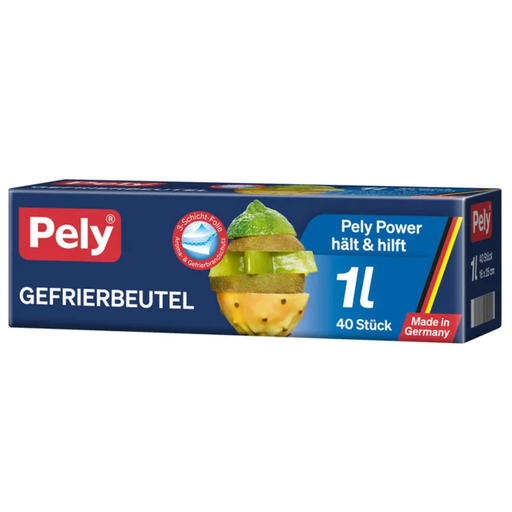
Why this product suits this profile: The 1-litre size is manageable for everyday portions and smaller households. The pack contains 40 bags for regular use.
The compact size reduces the risk of storing small quantities in oversized bags and using up unnecessary freezer space.
Three-layer BPA-free film, labelling area and, according to the product information, flexibility down to -40 °C.
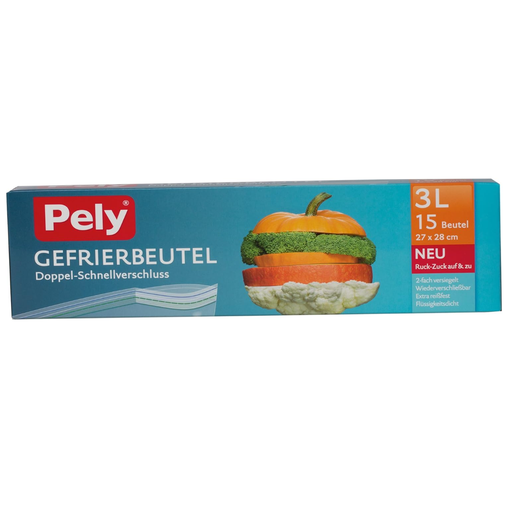
Why this product suits this profile: Two sealing strips and a 3-litre capacity are designed for liquids or larger portions.
The double closure addresses the weak point of simple sealing strips, provided both strips are closed fully.
Double press-seal closure, labelling area and designed for soups, stocks or marinades.
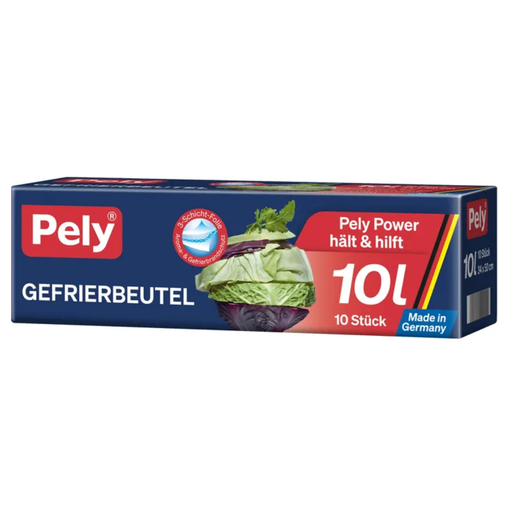
Why this product suits this profile: Measuring 34 × 50 cm, this large format is aimed at households freezing whole poultry portions, large roasts or substantial harvests.
The dimensions are provided alongside the volume. This makes it easier to check before buying whether the format will fit in your freezer compartment.
10-litre capacity, three-layer PE film, labelling area and, according to the product information, flexibility down to -40 °C.
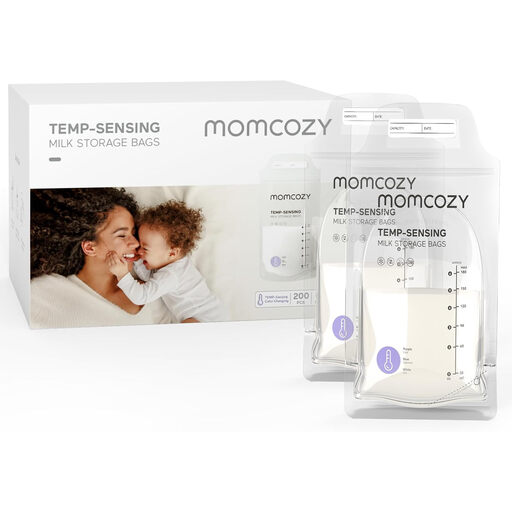
Why this product suits this profile: The pre-sterilised disposable bags are intended for expressed breast milk and hold approximately 180 ml per bag.
A double zip closure, separate filling and pouring areas, and a labelling area address common hygiene and organisation challenges.
BPA-free plastic, flat freezing, upright storage and a temperature-dependent colour indicator according to the product description. For single use only.
We have put together a complete, regularly updated list of products that fully meet these strict selection criteria and the safety regulations applicable in the EU.
Breast milk storage bags should be treated separately. They should only be used according to the manufacturer’s instructions. For the disposable bags mentioned above, reuse, microwave use and very hot water are not intended. The temperature of the milk should be checked independently of the colour indicator before feeding.
For small individual portions, 1L freezer bags are generally sufficient. For meals, soups or supplies for several people, 2L or 3L bags may be suitable. The right choice depends on the contents, shape and available space in your freezer.
Disposable bags should be disposed of after their intended use, particularly if they have come into contact with raw food or show signs of damage. Reusable silicone freezer bags can be used several times when cared for correctly. The cleaning and temperature instructions on the product packaging are decisive.
Models with a double closure or stand-up base are more practical for liquids. Even so, they should not be overfilled, must be sealed completely and should initially be frozen upright. Before buying, it is worth checking the type of closure, material specifications and information about leak resistance.