
Lieferung heute & morgen

Qualitätsgarantie

Willkommens-Angebote freischalten: KOSTENLOSE Lieferung | Bis zu 80 % RABATT | Kostenlose 30-Tage-JoyPlus-Testphase
App herunterladen
Freezer bags are a standard feature in many UK households. They help you portion meat, vegetables, fruit, baked goods and prepared meals while saving space. However, unclear size specifications, weak closures or unsuitable materials can often lead to unnecessary expense.
If you want to buy freezer bags, you should not focus solely on terms such as “XXL”, “extra strong” or “leak-proof”. Clear information about capacity, dimensions, film construction, closure and pack size is what really matters.
A 1-litre freezer bag will not automatically hold every item with a volume of exactly one litre. The shape of the contents, the space needed for the closure and the remaining air all affect how practical the bag is to use. You should therefore check the dimensions as well as the capacity.
A 16 × 25 cm bag is better suited to smaller portions. For larger quantities or family-sized portions, 2-litre freezer bags, 3-litre freezer bags or 6-litre freezer bags are more suitable.
A simple knot or clip may be sufficient for dry foods. However, for soups, sauces or marinated meat, a secure closure is more practical. Freezer bags with a double closure have two sealing tracks, creating an additional barrier against leaks.
With zip freezer bags, the closure should be fully sealed. Overfilling, sharp edges and frozen liquids that expand can damage even a well-made bag.
Multi-layer film can be an important factor when choosing freezer bags. According to the product information, the pely models mentioned are made from a three-layer film and remain flexible down to −40 °C, depending on the model. These specifications do not replace careful handling, however: bags should not be overfilled, and damaged bags should no longer be used.
For food storage, it is also important that the product is labelled as suitable for food contact. Claims such as BPA-free freezer bags should be clearly stated in the product description or on the packaging.
The right size depends on the contents and your household routine:
For space-saving storage, it is best to fill the food flat and press out as much air as possible before sealing the bag.
A simple clip or knot is straightforward for solid foods. For liquids, zip freezer bags or versions with a double closure are easier to handle. A gusseted base can also help keep the bag upright while you fill it.
Check whether the closure is described as a press seal, double closure or zip system. These terms refer to different designs and should not automatically be treated as interchangeable.
A large pack is not automatically cheaper. Divide the price by the number of bags, then compare the capacity and material. For regular freezing, packs of 30, 40 or 75 bags may offer better value; for specialist closures or XXL dimensions, a smaller pack is often sufficient.
Standard freezer bags are not always suitable for vacuum sealing. Vacuum bags for food require a suitable structure and, in most cases, a compatible vacuum sealer. Before buying, check whether the bags are designed for use with your appliance.
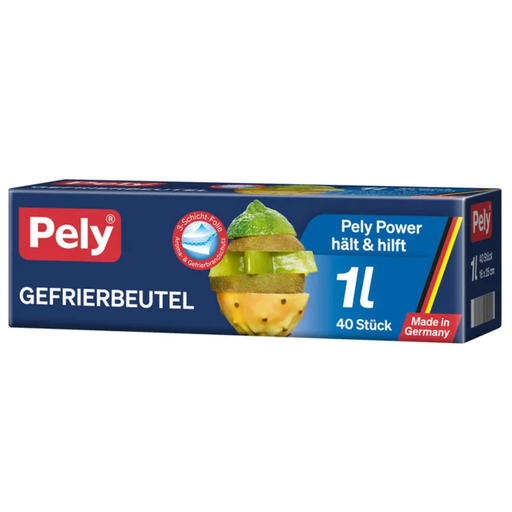
Why this product suits this profile: The 1-litre size and 40 bags are ideal for everyday portions and regularly storing leftovers in smaller households.
The specific dimensions of 16 × 25 cm and the stated capacity make it easier to choose than relying solely on an XXL marketing claim.
40 bags per pack, three-layer BPA-free film according to the product information, and a writable labelling panel.
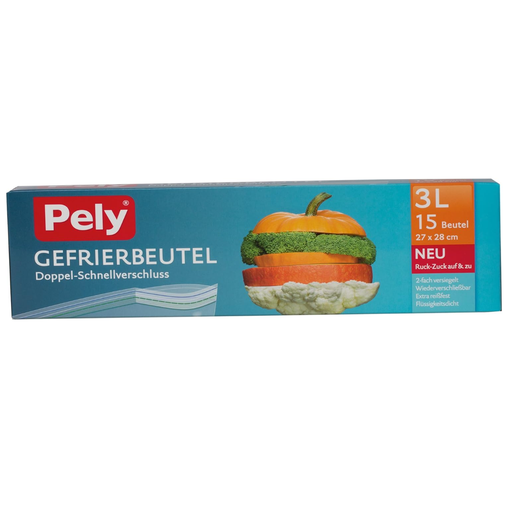
Why this product suits this profile: The 3-litre bag with a double closure is designed for larger and partly liquid portions such as soups, sauces or marinades.
Two sealing tracks reduce the risk of the bag not being fully closed. Even so, the closure should be checked after filling.
3-litre capacity, double closure and writable surface according to the product description.
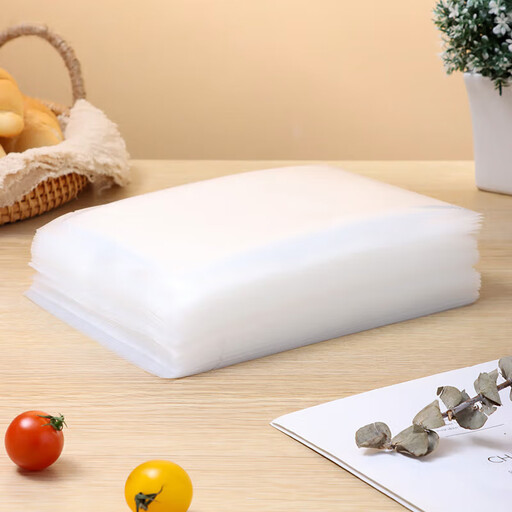
Why this product suits this profile: For meal-prep users, high-volume buyers, catering businesses and food-service operators, this format provides space for larger portions and use with a compatible vacuum sealer.
The specific size and quantity make it easier to calculate what you need. Before buying, check whether your vacuum sealer supports these bags.
50 bags measuring 30 × 40 cm; according to the product description, designed for common household vacuum sealers.
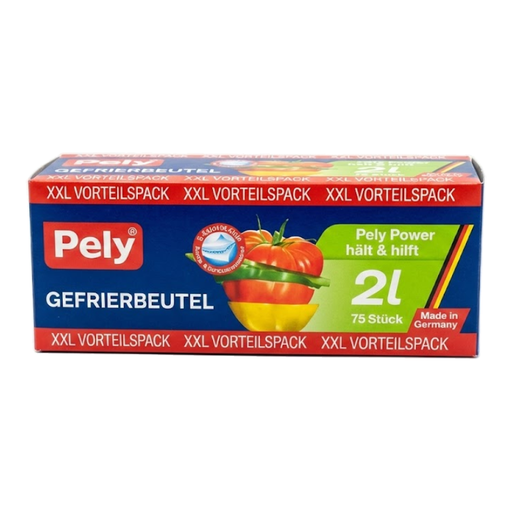
Why this product suits this profile: The combination of 2 litres, 20 × 31 cm and 75 bags is aimed at households that freeze food regularly.
The quantity and dimensions are clearly stated. This makes it easier to match your supply to your actual usage instead of choosing based solely on a marketing name.
75 bags per pack, three-layer film according to the product information, and a wide opening for easy filling.
We have put together a complete, regularly updated list of products that fully meet these strict selection criteria and the safety regulations applicable in the EU.
Plastic bags should be kept out of the reach of babies and young children, as they pose a suffocation risk. Always follow the instructions on the relevant product packaging as well.
For individual side dishes and small portions, 1-litre freezer bags are often sufficient. For shared meals, baked goods or larger quantities, 2-litre freezer bags are a flexible choice. The dimensions and actual contents remain the key factors.
A double closure can reduce the risk of leaks, particularly with liquid foods. However, absolute leak-proofing cannot be guaranteed across the board. The bag must not be overfilled, the closure must be fully sealed and the film must be undamaged.
Shelf life depends on the food, temperature, packaging quality and the amount of air left inside. A freezer bag does not automatically prevent quality loss. Label the contents with the date and store food according to the relevant recommendations for that product. Vacuum bags for food can reduce the amount of air when used with a compatible appliance, but they likewise do not replace proper chilling and storage.