
Lieferung heute & morgen

Qualitätsgarantie

Willkommens-Angebote freischalten: KOSTENLOSE Lieferung | Bis zu 80 % RABATT | Kostenlose 30-Tage-JoyPlus-Testphase
App herunterladen
Whether for meal prep, family-sized portions, seasonal vegetables or large roasts: freezer bags should store food hygienically, space-efficiently and with maximum leak protection. In practice, however, models differ considerably in terms of closure, film thickness, capacity and reusability. If you focus only on pack size or claims such as “extra strong”, you can quickly end up with bags that are unsuitable for their intended purpose.
This buying guide from the Joybuy Product Recommendation Officer explains which specifications genuinely matter and which options suit different households.
A simple flap or knot closure may be sufficient for dry foods. For soups, marinades or sauces, however, freezer bags with a double seal or a sturdy zip closure are the more reliable choice. The key factor is not merely the marketing claim “leak-proof”, but the specific closure design and correct use.
Even a double seal cannot prevent leaks if the bag is overfilled, damaged or not fully closed. Liquids should ideally be filled and transported in an upright position.
A 1-litre freezer bag is generally suitable for smaller portions, fruit, vegetables, leftovers or individual meals. For family-sized portions and larger foods, 3-litre freezer bags, 4-litre models or XXL freezer bags with capacities of 6 or 10 litres are considerably more practical.
The stated litre capacity does not always represent the most convenient usable fill volume. Wide openings, a stand-up base and the actual dimensions all influence how easily the bag can be filled.
Reusable storage bags can be used several times when cleaned properly. Before the next use, they must be rinsed thoroughly and allowed to dry completely. Raw meat, fish and particularly fatty foods require extra care when it comes to cleaning and checking the condition of the material.
Models made from PET, aluminium and PE may be designed for refrigerated and frozen storage, but they are not automatically suitable for microwave use, ovens, boiling water or direct heat. Always follow the manufacturer’s instructions.
Freezer bags with a zip can be opened and resealed quickly. A slider can make closing easier, while a double zip with two sealing tracks may provide additional security for liquids and marinades. Basic bags without an integrated closure often require a clip or knot.
For freezer bags designed for liquids, the following features are particularly useful:
Multi-layer films can provide additional stability when storing food. The pely models, for example, are specified as featuring three-layer films and BPA-free materials. According to the product description, some variants remain flexible down to -40°C. This specification applies to the intended use and does not replace a check for tears or sharp edges.
For reusable food storage bags made from PET, aluminium and PE, the specific temperature guidance is especially important. The Maxcook models are described as suitable for a range of -20°C to 100°C; however, according to the product information, they must not be used in a microwave, oven, boiling water or over an open flame.
A freezer bag with a writing panel makes it easier to keep track of contents in the freezer. Note the contents and freezing date so that older portions can be used first.
As a general guide:
Also compare the price per bag. A pack of 100 may be more economical for regular use, while 10 or 15 reusable bags are designed for a different usage pattern.
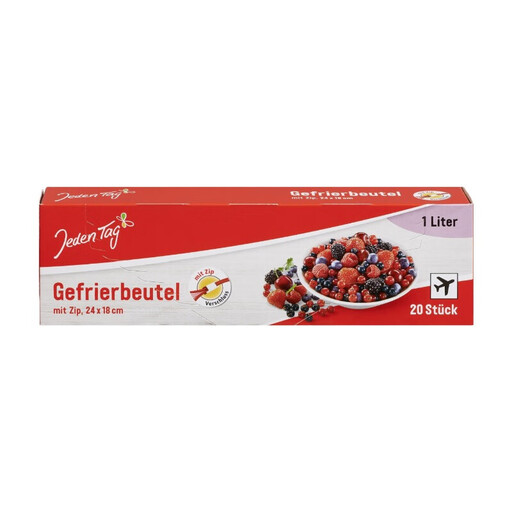
Why it fits the profile: The 20 transparent 1-litre bags are suitable for everyday portions, leftovers and smaller quantities of food.
The stated size and pack quantity are clearly specified. For liquids, the zip should be fully closed and the bag stored upright.
1-litre capacity, zip closure, transparent film and suitability for refrigerator and freezer use according to the product description.
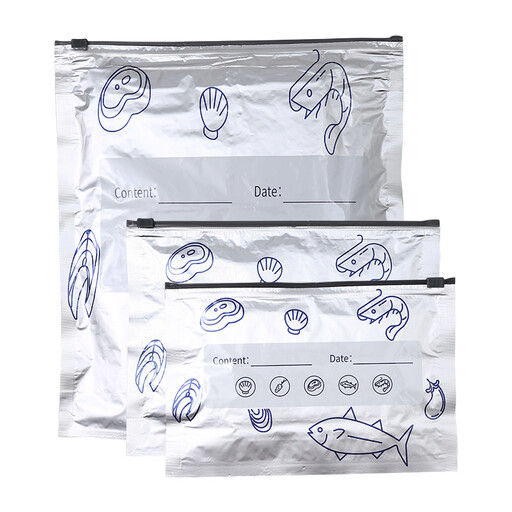
Why it fits the profile: The set contains three sizes with 10 bags each and is aimed at users who want to combine different portion sizes with reusable storage bags.
The different dimensions reduce the temptation to put every food item into an oversized bag. The cleaning instructions and lack of heat suitability should also be observed.
PET, aluminium and PE composite, slider closure, stand-up design, writing panel and washable construction according to the product specifications.
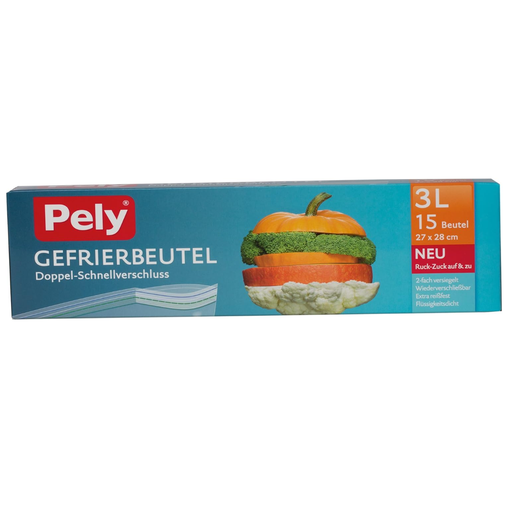
Why it fits the profile: The 15 bags, each with a 3-litre capacity, are designed for larger portions, soups, sauces and marinated meat.
The double seal is more practical for liquid contents than a simple clip. Even so, the bags should be frozen upright and not overfilled.
3-litre capacity, two sealing tracks, writing panel and suitability for liquid and solid foods according to the product description.
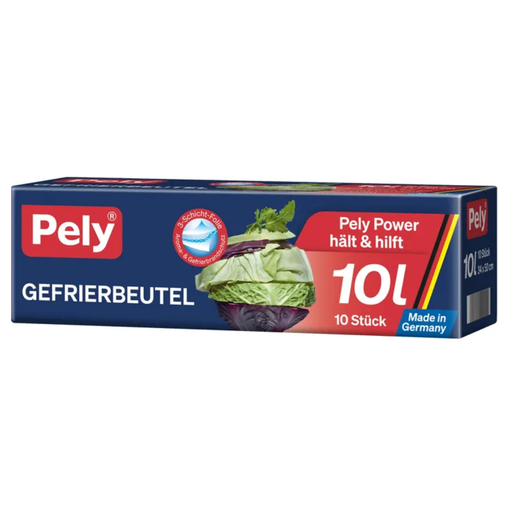
Why it fits the profile: Measuring 34 × 50 cm, these XXL freezer bags provide ample room for large pieces of poultry, roasts, baked goods or substantial harvest portions.
The generous capacity prevents bulky foods from being forced into bags that are too small. Sharp edges and overfilling must still be avoided.
10-litre capacity, three-layer PE film, writing panel and flexibility down to -40°C according to the product description.
The complete selection includes freezer bags with zippers in various sizes, closure designs and pack quantities for households and food-service businesses.
Paper food storage bags such as Pely Breakfast Bags 1L, 80 Pack are intended for dry foods such as sandwiches, bread or cheese. According to the product information, they are not suitable for liquids and should not be used for extended periods with hot or highly oily foods.
For many individual portions and smaller leftovers, a 1-litre freezer bag is sufficient. For larger family-sized portions or liquid foods, 3 litres or more is advisable. The actual dimensions and shape of the contents are what matter most.
According to the product description, models with a double seal may be designed for soups, sauces and marinades. Do not fill the bag completely, remove excess air and check the closure carefully. Storing the bag upright reduces the risk of leaks.
There is no universal fixed service life. It depends on cleaning, contents, temperature and mechanical stress. Reusable bags should be dried completely after every use and discarded if they develop tears, leaking seams or a persistent odour.