
Lieferung heute & morgen

Qualitätsgarantie

Willkommens-Angebote freischalten: KOSTENLOSE Lieferung | Bis zu 80 % RABATT | Kostenlose 30-Tage-JoyPlus-Testphase
App herunterladen
As a Joybuy Product Recommendation Officer, I see every day how small kitchen essentials can make a big difference. A great example is freezer bags. They are indispensable for keeping food fresh, building up a pantry, and maintaining order in the freezer. But not all bags are created equal. Many products promise more than they can deliver, leading to freezer burn, leaks, and ultimately, wasted food.
This guide will show you the three most common pitfalls when buying freezer bags and explain which objective criteria you should look for to make an informed decision for your household.
When buying freezer bags, crucial quality features that only become apparent during use are often overlooked. Watch out for these three typical problems to avoid bad buys:
To avoid the problems mentioned above, you should check three core parameters before buying. These define the quality and functionality of a freezer bag.
A tear-resistant freezer bag is the foundation for safely freezing food. Look for products made from a multi-layer film. Models like some Pely freezer bags, for example, use a 3-layer film that ensures high stability and puncture resistance. Another important feature is cold flexibility. The material should remain elastic even at low temperatures (e.g., down to -40°C) and not become brittle, to prevent cracks. Also, look for the "BPA-free" label to ensure that no unwanted substances are transferred to your food.
The seal is the most critical component. There are significant differences here:
Choose the size that fits your needs. For single portions or smaller quantities, 1-litre bags are sufficient. For family-sized portions, bread, or larger cuts of meat, 3L freezer bags or large freezer bags with 6 or 10 litres are the right choice. In addition to the volume, also consider the dimensions and the opening width. Models with a stand-up bottom are particularly practical as they are easy to fill and stand more stably in the freezer.
Based on the criteria above, we have put together a selection of products suitable for specific user profiles and their requirements.
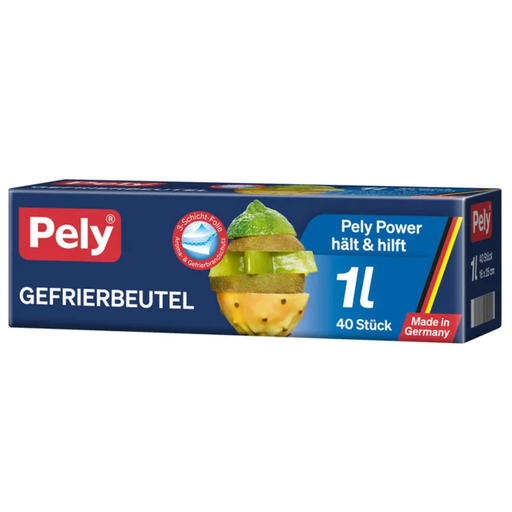
Why This Fits Their Persona: Ideal for daily portioning of meals, leftovers, or small amounts of fruits and vegetables. The 1-litre size is a versatile standard for any household.
The optimised 3-layer film, according to the manufacturer, counteracts the problem of thin material, ensuring high tear resistance and protection from freezer burn.
BPA-free, flexible down to -40°C, and equipped with a practical labelling area for better organisation.
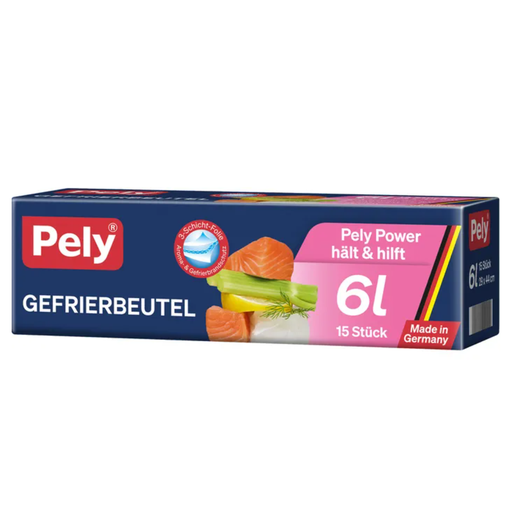
Why This Fits Their Persona: Perfect for freezing large roasts, whole fish, loaves of bread, or harvests from your own garden. The large volume is tailored to the needs of families and those who buy in bulk.
The extra-large opening and high 6-litre volume solve the problem of awkward filling. The robust film can also withstand heavy and bulky contents.
Large capacity (6 litres) for bulky foods. According to the manufacturer, the 3-layer film offers high tear resistance.
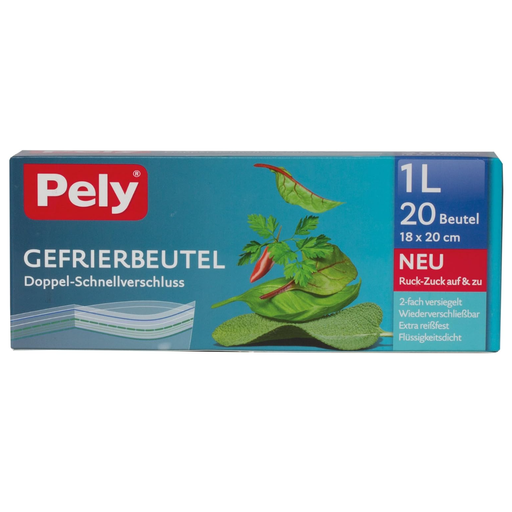
Why This Fits Their Persona: Ideal for freezing soups, sauces, and marinades, or for travellers who need to transport liquids securely in their carry-on luggage. Safety and leak protection are the top priorities here.
The double-track zip seal directly addresses the weak point of unreliable closures. It ensures a hermetically sealed and leak-proof closure.
Maximum leak protection thanks to two sealing tracks. According to the manufacturer, the bag meets the security regulations for liquids in airline carry-on luggage.
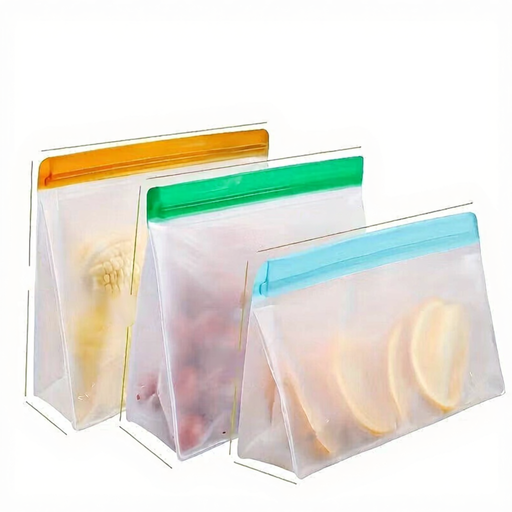
Why This Fits Their Persona: For anyone looking for a durable alternative to single-use plastic. These bags are designed to reduce waste and can be used for a variety of foods.
Designed as a reusable freezer bag, this product completely bypasses the problems of thin, single-use bags. The robust silicone material is inherently tear-resistant and durable.
Made from food-grade silicone, reusable, and easy to clean. Suitable for the freezer, refrigerator, and microwave.
We have compiled a complete, up-to-date list of products that fully meet these strict selection criteria and German safety regulations.
Freezer burn occurs when air comes into contact with the surface of the frozen food, drawing out its moisture. To prevent this, you should use a high-quality, thick freezer bag. Squeeze as much air as possible out of the bag before sealing it. A tight seal, ideally a double-track zip seal, is crucial to minimise air infiltration.
Standard polyethylene (PE) freezer bags are generally designed for single use, especially if they have contained raw meat, fish, or poultry, to avoid cross-contamination. If you are looking for a sustainable solution, special reusable freezer bags made from robust materials like silicone are a great choice. These can be cleaned after use and used again.
This specification is an important quality feature. It means that the bag's plastic material retains its flexibility even at very low temperatures, far below the freezing point of water. It does not become brittle and break. This is crucial for durability and makes the bag a tear-resistant freezer bag that won't get damaged even when moved around in a full freezer.