
Lieferung heute & morgen

Qualitätsgarantie

Willkommens-Angebote freischalten: KOSTENLOSE Lieferung | Bis zu 80 % RABATT | Kostenlose 30-Tage-JoyPlus-Testphase
App herunterladen
Freezer bags are a kitchen essential for food storage at home, for family meals, meal prep and catering. They let you portion food, protect it from moisture and help reduce freezer burn. However, freezer bags vary considerably in size, closure, film thickness and intended use.
If you choose based only on the number of bags in a pack or a low price per bag, you may end up with the wrong ones for your needs. The criteria below will help you compare freezer bags objectively and find the right option.
A 1L freezer bag is usually suitable for individual portions, fruit, vegetables or small leftovers. However, how much you can actually fit also depends on the bag’s dimensions and opening. For example, a 2L freezer bag measuring 20 × 31 cm offers more room for meals for two or larger ingredients.
For bread, poultry or larger quantities, 4L, 6L or 10L freezer bags are more practical. Always consider the capacity alongside the dimensions in centimetres.
A basic bag tied in a knot may be fine for dry food. Liquids such as soup, stock or marinade need a reliable closure and enough space at the top. Zip-lock bags with a double seal or models with a safety closure reduce the risk of leaks during freezing or transport.
Even a leakproof freezer bag should be frozen upright if it contains liquid. Before freezing, carefully seal it across the full width.
Not every food storage bag is suitable for the freezer. When choosing one, check the manufacturer’s stated uses, the material and its temperature resistance. For reusable silicone bags, it’s also worth checking whether they’re suitable for the microwave, dishwasher or sous vide cooking.
A freezer bag made from multi-layer PE film may be designed for freezing. That doesn’t automatically mean it’s suitable for the oven, hob or boiling liquids.
Choose a size that works with how you organise your freezer. An overfilled bag is harder to seal and may be damaged by sharp edges or protruding food.
Extra-strong freezer bag film is useful when freezing heavy or sharp-edged food. Compared with thin disposable bags, multi-layer film may offer greater tear resistance. The pely models described here are listed as having 3-layer film; according to the product details, several sizes remain flexible down to −40 °C.
Even robust film shouldn’t be overfilled. Damaged bags shouldn’t be used for food storage.
A labelling panel makes it easier to keep track of what’s inside and when it was frozen. This is particularly useful for meal prep and larger quantities. Double seals or safety zips are more practical than a simple knot for liquids.
If you want to reduce waste, reusable silicone bags are worth considering. According to the product description, these are BPA-free and suitable for the freezer, dishwasher and certain other uses. Before buying, check the manufacturer’s specific guidance on temperature, cleaning and closure.
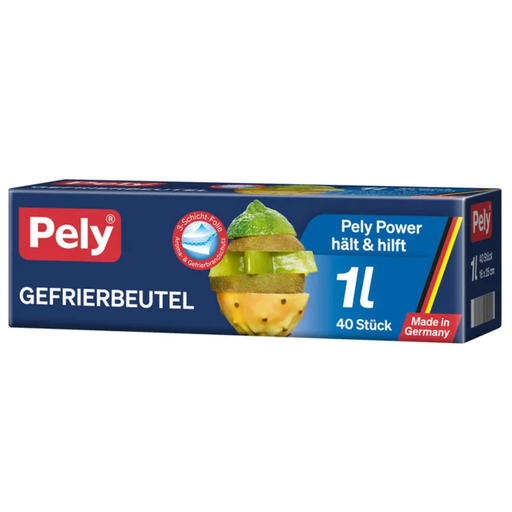
Why this product suits this profile: The 1-litre size and pack of 40 make these bags a good starting point for portioning and storing food regularly.
The product details list dimensions of 16 × 25 cm, a labelling panel and 3-layer film. This makes it easier to gauge the size before you buy.
40 bags per pack, 1-litre capacity and BPA-free film, according to the product details.
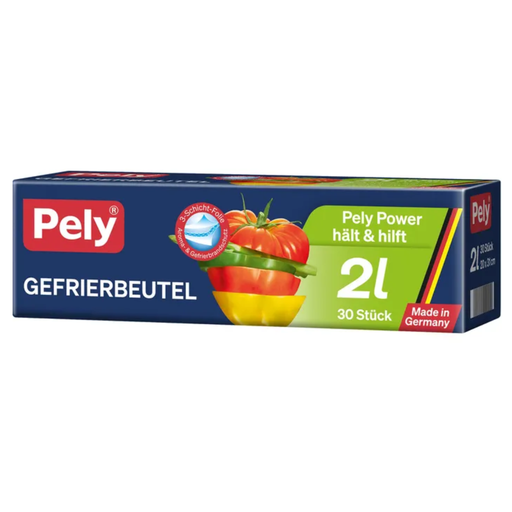
Why this product suits this profile: The 2-litre capacity gives you more room for prepared meals, portions of vegetables or food for several people.
The product description lists dimensions of 20 × 31 cm, a labelling panel, and protection against tearing and leaks. This makes portioning and storage easier to plan.
30 bags, a 2-litre size and flexibility down to −40 °C, according to the product details.
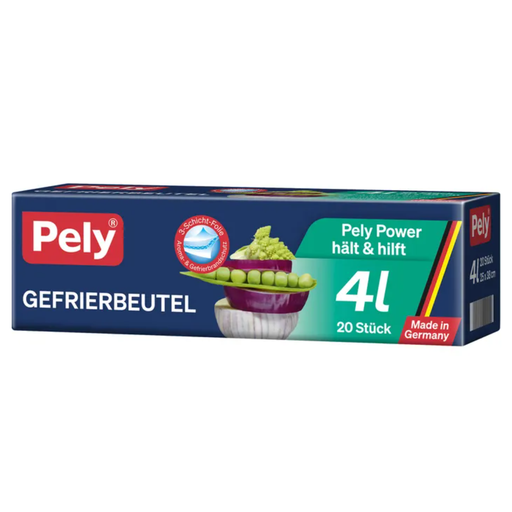
Why this product suits this profile: The larger size is designed for households looking to freeze family portions, bread or bulky ingredients.
The stated dimensions of 25 × 38 cm mean you don’t have to judge the bag by capacity alone. The 3-layer film and labelling panel address common needs for protection and organisation.
20 bags, 4-litre capacity, BPA-free film and stated flexibility down to −40 °C.
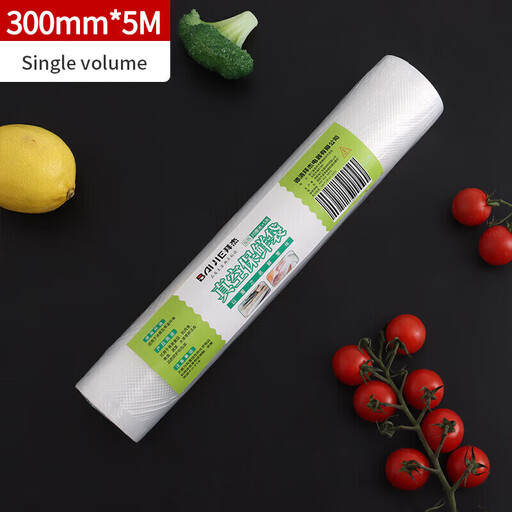
Why this product suits this profile: This roll is suitable for vacuum sealer users who want to adjust the bag length to suit different foods and portions.
The 300 mm width and 5 m length are clearly stated. This lets you check before buying whether the roll is compatible with your vacuum sealer.
A cut-to-size roll measuring 300 mm × 5 m, so you can make bags in different lengths.
We’ve put together a complete, regularly updated list of products that meet these strict selection criteria and the safety regulations in force in the EU.
A 1L freezer bag is often enough for individual portions and small leftovers. A 2L freezer bag is more practical for meals for two or larger ingredients. Depending on the quantity, family portions and bulky foods may need 4L, 6L or 10L bags.
Freezer burn is more likely when food is exposed to air and loses moisture. Pack food with as little air as possible, seal the bag carefully and label the contents with the date. Food vacuum bags used with a suitable vacuum sealer can provide particularly airtight packaging.
Disposable bags are intended for single use, particularly if they’ve been in contact with raw food or liquids. Reusable silicone bags can be used several times if cleaned properly. Always follow the relevant manufacturer’s instructions and check the condition of the bag.