
Lieferung heute & morgen

Qualitätsgarantie

Willkommens-Angebote freischalten: KOSTENLOSE Lieferung | Bis zu 80 % RABATT | Kostenlose 30-Tage-JoyPlus-Testphase
App herunterladen
Freezer bags are a practical way to store food, but they are often chosen based on the cheapest pack price. This can lead to unnecessary waste, leaky closures or unsuitable sizes. Before buying, it is therefore worth taking a closer look at the material, capacity and type of closure.
Soups, sauces and marinades place greater demands on a bag than bread or frozen vegetables. A basic press-seal closure can open if the bag is filled incorrectly or become strained by liquid. For liquid foods, leakproof food bags with a safety closure, double seal or sturdy welded seam are a better choice.
A bag that is too large takes up more space in the freezer and often leaves more air inside. A bag that is too small, on the other hand, will quickly become overfilled. Common options range from the 1L freezer bag for small portions to the 10L freezer bag for large cuts of meat or substantial supplies.
Reusable silicone bags may be suitable for meal prep and regular food storage. However, specific information about cleaning, temperature resistance and leakproofing is essential. With disposable bags, you should also check whether they are intended for freezing and what disposal guidance the manufacturer provides.
Polyethylene, or PE for short, is commonly used for food storage bags and freezer bags. The material thickness and the way the edges are made affect how well the bag is protected against tearing and punctures. However, sharp bones, frozen edges or pointed foods can damage even robust films.
For silicone bags, information about use in the freezer, dishwasher or microwave is relevant. According to the respective manufacturer's product information, the stated temperature range may vary from one product to another. Use at high temperatures should only take place if this is expressly intended.
For dry foods such as bread, cheese or snacks, sandwich bags with clips or simple zip bags may be sufficient. For liquids and marinades, however, the following features are useful:
A double seal does not replace proper handling. The bag should not be overfilled. Before sealing, excess air can be gently pressed out without crushing the contents.
1L freezer bags are practical for individual portions or chopped fruit. Family portions, soups and larger quantities are better suited to 3L storage bags. For whole poultry portions, large roasts or substantial harvests, 10-litre bags with generous dimensions are a suitable category.
The number of bags in a pack also matters. A low price per bag is not automatically more economical if the size is rarely needed in everyday use. Multipacks can be useful for regular meal prep, while a smaller pack is often more manageable for occasional use.
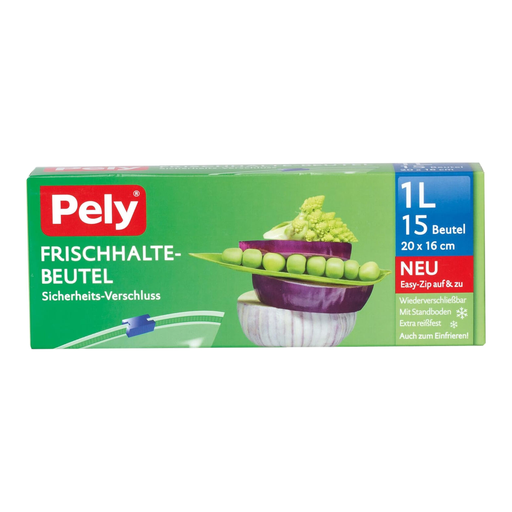
Why this product suits this profile: The 15 one-litre bags are suitable for individual portions, small leftovers and liquids at home or when travelling.
The safety closure and stand-up base address the risks of a bag that is difficult to fill or prone to leaking.
1-litre format, writable area and, according to the product information, suitable for the freezer and liquids.
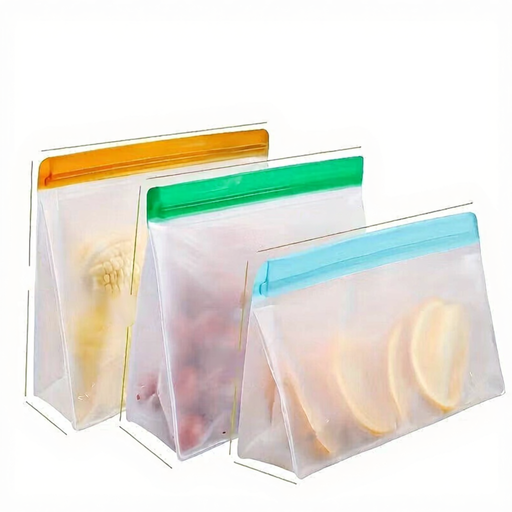
Why this product suits this profile: This silicone set is aimed at households that want to reuse bags for storage, marinating, freezing and organising.
The reusable design reduces reliance on disposable bags; according to the product description, the closure is designed to be leakproof.
Food-safe, BPA-free silicone and, according to the product information, suitable for the freezer, dishwasher and microwave.
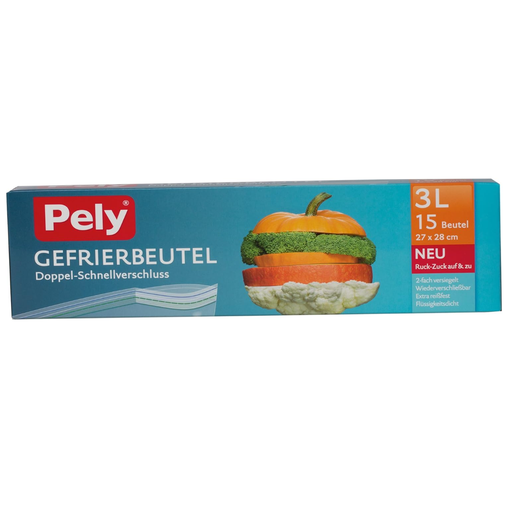
Why this product suits this profile: The 3-litre capacity is suitable for larger portions, soups, stock and marinated foods that are prepared regularly.
The double seal provides an additional sealing track for liquid contents and larger quantities.
15 bags, 3-litre capacity, labelling area and, according to the product information, suitable for marinades and freezing.
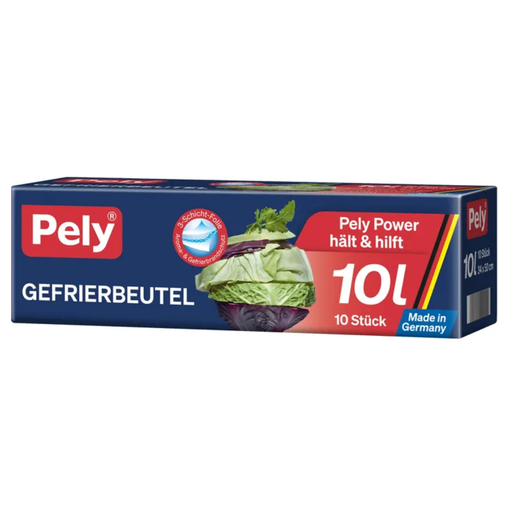
Why this product suits this profile: The 10-litre format, measuring 34 × 50 cm, is designed for large cuts of meat, whole poultry portions, vegetable supplies and substantial amounts of food for freezing.
The large format prevents substantial quantities of food from having to be squeezed into several bags that are too small.
Three-layer PE film, labelling area, perforated separation and, according to the product information, cold resistance down to -40 °C.
We have put together a complete, regularly updated list of products that fully meet these strict selection criteria and the safety regulations applicable in the EU.
A 1-litre freezer bag is usually sufficient for small portions, pieces of fruit, herbs or leftovers. 3-litre bags are more practical for family portions and liquid foods. 10-litre bags are mainly used for large foods or substantial supplies.
According to the product information, a silicone bag may be fitted with a leakproof closure. Actual leak resistance also depends on whether the closure is fully closed, the bag is not overfilled and the film is undamaged. It is advisable to check the closure briefly before transporting the bag.
Their lifespan depends on the material, use and storage conditions. Disposable bags are intended for limited use. Reusable silicone bags can be used several times if they are cleaned carefully and remain undamaged. Bags should be replaced if they develop tears, leaking seams or permanently deformed closures.