
Lieferung heute & morgen

Qualitätsgarantie

Willkommens-Angebote freischalten: KOSTENLOSE Lieferung | Bis zu 80 % RABATT | Kostenlose 30-Tage-JoyPlus-Testphase
App herunterladen
Freezer bags are a staple in many British households. They allow you to portion meat, vegetables, bread, soups and prepared meals, while making efficient use of the available space in your freezer. However, not every bag is suitable for every purpose. An opening that is too small, a closure that is not leak-proof or film that is too thin can quickly make storing food inconvenient.
Before buying, it is therefore worth looking at the actual product specifications rather than relying on general advertising claims. The key factors are capacity, film thickness, closure type and pack size.
The litre rating describes the approximate volume, but on its own says little about how practical the bag is to use. A 1L freezer bag measuring 16 × 25 cm is better suited to smaller portions, fruit, vegetables or leftovers. A 2L freezer bag measuring 20 × 31 cm offers more room for meals for several people or larger ingredients.
For bulky food, 4L freezer bags or 6L freezer bags are more suitable. Measuring 25 × 38 cm and 29 × 44 cm respectively, they are designed for large loaves of bread, poultry, roasts or larger quantities of home-grown vegetables. If you only look at the litre capacity, it is easy to overlook the available opening width and the shape of the bag.
The construction of the film is important when the bags are used frequently, for sharp-edged foods or for large portions. As an objectively verifiable product specification, selected pely models state that they use optimised 3-layer film. According to the product description, this design is tear-resistant and intended for storage at low temperatures.
Particularly thin film may be sufficient for small, dry items. However, extra-strong freezer bags with more robust film are more practical for bones, frozen baked goods or larger cuts of meat. Even so, overfilling the bags and allowing them to come into contact with sharp edges should be avoided.
For dry foods, a clip, knot or simple press seal may be sufficient. For liquids such as soup, stock or marinade, resealable freezer bags with a secure closure are more practical. Models with a double-seal freezer bag design have two sealing lines and, when used correctly, can reduce the risk of leaks.
Important: Even an item described as a leak-proof freezer bag should not be filled to the brim. Liquids expand when they freeze. The bag should therefore be filled upright, sealed carefully and, if possible, frozen inside a bowl or container.
The actual dimensions should also be checked. With irregularly shaped food, a wide opening is often more important than a large nominal capacity.
Look for information about food suitability and temperature resistance. Several pely models are stated to remain flexible down to −40 °C. This is a specific manufacturer’s claim and should not automatically be applied to other freezer bags.
BPA-free freezer bags may be relevant to shoppers who specifically want to choose this material feature. The relevant product variants are described as having BPA-free, three-layer film. For other products, check the material description for the individual item.
The description freezer bags made in Germany indicates the stated place of manufacture, but does not replace a comparison of size, closure and pack contents.
A bulk pack of freezer bags can be more economical if you freeze food regularly. The selection ranges from small packs containing 15 or 20 bags to multipacks containing 75 or 100. So do not just compare the pack price: consider the price per bag and the size you need.
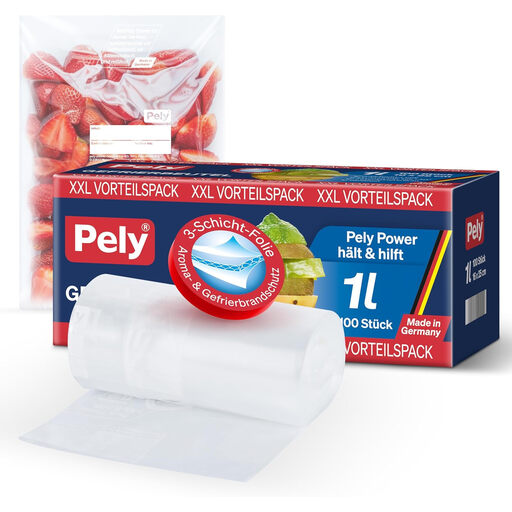
Why this product suits this profile: The pack of 100 is ideal for households that regularly freeze small portions and want to work out their stock of bags per use. Measuring 16 × 25 cm, the bags are suitable for everyday quantities.
The stated 3-layer film and labelling panel make the material construction and organisation clearer than a purely promotional claim.
100 bags per pack, 1-litre format, BPA-free 3-layer film and made in Germany according to the product information.
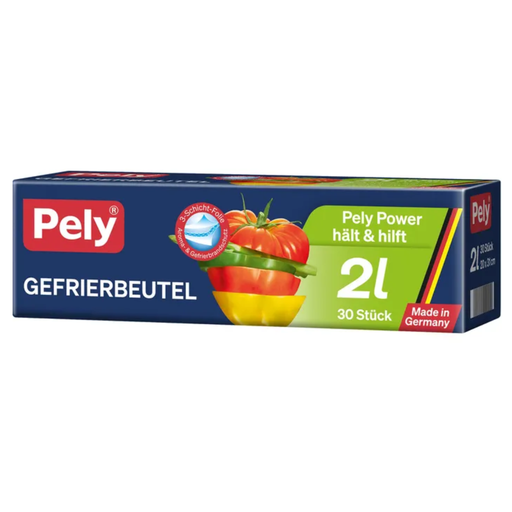
Why this product suits this profile: The 2-litre format is designed for meal prep, medium-sized family portions and a wide range of kitchen tasks. The stated dimensions of 20 × 31 cm make planning freezer space easier.
The temperature rating down to −40 °C, the 3-layer construction and the labelling panel provide specific selection criteria rather than general claims about freshness.
30 bags, 2-litre capacity, BPA-free film and tear-resistant and leak-proof according to the product information.
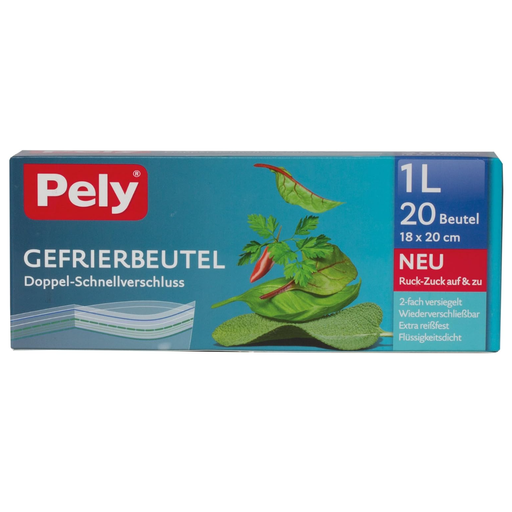
Why this product suits this profile: The double press seal is suitable for liquids, marinades and transport when a secure closure is more important than a large pack size.
Two sealing lines are specified as a concrete design feature. This reduces reliance on knots or individual clips.
20 bags, double seal, 1-litre format and extra-strong film according to the product description.
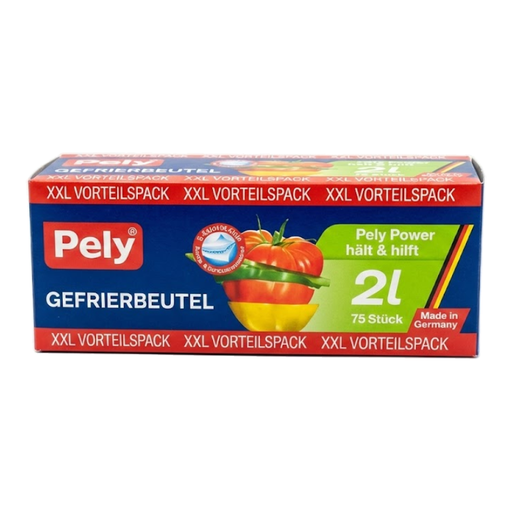
Why this product suits this profile: The bulk pack of 75 is designed for families, catering, food service and regular meal prep when larger quantities of medium-sized portions are needed.
The pack quantity and format are clearly stated. This makes it easier to calculate your requirements without having to repeatedly buy packs that are too small.
75 bags, 2-litre capacity, wide opening and 3-layer film according to the product information.
We have put together a complete, regularly updated list of products that fully meet these strict selection criteria and the safety regulations applicable in the EU.
Fill the bag with an appropriate portion, remove as much air as possible and seal it completely. Multi-layer film can reduce contact with air. A constant freezing temperature and clearly marked dates also help, so that food is used in good time.
Shelf life depends on the food, storage temperature, packaging quality and hygiene when freezing. The freezer bag itself does not determine a standard storage period. Follow official food storage recommendations and regularly check the contents, smell and condition of the packaging.
According to the relevant product information, models with a double seal or safety closure are intended for liquids such as soups and marinades. Nevertheless, only fill them partially, seal both lines carefully and, if possible, place the bag upright in a bowl when freezing.