
Lieferung heute & morgen

Qualitätsgarantie

Willkommens-Angebote freischalten: KOSTENLOSE Lieferung | Bis zu 80 % RABATT | Kostenlose 30-Tage-JoyPlus-Testphase
App herunterladen
Freezer bags are practical everyday essentials for the kitchen and home. They allow you to portion food, protect it from freezer burn and keep your supplies neatly organised. However, products can vary considerably in film thickness, capacity, closure type and reusability.
If you focus only on a low pack price or bold advertising claims, it is easy to choose a product that does not actually suit your needs. Three common pitfalls occur particularly often:
The capacity should match both the quantity of food and the shape of the contents. For UK households, the following guide may be useful:
The litre capacity describes the volume, but not necessarily the usable interior area. Before buying, also check the width, height and opening width.
For food stored in the freezer, it is important to use a plastic film designed for contact with food. According to the manufacturer’s information, the pely models mentioned use a multi-layer polyethylene film; several versions are described as BPA-free and suitable for temperatures as low as −40 °C. This information should be verifiable directly on the product packaging or in the data sheet.
“BPA-free” refers to the stated substance bisphenol A. This does not automatically mean that a bag is suitable for every application. Always follow the instructions regarding freezing, heating, microwaving and dishwasher use. Freezer bags are generally not designed for hot food or use in the oven.
A freezer bag with a double seal or freezer bag with a zip closure can make it easier to handle liquid food when freezing it. The key point is to close both sealing strips completely. A stand-up base helps when filling the bag and reduces the risk of it tipping over.
With a bag without a zip closure, the air and opening must be secured using, for example, a clip, knot or suitable fastener. This may be sufficient for dry food, but is less convenient when transporting liquids. A product should only be described as leak-proof if this is supported by the specific manufacturer’s information. Even a double seal cannot prevent leaks if the bag is overfilled, damaged or not fully closed.
A small pack may be sufficient for occasional food storage. Families, keen cooks and meal-prep users often benefit from larger packs. Do not just compare the total price: also look at the price per bag and whether the size is right for you.
A labelling panel is particularly useful in the freezer. Write down the contents and freezing date so that older portions can be used first. Before sealing the bag, remove as much excess air as possible without damaging it.
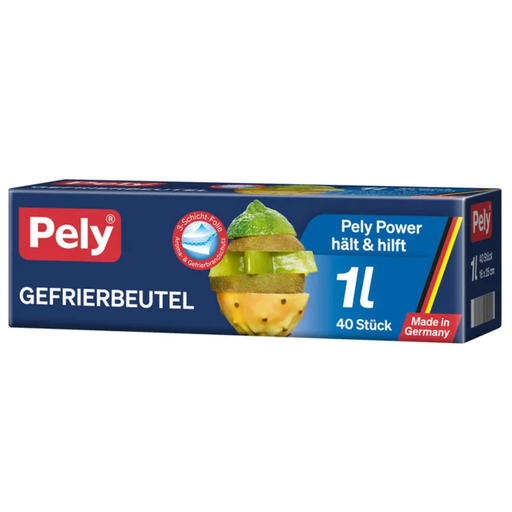
Why this product suits this profile: The 1-litre size is ideal for everyday individual portions and leftovers. With 40 bags, you can try the product without committing to a large supply.
The stated dimensions of 16 × 25 cm make the size easier to assess than the litre capacity alone. The integrated labelling panel supports organised food storage.
According to the product details: 1-litre capacity, 40 bags, three-layer film and BPA-free design.
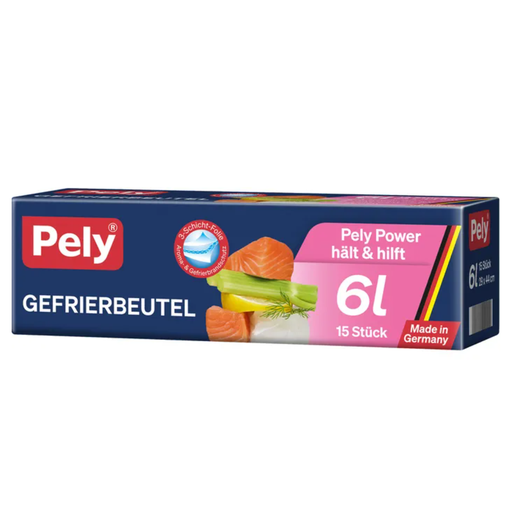
Why this product suits this profile: The 6-litre version is designed for households with large portions, extensive food storage needs or bulky ingredients.
The external dimensions of 29 × 44 cm show whether larger foods will actually fit inside. According to the product description, the three-layer film is designed to be tear-resistant and withstand low temperatures.
15 bags per pack, labelling area, BPA-free design and, according to the product details, made in Germany.
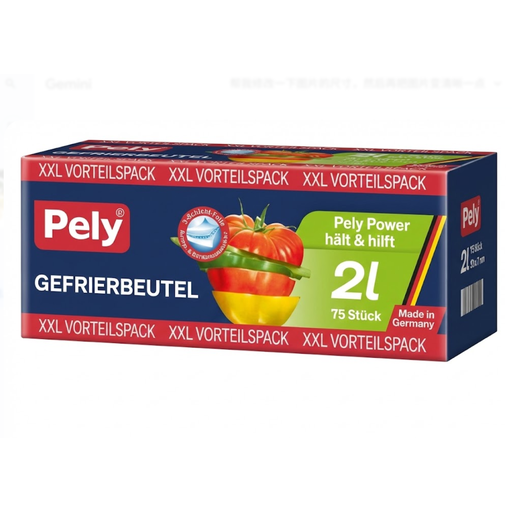
Why this product suits this profile: 45 4-litre bags are suitable for larger quantities of food, family-sized portions and regular freezing.
The combination of pack size, external dimensions of 25 × 38 cm and three-layer film provides specific points of comparison rather than relying solely on an advertising claim about capacity.
Large pack with 45 bags, wide opening, labelling panel and, according to the product details, BPA-free film.
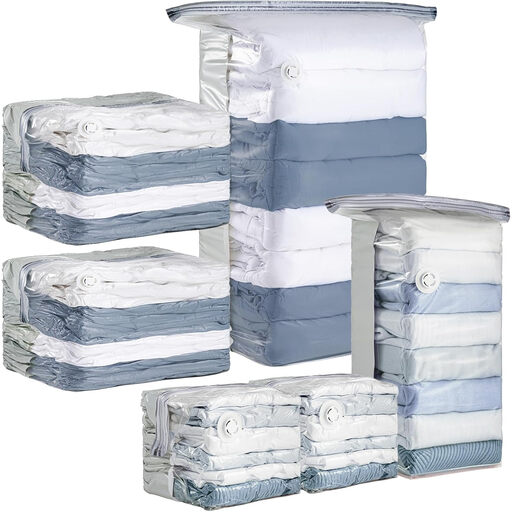
Why this product suits this profile: These vacuum storage bags are intended for bed linen, blankets, clothing and other textiles, not for food.
Clearly distinguishing between food storage bags and textile bags prevents misuse. Sharp objects can damage the PA/PE film.
Six cube bags, double zip closure, sliding clip and valve for a standard vacuum cleaner; according to the product details, each bag can hold several blankets or items of bedding.
We have put together a complete, regularly updated list of products that fully meet these strict selection criteria and the safety regulations applicable in the EU.
A few simple steps can help you use freezer bags safely and neatly:
Reusable vacuum bags are a different product category. They are mainly suitable for clothing, duvets and seasonal textiles. For food, only use bags that are explicitly designed for this purpose. With vacuum bags, it is also advisable to check the closure after removing the air and before storing the bag for a longer period.
A double seal can reduce the risk of leaks, particularly when used correctly. However, the type of closure alone cannot guarantee absolute leak-proof performance. Do not overfill the bags, close both sealing strips completely and place the bag upright or flat on a suitable surface when freezing.
Disposable freezer bags are designed for single use. Reusing them can present hygiene issues after contact with raw animal products, fats or liquids. Reusable models should be cleaned according to the manufacturer’s care instructions, dried completely and replaced if they develop tears or leaks.
No. BPA-free only describes the absence of, or the supplier’s stated freedom from, bisphenol A. Also check whether the specific bag is approved for food contact, deep-freezing, liquids and the intended temperature. The information on the packaging and product page is the relevant guidance here.