If your existing four-star freezer compartment can hold the portions of bread and batch-cooked meals you have planned, and can freeze fresh food, you won’t need a separate appliance just for bread. Food needs to be stored at −18 °C, and the consumer advice centre says a four-star compartment is essential for freezing fresh food in a fridge-freezer. If you regularly batch-cook larger quantities, an upright freezer with compartments makes it easier to organise everything, while a chest freezer offers one spacious area. Compare the space available, usable capacity, interior layout and kWh/year for the specific model.
Which type of freezer space is right for you?
People who batch-cook together
If you share freezer space and cooking sessions, you’ll want to find labelled portions quickly and put them in the right place. The Federal Centre for Nutrition recommends labelling frozen food with its contents, quantity and date.
People who take out individual slices of bread
If you freeze fresh sliced bread and want to take out just a few slices at a time, a suitable freezer compartment you already have may be all you need. The Federal Centre for Nutrition recommends freezing bread as fresh as possible and already sliced.
Households that batch-cook larger quantities
If you want to store several prepared meals as well as bread, consider whether an upright freezer with compartments or the open storage space of a chest freezer is a better fit for your containers and available space. The consumer advice centre says regularly freezing larger quantities can be a reason to get a separate freezer.
Which buying criteria matter?
Existing four-star freezer compartment
A good fit if: There’s room for your labelled bread and meal portions, and the compartment can freeze fresh food.
Consider: You won’t need another appliance, but the space you already have may limit the size of your batch-cooked meals or how many separate areas you can use for storing food.
Upright freezer with drawers
A good fit if: Several people regularly take out portions and it would be useful to have dedicated spaces for bread and prepared meals.
Consider: Drawer layouts and usable capacity vary by model. A separate appliance also needs space and uses electricity.
Chest freezer
A good fit if: Your cooking sessions leave you with larger quantities to store and you have a suitable spot with room to open it from above.
Consider: Unlike an upright freezer, the storage space isn’t divided into drawers. How easy it is to reach your food and how often you need to defrost it depend on the model and how you organise it.
The Federal Centre for Nutrition recommends freezing bread as fresh as possible and already sliced. For a fridge-freezer compartment, the consumer advice centre says it needs to be four-star rated to freeze fresh food.
| What you need |
What to check when buying |
Who it matters most to |
| Organising shared supplies |
Compare the drawers or baskets, including their internal dimensions, with the portions you plan to store. |
If several people are storing bread and prepared meals, I want to find labelled portions quickly. Around 33% of consumers prioritise keeping everything organised and easy to find. |
| Taking out individual slices of bread |
Check whether the compartment can freeze fresh food and keep it stored at −18 °C. |
If I only want to take out the slices of bread I need, a suitable compartment and easy-to-reach portions matter. Around 27% of consumers prioritise freezing bread in individual portions. |
| Space for batch-cooked meals |
Measure your containers and the route they’ll take to the freezer. Compare the usable capacity and interior layout of the specific models. |
If you store several prepared meals as well as bread, you’ll need room for suitable containers. Around 20% of consumers prioritise space for larger batches of food. |
| Energy use and care |
Check the kWh/year, usable capacity and defrosting method for the specific model. |
If I’m considering an additional appliance, I want to factor in its stated energy use and how much defrosting it needs. Around 20% of consumers prioritise this. |
Common buying mistakes
-
Buying a separate appliance just for a few slices of bread
A suitable freezer compartment you already have may be able to hold small portions. A separate appliance is worth considering mainly if you regularly need to store larger quantities.
First, work out how much bread and how many portions of batch-cooked meals you’ll actually need to store between cooking sessions.
An additional appliance takes up space and adds to your ongoing electricity use.
-
Looking only at litres or the energy rating
The stated capacity alone won’t tell you whether your containers will fit or whether your food will be easy to reach. You should also check the annual energy consumption for the specific model.
Compare the external and internal dimensions, layout and kWh/year of suitable models. If you’re considering a chest freezer, make sure you can access it from above.
Containers that don’t fit or food that’s difficult to reach can make it harder to stay organised.
-
Assuming SmartFrost and NoFrost are the same defrosting feature
Liebherr describes the CFe 1870 as SmartFrost and the FNd 4224 as NoFrost. These terms refer to different features on the models.
Check the defrosting method against the full model name rather than assuming the terms mean the same thing.
Depending on the appliance, manual defrosting can take time.
Popular freezer brands at a glance
Exquisit
The GS111-040E and GS231-NF-H-040C cater for different space requirements. The manufacturer lists usable capacities of 64 l and 161 l respectively.
- Exquisit lists NoFrost and 132 kWh/year for the GS231-NF-H-040C. The GS111-040E is listed at 158 kWh/year, so with these two models, the smaller capacity doesn’t mean lower stated annual energy use.
- Check the usable capacity, dimensions and annual energy consumption for the specific model rather than assuming one model represents the whole brand.
Bosch
The freestanding GSN29VWEP is an upright option for households looking to organise containers of different sizes.
- Bosch lists a 200 l capacity, 39 dB(A), No Frost and alerts for an open door or rising temperature for this model.
- These features apply to the GSN29VWEP, not to all Bosch freezers.
Liebherr
The FNd 4224 is a freestanding upright freezer with a 160 l capacity, while the CFe 1870 chest freezer offers more open storage space.
- Liebherr lists NoFrost, 37 dB and a SmartDeviceBox that can be fitted later for the FNd 4224. The CFe 1870 is listed with a 281 l capacity and SmartFrost.
- SmartFrost and NoFrost are different model features. Also check whether the upright freezer’s layout or the chest freezer’s open space better suits your portions.
Haier
The HCE200C is a 196 l chest freezer for households considering a larger, open storage space.
- Haier lists manual defrosting for the HCE200C.
- The manufacturer doesn’t list any drawers. Plan how you’ll organise and reach smaller portions of bread and containers in the chest freezer.
Beko
The RFNE200E40WN is a slim, freestanding No Frost upright freezer. Its stated width of 54 cm may make it a good option for a tight space.
- Beko lists a reversible door for this model.
- Before deciding, check the data sheet for the specific version to confirm its usable capacity. Don’t include a capacity figure in your comparison without verifying it first.
Freezers at Joybuy
The Joybuy models below are upright freezers for storing bread and prepared meals together, with varying capacities and features. If you’re freezing fresh bread, check that the freezer compartment on the specific appliance can maintain −18 °C and is suitable for freezing fresh food.
 No image available
Heinrich’s upright freezer, 161 l, No Frost
The drawer layout can help you store bread and prepared portions separately.
The product title lists a 161 l capacity, No Frost and three freezer drawers.
View at Joybuy
 No image available
homeX FSN2041E-S upright freezer, 204 l, NoFrost
The stated usable capacity may suit households planning to store several portions of batch-cooked meals as well as bread.
The product title lists a 204 l capacity, NoFrost, a Super-Freeze function, 39 dB and energy class E.
View at Joybuy
 No image available
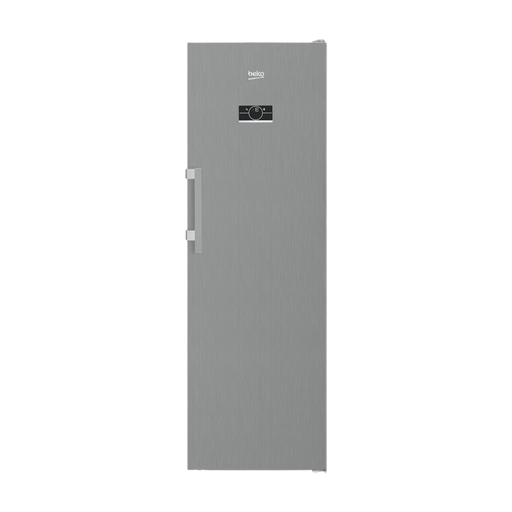
Beko B7RFNE315XP upright freezer, 286 l
The stated net capacity may suit households looking to store larger batches of food as well as bread.
The product title lists a 286 l net capacity, No Frost, Fast Freeze and energy class D.
View at Joybuy
 No image available
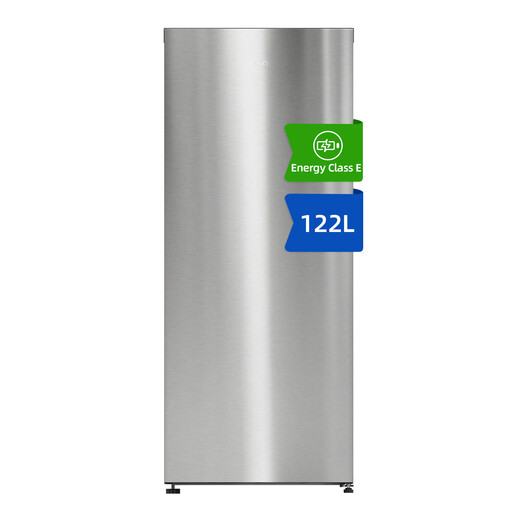
CHiQ JR122WSD upright freezer, 122 l, four-star compartment
The stated capacity and four-star compartment may appeal to households with smaller shared food supplies.
The product title lists a 122 l capacity, No Frost, a switchable fridge mode and energy class E.
View at Joybuy
 No image available
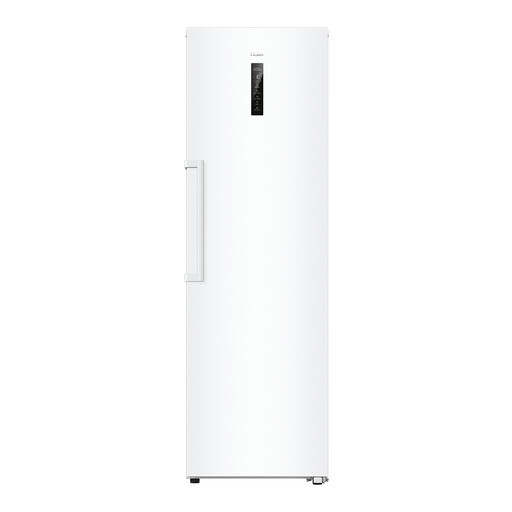
Haier H4F306WCH1 Up 60 Series 7 upright freezer, 301 l, Total NoFrost
The stated capacity may suit households looking to store larger quantities together.
The product title lists a 301 l capacity, Total NoFrost, four drawers and energy class C.
View at Joybuy
Frequently asked questions
How should I freeze sliced bread for everyone to share?
Freeze bread as fresh as possible and already sliced, so you can take out individual portions later. The Federal Centre for Nutrition recommends labelling packaging with its contents and date, and says frozen bread can be stored for one to three months.
Do I need a separate freezer for this?
No, not if a suitable compartment you already have can hold the portions you’ve planned and freeze fresh food. If you regularly batch-cook larger quantities, a separate appliance can provide extra space. Remember to consider its footprint, interior layout and stated annual energy consumption.
Is an upright freezer or a chest freezer better for batch cooking together?
An upright freezer with suitable drawers can make it easier to sort and take out portions separately, while a chest freezer offers open storage space for larger containers. The key factors are the actual interior layout, your containers and how easy it is to access the freezer in its planned location.
What does a freezer compartment need to freeze fresh bread?
The freezer compartment needs to keep food at −18 °C. If you’re using a compartment in a fridge-freezer, check that it’s four-star rated: the consumer advice centre says this is essential for freezing fresh food in this type of appliance.


