
Lieferung heute & morgen

Qualitätsgarantie

Willkommens-Angebote freischalten: KOSTENLOSE Lieferung | Bis zu 80 % RABATT | Kostenlose 30-Tage-JoyPlus-Testphase
App herunterladen
Buying a new freezer might seem straightforward at first glance. But behind the marketing promises lie technical details that can make the difference between satisfaction and frustration. The wrong model can not only complicate your daily routine but also unnecessarily inflate your electricity bill. As your Joybuy Product Recommendation Officer, I'll help you identify the crucial criteria and avoid common pitfalls.
Many buyers focus on price or brand name, overlooking two critical aspects that often lead to problems later on:
freezer for a basement must be explicitly designed for this temperature range.This guide will show you which technical parameters truly matter, so you can make an informed decision when you're ready to buy a freezer.
To avoid a bad purchase, you should focus on three objective criteria. These determine the efficiency, convenience, and longevity of your appliance.
The first decision concerns the form factor. Each type has specific advantages and disadvantages:
small freezer for single households to large appliances for families.Rule of thumb for usable capacity: Plan for about 50 to 80 litres of usable capacity per person in the household. For a family of four that regularly stocks up, a deep freezer with 200 to 300 litres is a sensible size.
Since 2021, a new EU energy label with a scale from A (very efficient) to G (less efficient) has been in effect. An energy-efficient freezer in class A or B may be more expensive to purchase, but it pays for itself over the years through a significantly lower electricity bill. Since a freezer runs 24 hours a day, energy consumption is one of the most important cost factors over its entire lifespan.
This is where the best models truly distinguish themselves. The right technology saves you work and ensures the appliance functions correctly in its intended location.
Based on the criteria mentioned, we have identified several models that represent a considered choice for different user profiles and their specific requirements.

Why It's a Great Fit: With 60 litres of usable capacity and compact dimensions, this appliance is ideal for singles, couples, or as a supplementary unit in the kitchen. It fits under most countertops and, with three compartments, provides good organisation for daily needs.
This model deliberately forgoes expensive defrosting technology. It's a straightforward solution for budget-conscious buyers who accept the minimal manual defrosting effort for this size and don't want to pay for unused features.
4-star freezing performance for long-term storage. Reversible door hinge for flexible placement.
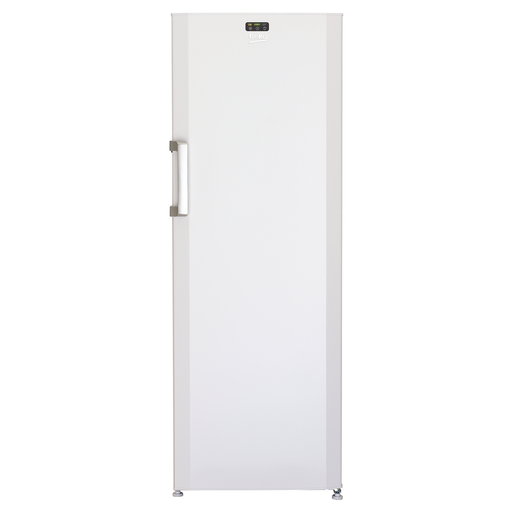
Why It's a Great Fit: With 244 litres of usable capacity, this `Beko freezer` offers ample space for a family's groceries. The combination of five drawers and two flap compartments ensures flexible and organised storage.
This appliance solves the location problem: according to the manufacturer, it is suitable for operation in unheated rooms down to -15 °C. Additionally, the MinFrost technology offers a great compromise that significantly reduces ice build-up and minimises defrosting effort.
Large usable capacity (244 L). Suitable for cool basements. Quiet operation at 36 dB.
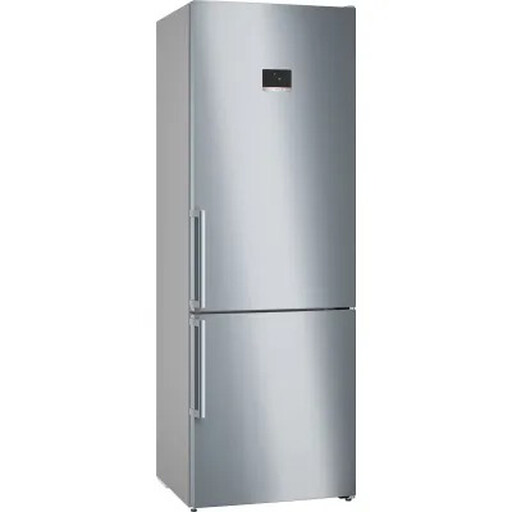
Why It's a Great Fit: This `Bosch fridge-freezer` is a solution for discerning users. It combines a large volume (440 L) with high energy efficiency and advanced food preservation technologies like VitaFresh XXL.
The appliance fully delivers on the "NoFrost" promise. The Total No-Frost technology prevents ice formation throughout the entire unit, making manual defrosting a thing of the past. This is a deliberate investment in maximum convenience.
Very high energy efficiency (Class B). Total No-Frost technology. VitaFresh system for longer freshness of fruit, vegetables, fish, and meat.
We have compiled a complete, up-to-date list of products that fully meet these strict selection criteria and German safety regulations.
1. How much usable capacity does a freezer need per person? As a guideline: for basic stocking in a single or two-person household, 50 to 80 litres per person is often sufficient. Families who do a lot of batch cooking, buy in bulk, or freeze garden produce should plan for 100 to 130 litres per person to have enough flexible storage space.
2. What does the climate class on a freezer mean? The climate class (e.g., SN, N, ST, T) defines the ambient temperature range in which the appliance functions correctly. A Class N appliance is designed for room temperatures from +16 °C to +32 °C. Such a device is unsuitable for a cool basement where the temperature can drop below 10 °C. For this, look for Class SN (+10 °C to +32 °C) or special manufacturer approvals for colder environments.
3. Is a freezer with No-Frost technology really worth it? The decision depends on your priorities. A No-Frost freezer prevents ice build-up, which has three advantages: you save the effort of defrosting, energy consumption remains consistently low (a layer of ice increases power demand), and your frozen goods don't get icy. If this convenience and long-term efficiency are worth the higher purchase price to you, then the answer is yes. For budget-conscious buyers or for smaller appliances, MinFrost technology or manual defrosting can be a sensible compromise. Anyone conducting their own freezer review for 2026 should consider this cost-benefit factor.