
Lieferung heute & morgen

Qualitätsgarantie

Willkommens-Angebote freischalten: KOSTENLOSE Lieferung | Bis zu 80 % RABATT | Kostenlose 30-Tage-JoyPlus-Testphase
App herunterladen
A new freezer should store food reliably, take up little space and avoid causing disruption in everyday life through excessive noise or frequent defrosting. However, many product claims sound similar when you are comparing models. That is why it is important to look beyond individual buzzwords and focus on verifiable information such as usable capacity, dimensions, energy efficiency class and noise level.
A large upright freezer or chest freezer may offer plenty of capacity on paper. However, the interior, baskets, drawers and technical components reduce the space that can actually be used. Always compare the stated usable capacity in litres and check how the interior is divided up.
These terms describe different solutions:
The specific instruction manual remains the authoritative source. A freezer with MinFrost or LowFrost is not automatically maintenance-free.
The energy efficiency class is a useful point of comparison, but on its own it does not show the actual running costs. Other relevant factors include annual consumption in kilowatt hours, the size of the appliance, its location and your individual electricity tariff. A larger freezer may consume more electricity than a compact model, even if it has a better energy efficiency class.
For smaller homes, a table-top freezer, mini freezer or compact fridge freezer may be suitable. Do not just measure the floor space: also check the door opening angle, clearance from the wall and the route to the installation location. A freestanding freezer needs sufficient ventilation to allow heat to escape.
A chest freezer often provides plenty of storage space for families and households that freeze large quantities of food. However, it requires a larger footprint and can make it less easy to see or access food stored at the bottom. A fridge freezer gives you two functions in one appliance, while a separate upright freezer offers greater flexibility when organising your storage.
Singles or couples generally need less capacity than families storing supplies, frozen meals or larger quantities of seasonal food. Drawers and transparent flaps make sorting easier. Height-adjustable shelves are particularly useful when you need to store containers of different sizes.
A large upright freezer or chest freezer is only worthwhile if you will use the space regularly. Empty space does not automatically improve efficiency. Food should be stored in a way that does not completely block air circulation.
For open-plan kitchens or smaller homes, the noise level in dB(A) is an important factor. The appliances considered here are specified as producing between 35 and 39 dB(A), although perceived noise also depends on the room and installation position.
Useful additional features may include:
Depending on the design, an ice maker may require a water connection or a tank that must be filled manually. Check the installation requirements before buying.
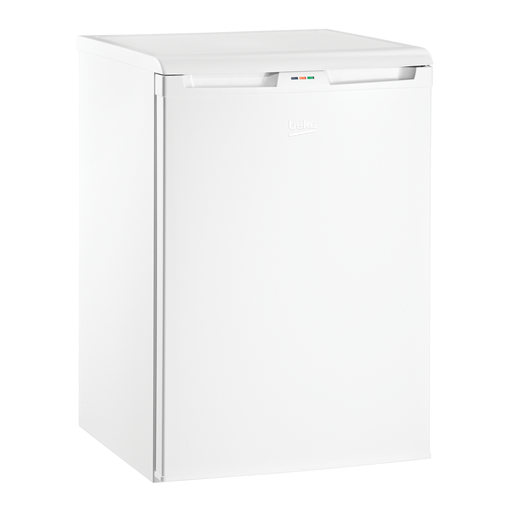
Why this product suits the profile: This freestanding table-top freezer offers 95 litres of usable capacity and is 84 cm high, making it suitable for smaller households or as an additional freezer.
The capacity is clearly stated. According to the product description, MinFrost reduces ice formation, while two drawers and a compartment with a transparent flap make it easier to see what is inside.
37 dB noise level, reversible door hinge and 95-litre capacity.
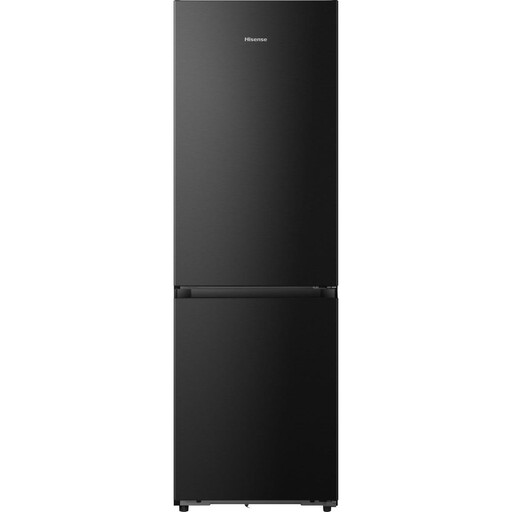
Why this product suits the profile: This fridge freezer combines 330 litres of total capacity with NoFrost Plus, a digital temperature display and a specified noise level of 35 dB(A), making it suitable for open-plan kitchens.
NoFrost Plus is clearly listed as a feature. The product description also specifies annual consumption of 165 kWh, energy efficiency class C and a reversible door opening.
115-litre freezer compartment, inverter compressor, Super-Cool function and integrated Wi-Fi control.
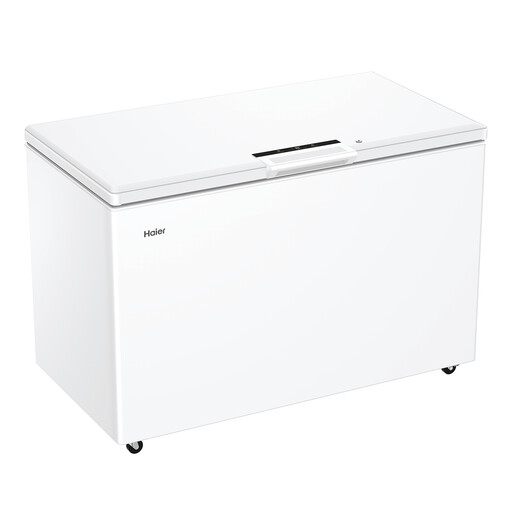
Why this product suits the profile: With a capacity of 418 litres, this chest freezer is aimed at families, households that like to stock up and users who want to store larger quantities.
The dimensions, annual consumption of around 215 kWh and energy efficiency class D are clearly stated. Low Frost reduces ice build-up, but does not automatically eliminate the need for all maintenance.
418 litres of usable capacity, three baskets, LED lighting, fast-freezing function and castors.
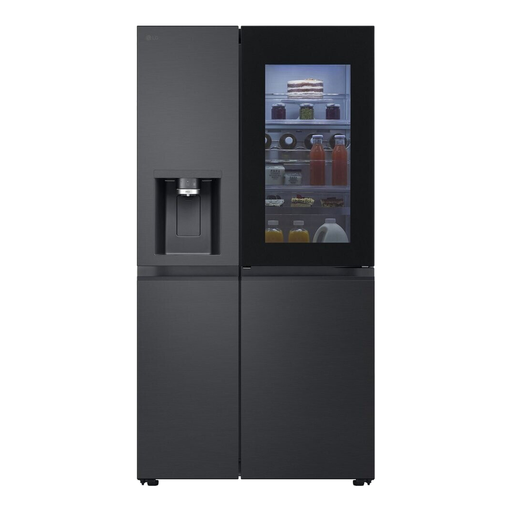
Why this product suits the profile: This side-by-side fridge freezer offers 628 litres of total capacity, including a 221-litre freezer compartment, and is designed for larger households interested in convenient features.
Total NoFrost is listed as a feature. The appliance also has annual consumption of 276 kWh, energy efficiency class D and a noise level of 35 dB.
Water and ice dispenser, Craft Ice function, app control, Express Freeze and inverter compressor.
We have put together a complete, regularly updated list of products that fully meet these strict selection criteria and the safety regulations applicable in the EU.
Before connecting the appliance, make sure it is stable and level. Many models need to stand upright for several hours after transport. Follow the clearances from walls and heat sources specified in the manual, and keep ventilation openings unobstructed.
For an even temperature, do not freeze hot food immediately. Label containers with their contents and date, and avoid leaving the door open frequently or for long periods. A damaged door seal, unusual noises or continuous running may indicate that maintenance is required.
This depends on your shopping habits, household size and how long you plan to store food. Singles often need a smaller model, while families and households that like to stock up can benefit from a large upright freezer or chest freezer. Do not plan solely according to the number of people in your household: consider the usable capacity you regularly need.
There is no universal answer. Compare the energy efficiency class and annual consumption in kWh for appliances with a similar usable capacity. A chest freezer may benefit from its design when it comes to retaining cold air, but it requires more floor space and is less accessible when sorting through stored food.
The service life depends on how the appliance is used, its location, care, door seal and maintenance. Good ventilation, regularly removing dust from accessible areas and following the manufacturer’s instructions can help ensure reliable operation. A fixed service life cannot be guaranteed for all freezers.