
Lieferung heute & morgen

Qualitätsgarantie

Willkommens-Angebote freischalten: KOSTENLOSE Lieferung | Bis zu 80 % RABATT | Kostenlose 30-Tage-JoyPlus-Testphase
App herunterladen
A freezer provides extra storage space for frozen food, meal-prep portions and seasonal produce. The choice ranges from a mini freezer with around 30 litres to a spacious upright freezer with more than 200 litres. Chest freezers with a large top-opening lid are also available for cellars, garages or small businesses.
When buying, however, some common marketing claims can lead to poor decisions. What matters is not individual buzzwords, but the combination of usable capacity, installation location, energy consumption and ease of use.
A stated capacity of, for example, 100 or 200 litres does not always describe the interior space actually available. Drawers, compartments and technical components reduce the usable room. For planning purposes, net capacity should therefore be the key figure.
As a general guide:
A 60-litre freezer takes up little floor space, but offers less flexibility for large packages. A 100-litre freezer or 200-litre freezer, on the other hand, should be checked for door width, transport routes and sufficient ventilation clearance before purchase.
Noise levels are stated in dB(A). A model rated at 36 to 40 dB may be suitable for kitchens, living areas or open-plan layouts. Values around 41 dB are also often practical, but should be considered in relation to the intended installation location.
The description “quiet freezer” on its own is not enough. Also check the airborne acoustical noise emission class, if it is listed in the product data sheet.
A No Frost freezer circulates cold air and reduces the build-up of ice inside. Depending on its design, this can eliminate the need for manual defrosting. Low Frost also produces less ice than a conventional static system, but occasional defrosting may still be necessary.
A fast-freeze function is not a substitute for loading the appliance correctly. It lowers the temperature more sharply for a short period when larger quantities of fresh food are being stored. The permitted freezing capacity in kilograms per 24 hours remains an important factor.
An upright freezer makes use of vertical space and usually has drawers or flaps. This arrangement makes sorting easier and is practical in kitchens, utility rooms or cellars. A chest freezer, by contrast, makes efficient use of floor space, but needs more room to open the lid and can be less organised when storing smaller items.
Measure:
The climate class is particularly important for unheated rooms. Not every appliance is suitable for a cold garage or cellar. For example, operation of the Beko FS127940N in unheated rooms down to -15 °C is specified. However, this does not replace checking the manufacturer’s full specifications.
EU energy efficiency classes range from A to G. Class E is common among freezers, but on its own it says nothing about the annual running costs. You should therefore compare the stated annual consumption in kWh and multiply it by your current electricity tariff.
A larger appliance may consume more energy overall despite having a similar efficiency rating. An energy-efficient freezer should therefore match the amount of food you actually need to store. A large appliance that is only partly filled is not automatically more economical.
A 4-star freezer is designed for the long-term storage of frozen food. The star rating describes the temperature that can be reached and the storage capability, but not the quality or shelf life of individual foods. Always follow the instructions on the packaging.
Freezing capacity, storage time during a power cut and a temperature warning are also relevant. These details are particularly useful for households that freeze larger quantities at once.
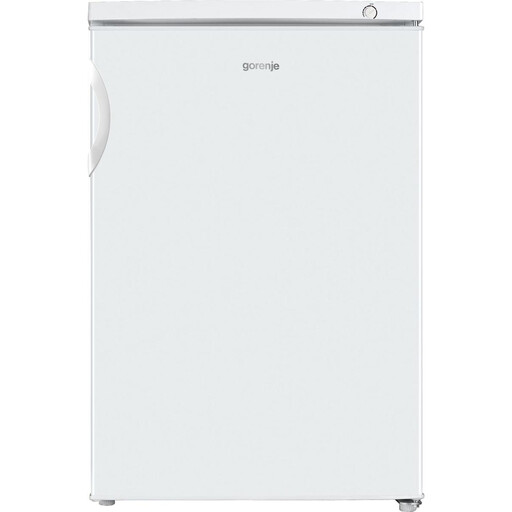
Why this product suits this profile: This compact upright freezer offers 85 litres of net capacity and is suitable for smaller households or as an additional appliance.
The three transparent drawers keep the interior organised. The product details state an annual consumption of 131 kWh and energy efficiency class D.
4-star rating, EcoMode, freezing capacity of 4 kg per 24 hours and reversible door hinge.
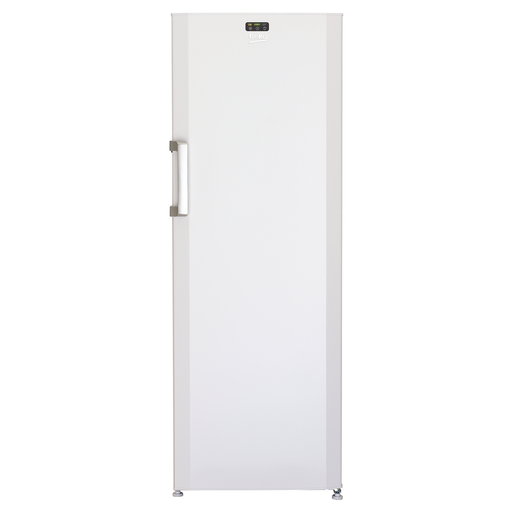
Why this product suits this profile: This large freezer is aimed at families and households that regularly buy food in bulk.
The capacity is stated as net capacity. MinFrost can reduce ice build-up, but according to the product details it does not completely eliminate the need for manual defrosting.
244 litres of net capacity, five drawers, two flaps, fast-freeze function, temperature alarm and an operating noise level of 36 dB.

Why this product suits this profile: This chest freezer can be switched between cooling and freezing modes as required, making it suitable for homes, garages or small retail outlets.
The 7-stage thermostat control and defrost water drain support controlled use and make cleaning easier.
95-litre capacity, 4-star freezer rating, annual consumption of 165 kWh, 38 dB and removable basket.
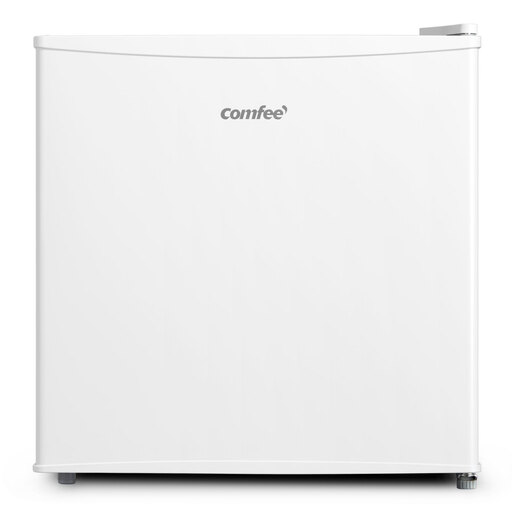
Why this product suits this profile: This compact mini freezer takes up very little space and is designed for small additional quantities, offices or holiday accommodation.
The compact capacity prevents an oversized appliance from being operated half-empty over the long term. The door hinge is reversible.
31-litre capacity, 4-star freezer rating, freezing capacity of up to 2 kg per 24 hours and 41 dB.
We have put together a complete, regularly updated list of products that fully meet these strict selection criteria and the safety regulations applicable in the EU.
Place the freezer on a level, stable surface and maintain the clearances specified in the instructions. Do not cover the ventilation grilles. After transport, the appliance should first be left standing upright in accordance with the manufacturer’s instructions before it is connected to the power supply.
The following measures can help keep energy consumption as low as possible:
A reversible door hinge is particularly useful if the room layout may change in the future. For a chest freezer, a removable basket, castors and a defrost water drain are practical features.
Around 80 to 120 litres may be sufficient for two people if you only store a moderate supply of food. If you regularly batch-cook or buy large packs, you should allow for more spare capacity. The key figure is the actual net capacity, not just the external dimensions.
Running costs depend on annual consumption, the electricity tariff, ambient temperature and how the appliance is used. The calculation is: annual consumption in kWh × electricity price per kWh. You should therefore compare appliances using the energy information on the EU energy label.
No Frost can reduce maintenance, but it is not essential for every household. If the appliance is opened infrequently and maintained regularly, a static or Low Frost model may also be suitable. If you want to avoid manual defrosting as far as possible, look specifically for a No Frost freezer.