
Lieferung heute & morgen

Qualitätsgarantie

Willkommens-Angebote freischalten: KOSTENLOSE Lieferung | Bis zu 80 % RABATT | Kostenlose 30-Tage-JoyPlus-Testphase
App herunterladen
A freezer creates extra storage space for frozen products, supplies and home-frozen food. The range extends from a compact mini freezer to a large upright appliance with several drawers. However, eye-catching advertising claims do not automatically mean a product is the right solution for your household.
Before buying, you should compare the available space, actual usable capacity, energy consumption and ease of use. The following criteria will help you avoid common mistakes.
A large number of litres on the packaging does not always describe the storage space actually available. Drawers, compartments and technical components reduce the usable volume. The key figure is therefore the net capacity.
For singles and couples, a small freezer with around 60 to 100 litres may be sufficient. Families or households that like to stock up often need considerably more space. An appliance with 204 litres or more is better suited to larger quantities, but it also requires a correspondingly larger footprint.
A freezer with NoFrost distributes cold air in such a way that an ice layer normally does not form inside. Depending on the appliance design, this can reduce the need for manual defrosting or eliminate it altogether.
MinFrost, on the other hand, refers to a system that reduces ice formation. This does not necessarily mean that defrosting will no longer be required. If you want to keep maintenance to a minimum, look specifically for the term “NoFrost” and check the information in the product data sheet.
The energy efficiency classes on the current EU label range from A to G. An appliance in class D or E may be suitable for the size and features you want. However, the annual consumption in kilowatt hours is the most important figure for running costs.
A larger class D freezer may use more electricity overall than a smaller class E appliance. Always compare usable capacity and annual consumption together.
An upright freezer generally offers a well-organised interior and can be installed independently of a fridge. A table-top freezer or compact mini freezer fits into smaller kitchens, offices, holiday homes or beneath certain worktops.
Before ordering, check:
A freezer with a reversible door offers greater flexibility when positioning the appliance, particularly in narrow kitchens or cellar rooms.
Drawers make it easier to separate meat, vegetables, baked goods and ready meals. Transparent fronts allow you to see the contents quickly without leaving the door open for long. In larger appliances, XXL drawers or glass shelves are practical for packages of different sizes.
Also look at the freezing capacity in kilograms per 24 hours. This figure shows how much fresh food the appliance can freeze within a day. A fast-freeze function temporarily lowers the temperature further and is particularly useful when storing larger quantities.
The noise level is stated in decibels (dB). A model producing 34 to 40 dB may be worth considering for open-plan living areas, studio flats or offices. However, the perceived noise level also depends on the floor, distance from the wall and operating conditions.
For cellars, garages or unheated utility rooms, you must check the climate class. Not every freezer is suitable for low room temperatures. For example, the Beko FS127940N is specified as suitable for operation in unheated rooms down to -15 °C. The installation instructions provided by the respective manufacturer remain decisive.
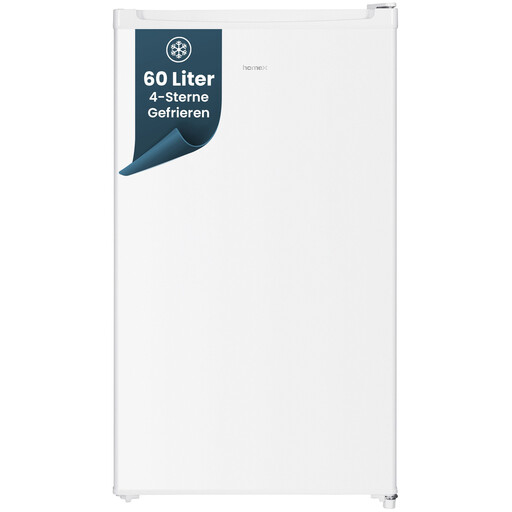
Why this product suits the profile: With 60 litres of usable capacity, this compact freezer is suitable for singles, couples or use as a second appliance in an office or holiday home.
The precise dimensions of 47.5 × 45 × 85 cm make it easier to plan the available space. Two transparent drawers and a shelf help prevent disorganised stacking.
60 litres net capacity, 2.8 kg freezing capacity per 24 hours, reversible door and an operating noise level of 40 dB.
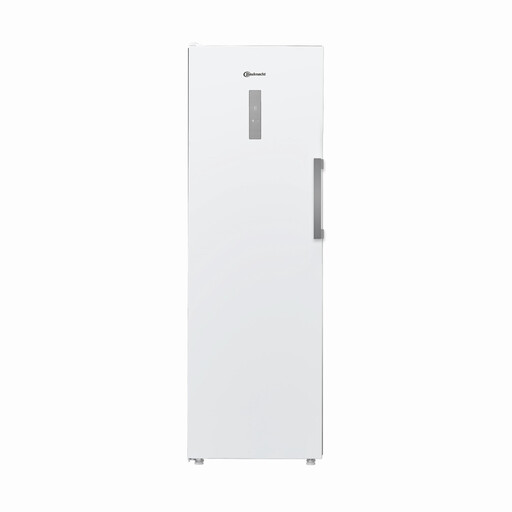
Why this product suits the profile: This appliance combines 286 litres of usable capacity with NoFrost, touch controls and a well-structured interior for regular use.
NoFrost reduces the need for manual defrosting. The stated energy efficiency class D and annual consumption of 200 kWh allow for an objective comparison of running costs.
34 dB(A), 15 kg freezing capacity per 24 hours, five drawers including two XXL boxes and a door-open alarm.
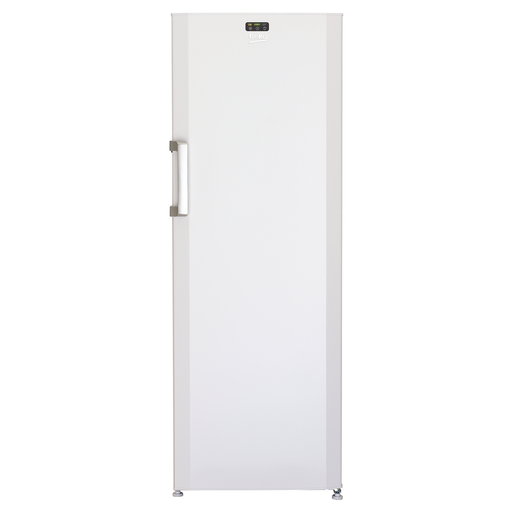
Why this product suits the profile: With 244 litres of usable capacity, five drawers and two flap compartments, this upright appliance is aimed at households that regularly buy food in bulk.
The door is reversible, while a temperature alarm alerts you to a possible rise in temperature. MinFrost can reduce ice formation, but it does not generally replace the need to check the interior.
244 litres net capacity, 36 dB, fast-freeze function and stated suitability for unheated rooms down to -15 °C.
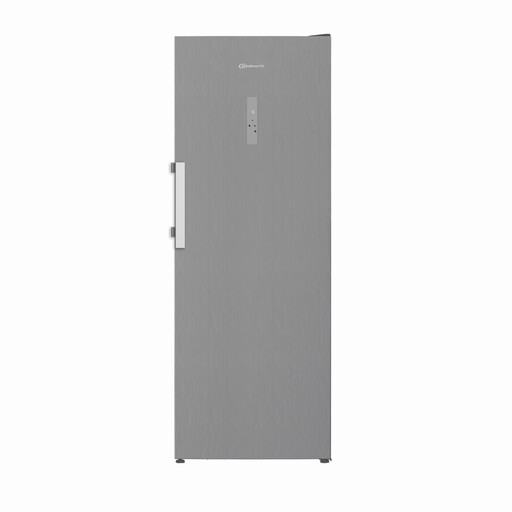
Why this product suits the profile: With a capacity of 404 litres, the Multi-Zone function provides plenty of storage space and allows you to use the appliance as either a freezer or a fridge.
The large capacity is complemented by precise dimensions of approximately 191.2 × 70 × 81.3 cm. Before buying, measure the available space, including the door swing area.
404 litres, NoFrost, 19 kg freezing capacity per 24 hours, 38 dB and six drawers on guide rails.
We have put together a complete, regularly updated list of products that fully meet these strict selection criteria and the safety regulations applicable in the EU.
Place the freezer on a level, stable surface and keep the ventilation openings clear. After transport, the appliance should remain upright for several hours, in accordance with the manufacturer’s instructions, before it is connected. Keep the door open for as short a time as possible, particularly in the event of a power cut.
For models without NoFrost, regular defrosting is necessary once a substantial layer of ice has formed. Do not use sharp objects and disconnect the appliance from the mains beforehand. Food should only be stored once the target temperature has been reached.
Annual consumption depends on the size, energy efficiency class, ambient temperature, usage and condition of the door seal. For a rough estimate of the cost, multiply the stated annual consumption in kWh by your electricity price per kWh. The figure on the EU energy label allows you to compare similar appliances.
A standard service life cannot be guaranteed. It is influenced by factors including frequency of use, ventilation, cleaning, the door seal and compressor operation. Correct installation and keeping the ventilation areas clear can help support trouble-free operation.
For singles, couples or a small kitchen, consider a table-top freezer, a 60- to 95-litre upright model or a mini freezer. If you also need refrigerated storage, a compact fridge freezer may be worth considering. The key factors are the available space, usable capacity and annual consumption.