
Lieferung heute & morgen

Qualitätsgarantie

Willkommens-Angebote freischalten: KOSTENLOSE Lieferung | Bis zu 80 % RABATT | Kostenlose 30-Tage-JoyPlus-Testphase
App herunterladen
Anyone looking to buy a freezer will usually compare capacity and price first. However, these details alone do not show whether an appliance is right for your home, family or chosen location. Noise level, climate class, energy consumption, interior layout and the amount of day-to-day maintenance required are also important factors.
A 300-litre freezer requires significantly more floor space and height than a compact model. If the interior is only partly used, the extra space may not justify the additional energy consumption or the room it takes up. For singles or couples, a mini freezer with a capacity of 31 to 85 litres may be sufficient. Families or households that keep larger food stocks, on the other hand, can benefit from around 200 to 300 litres.
Look at the net capacity, not just the gross figures. Drawers, shelves and technical compartments reduce the storage space that is actually available.
A No Frost freezer circulates cold air and reduces or prevents ice from forming inside the appliance. With Total No Frost, manual defrosting is normally not required. Low Frost or MinFrost reduces ice formation, but does not completely eliminate the need for occasional cleaning and defrosting.
If you want to keep maintenance to a minimum, check the specific defrosting system stated for the appliance. A cheaper Low Frost model may be a sensible choice if you are happy to defrost it occasionally.
A quiet freezer rated at 34 to 40 dB is generally better suited to open-plan kitchens or adjoining living areas. However, the perceived noise also depends on the floor, the distance from the wall and the compressor’s operating sounds. If the appliance is installed in a garage, the permitted ambient temperature is also important. Not every freezer operates reliably in an unheated room.
A freestanding freezer usually offers a well-organised layout with drawers and compartments. On many models, the door can be reversed, which is useful in narrow kitchens or alcoves. A chest freezer uses the floor area differently: it often accommodates bulky food, but requires you to reach down from above and needs enough clearance to open the lid.
For small kitchens, offices or holiday homes, a mini freezer or under-counter freezer may be suitable. Before ordering, measure the width, depth and height, as well as the clearance required from walls and other heat sources. You should also plan the route through doors and stairwells for delivery.
The following sizes can serve as a general guide:
Transparent drawers make it easier to keep track of your supplies. Flaps and removable shelves can provide greater flexibility for large packages. Also check the stated freezing capacity in kilograms per 24 hours if you regularly freeze fresh food.
The EU energy label rates household appliances on a scale from A to G. Also compare the stated annual consumption in kilowatt hours, as a larger appliance may use more electricity despite having a similar efficiency rating. For a simple cost estimate, multiply the annual consumption by your electricity price per kilowatt hour.
The climate class indicates the ambient temperatures for which the appliance is designed. A freezer for the garage should be explicitly suitable for unheated rooms. Several of the models featured here are stated to operate at ambient temperatures down to -15 °C. This does not replace checking the relevant product datasheet and installation instructions.
The following recommendations group specific models according to different requirements. The details are based on the technical specifications provided by the manufacturer or stated in the relevant product listing.

Why this product suits this profile: With 60 litres, three compartments and a compact height of 84.5 cm, this appliance is suitable for singles, couples, offices or as an additional appliance under or beside a worktop.
Its clearly limited capacity prevents you from allocating unnecessary floor space to unused freezer storage. The reversible door allows for flexible positioning.
4-star freezing performance, three storage compartments, adjustable thermostat and freezing capacity of up to 6 kg per 24 hours.

Why this product suits this profile: This freestanding freezer combines 301 litres of usable space with Total No Frost, electronic controls and the option to use it as a fridge.
The stated No Frost system reduces maintenance. Before buying, however, check that the 190 cm height and 74.2 cm depth are suitable for the installation location.
Energy efficiency class C, around 36 to 37 dB, four drawers, LED lighting and Instaswitch function.

Why this product suits this profile: This model is aimed at families and users who regularly freeze larger quantities and may want to install it in a garage, cellar or unheated adjoining room.
The manufacturer’s stated suitability for use down to -15 °C addresses cold installation locations. Nevertheless, check the climate class and ensure adequate ventilation as specified in the instructions.
286 litres of usable capacity, No Frost, Fast Freeze, digital temperature control, 34 dB and five drawers or compartments.
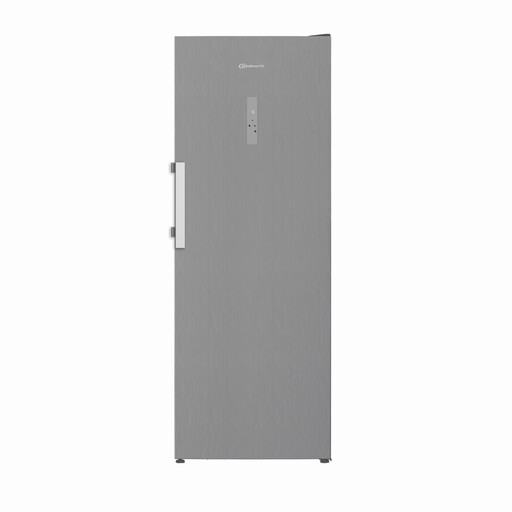
Why this product suits this profile: With a capacity of 404 litres and freezing performance of 19 kg per 24 hours, this appliance is designed for households storing larger shops, home-cooked meals or seasonal supplies.
The six pull-out drawers make it easier to access the large interior. Because the appliance is around 191 cm high and 81.3 cm deep, the installation space must be checked carefully.
No Frost, energy efficiency class D, Multi-Zone conversion between freezer and fridge operation, Fast Freeze and HomeWhiz connectivity.
We have put together a complete, regularly updated list of products that fully meet these strict selection criteria and the safety regulations applicable in the EU.
Place the freezer on a level, stable surface and leave the ventilation clearances specified in the instructions unobstructed. After transport, the appliance should generally be left standing upright for the period specified by the manufacturer before it is connected. For many appliances, the ideal storage temperature is around -18 °C; the operating instructions take precedence.
A fast-freezing function is particularly useful when adding large quantities of fresh food at once. It should not be left on permanently, as it can increase energy consumption. In the event of a power cut, keep the door closed wherever possible so that the cold is retained for longer.
For one person or a couple, 60 to 120 litres may be sufficient. Families often choose 200 to 300 litres, depending on their shopping habits and how much food they store. The actual usable capacity is what matters, not just the appliance’s external size.
This depends on the climate class and the ambient temperature specified by the manufacturer. Some appliances are designed for unheated rooms down to -15 °C. An ordinary freezer without this specification should not simply be operated in a cold garage.
Multiply the annual consumption in kWh by your electricity tariff. An appliance using 160 kWh per year would cost around 56 Euro annually at an assumed tariff of 0.35 Euro per kWh. The actual amount depends on your tariff and how the appliance is used.