
Lieferung heute & morgen

Qualitätsgarantie

Willkommens-Angebote freischalten: KOSTENLOSE Lieferung | Bis zu 80 % RABATT | Kostenlose 30-Tage-JoyPlus-Testphase
App herunterladen
A freezer provides extra storage space for frozen food, prepared meals or larger grocery shops. The choice ranges from compact mini models and classic upright freezers to spacious chest freezers. However, eye-catching advertising claims do not automatically mean a solution is right for you.
Typical poor purchasing decisions come down to three points: a generous gross capacity says little about the space you can actually use, a low noise rating is assessed without comparing it with the installation location, and “No Frost” is treated as meaning completely maintenance-free. If you also fail to consider room temperature, door opening and the interior layout, you may later find that the appliance is inconvenient or technically unsuitable where it has been installed.
An upright freestanding freezer is usually easier to organise. Drawers or compartments keep meat, vegetables and ready meals separate. A freezer with drawers is therefore particularly suitable for households that regularly access different types of food.
The capacity should match your actual needs:
Net capacity, external dimensions and the interior layout are the key considerations. Before buying, check the door or lid opening, stairs, passageways and the amount of floor space required.
A No Frost freezer circulates cold air and reduces the build-up of ice inside the appliance. This can reduce the need for manual defrosting. With static-cooling chest freezers, regular defrosting is still usually necessary once a thicker layer of ice has formed.
A fast-freeze function is useful when freezing larger quantities of fresh food at once. However, it does not replace proper packaging or compliance with the maximum freezing capacity per 24 hours.
A freezer with a temperature alarm can alert you in the event of a power cut, a door that has not been fully closed or a rising internal temperature. The alarm is a monitoring aid, not a substitute for correct installation and regular checks that the appliance is working properly.
The EU energy label ranges from A to G. For running costs, the stated annual consumption in kilowatt hours is more informative than the energy rating alone. An energy-efficient freezer should therefore be assessed based on annual consumption, capacity and your usage habits.
Noise level in decibels is also relevant. An appliance producing around 35 to 40 dB may be better suited to living areas, kitchens or utility rooms than a louder model. For a cellar or garage, climate class and the permitted ambient temperature are also important. Not every appliance is suitable for unheated rooms. Information such as “up to -15 °C ambient temperature” should always be checked against the product description and instruction manual.
The following selection groups specific models according to space requirements and intended use. Technical details are based on the product data provided.
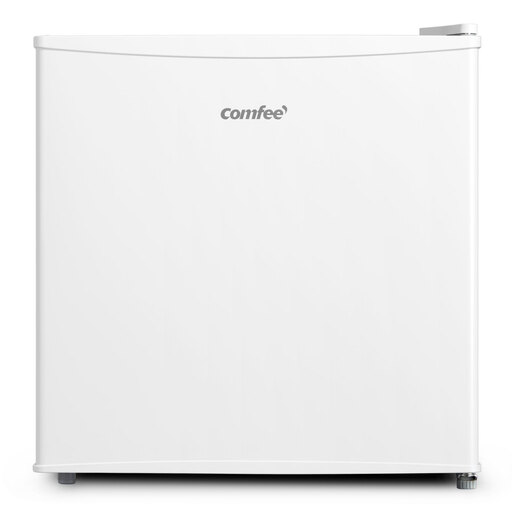
Why this product suits this profile: This compact freezer takes up very little floor space, making it suitable for small kitchens, offices or as an additional solution for individual frozen foods.
The 31-litre capacity clearly shows how much storage space is available. The reversible door and adjustable feet make it easier to adapt the appliance to its intended position.
31 litres of usable capacity, 4-star freezing performance, reversible door hinge and a stated noise level of 41 dB.
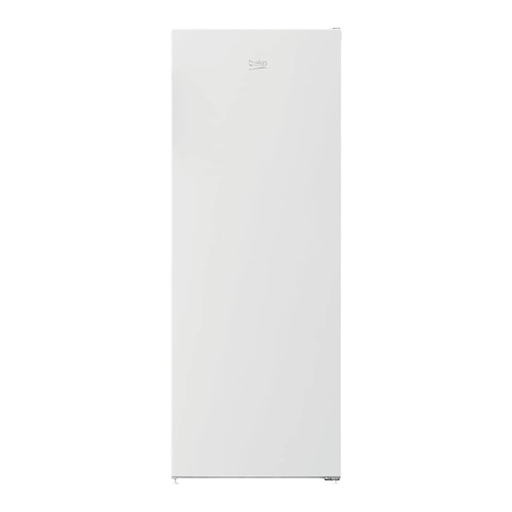
Why this product suits this profile: The upright design combines 177 litres of net capacity with a clear layout, making it suitable for families, couples or as a second appliance in the utility room.
No Frost reduces the need for manual defrosting. A temperature alarm indicates possible temperature deviations, while the reversible door hinge makes planning the installation easier.
177 litres of net capacity, 3 drawers, 2 compartments, Fast Freeze function, 40 dB and energy efficiency class E.

Why this product suits this profile: This model is designed for users who want to combine ample storage space, organised compartments and low noise levels in an upright freezer.
The 4 drawers prevent difficult-to-access stacking. Total No Frost reduces ice formation, while the door alarm and LED display make everyday monitoring easier.
301 litres, energy efficiency class C, approximately 36 to 37 dB, Total No Frost and switchable use as either a fridge or freezer according to the product information.
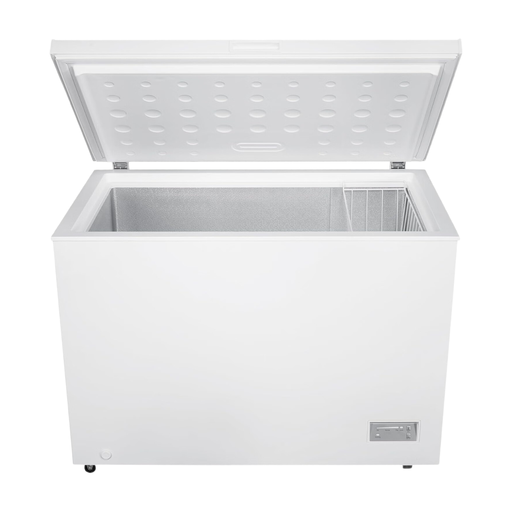
Why this product suits this profile: This chest freezer is designed for larger food supplies, families and installation in a cellar, garage or utility room.
The large net capacity is clearly stated. A basket provides separate storage for smaller products, while the temperature alarm and LED display make monitoring easier.
308 litres, 4-star freezing class, 16 kg freezing capacity per 24 hours, 40 dB and four transport wheels.
We have put together a complete, regularly updated list of products that fully meet these strict selection criteria and the safety regulations applicable in the EU.
Before delivery, check whether the appliance will fit through doors, stairwells or lifts. The following points are important at the installation location:
This depends on the size of your household, your shopping habits and the refrigeration appliance you already have. For occasional additional storage, 30 to 100 litres may be sufficient. Families who like to keep substantial supplies often choose 150 to 300 litres. If you regularly freeze larger quantities, you may want to consider a chest freezer with a capacity of more than 300 litres.
Not every model is. Climate class and the minimum and maximum ambient temperatures specified by the manufacturer are the decisive factors. In particular, for unheated rooms, you must check whether the freezer is approved for the temperatures expected there. You should also consider humidity, sufficient ventilation and a power connection protected from frost.
For a rough estimate, multiply the annual consumption in kilowatt hours by your electricity tariff. Example: with annual consumption of 160 kWh and a rate of 0.35 euros per kWh, the calculated cost is 56 euros per year. Actual consumption may vary depending on room temperature, how full the appliance is, how often the door is opened, ice build-up and the appliance settings. Models should therefore always be compared based on their stated annual consumption, rather than the energy efficiency class alone.