What should you look for when buying?
Existing freezer compartment
A good fit if: There’s room for your planned portions of carrots as well as your other frozen food.
The trade-off: There may not be enough room for larger freezing sessions.
Compact upright freezer
A good fit if: You want to store individual portions separately and take them out independently more often.
The trade-off: The limited usable capacity may not be enough for large batches. Check the annual energy consumption of smaller appliances too.
Larger upright freezer
A good fit if: You regularly store larger quantities and other frozen food, as well as individual portions of carrots.
The trade-off: More capacity takes up more floor space. The Verbraucherzentrale recommends choosing an appliance size that suits your needs.
Chest freezer
A good fit if: Storing large quantities and having enough floor space matter more to you than being able to reach lots of individual portions easily.
The trade-off: You access it from the top. Baskets and labels can help you keep individual portions organised.
The main things to consider are how easily you can reach individual portions, batch size, ongoing electricity costs and available space. The Verbraucherzentrale recommends choosing a capacity to suit your needs; the European Commission says the EU energy label includes information such as energy consumption and usable volume.
| Priority |
What to check when buying |
Who it matters most to |
| Finding individual portions |
Check that the drawer layout and internal dimensions suit the containers you plan to use; label packages with their contents, quantity and date. |
If you take out carrots for meals at different times, you’ll want to find individual labelled portions without searching through the rest of your frozen food for too long. Around 36% of consumers put quick access to individual portions first. |
| Freezing larger quantities |
Compare the amount you plan to freeze in each batch with the freezing capacity in kg/24 h and the usable capacity you need. |
If you often freeze a large batch of vegetables at once, the appliance needs enough room for that as well as your other frozen food. Around 29% of consumers prioritise batch size when buying. |
| Keeping electricity use down |
Compare the annual energy consumption in kWh and usable capacity of the specific models you’re considering; the energy efficiency class alone isn’t enough to make the comparison. |
If you plan to run an additional appliance all the time, you’ll want to avoid unnecessary energy use from capacity you don’t need. Around 21% of consumers prioritise ongoing energy consumption. |
| Making room for it |
Measure the route for getting it into place, the appliance dimensions and the space needed with the door open. If it’s going in a cold room, check the operating ambient temperature approved for the specific model. |
If there’s limited space in your kitchen, cellar or garage, the appliance needs to fit where you plan to put it and have room to open. Around 14% of consumers put available space first. |
Freezers at Joybuy
The range includes compact and larger upright freezers, as well as chest freezers to suit different quantities and ways of accessing your frozen food.
 No image available
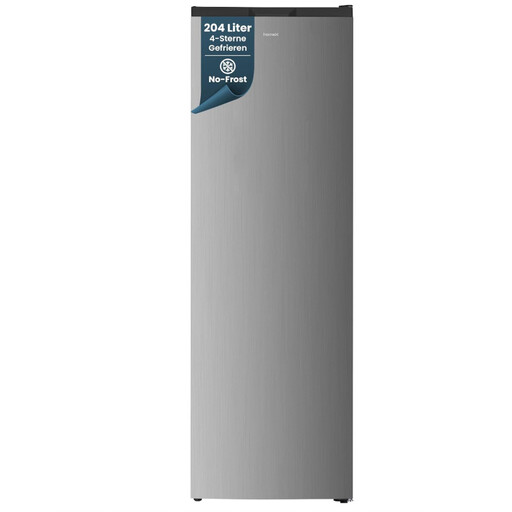
homeX FSN2041E-S, 204 l, NoFrost, silver
For households looking for a larger freestanding freezer for portions of carrots and other frozen food.
204 l; NoFrost; Super Freeze; 39 dB; energy efficiency class E.
View at Joybuy
 No image available
COMFEE' RCU40WH2(E), mini freezer, 31 l
For smaller amounts to freeze, if a mini freezer suits your needs.
31 l; 4-star freezer compartment; reversible door; 147 kWh/year; energy efficiency class E.
View at Joybuy
 No image available
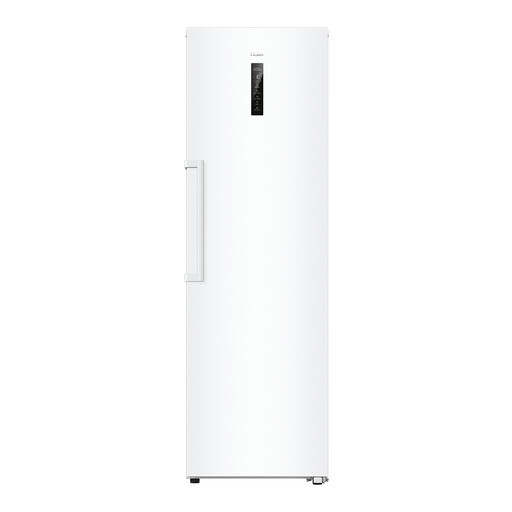
Haier H4F306WCH1 Up 60 Series 7, 301 l
For households planning extra storage for larger batches of carrots and other frozen food.
301 l; Total NoFrost; four drawers; energy efficiency class C.
View at Joybuy
 No image available
Exquisit chest freezer, 142 l, 4-star freezer compartment
For extra storage, if a chest freezer suits your available space and you’re happy to access it from the top.
142 l; 4-star freezer compartment; electronic temperature control with LED display; fast-freeze function; reversible door; castors.
If you often take out individual portions, consider how they’ll be arranged in the removable basket.
View at Joybuy
 No image available
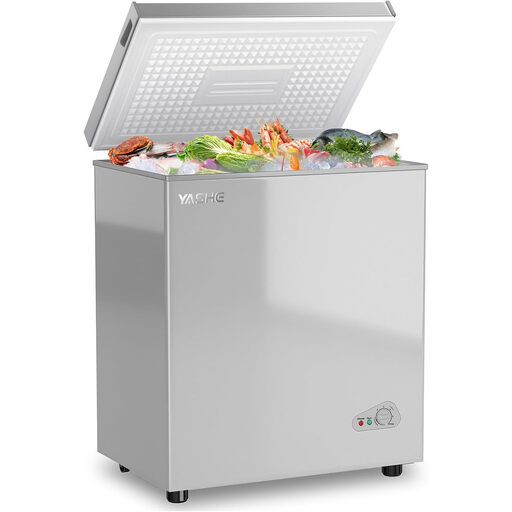
YASHE BC-150Q-EU, chest freezer, 150 l
For extra freezer space, if you can keep individual portions neatly organised in the removable baskets.
150 l; two removable baskets; six temperature settings.
If you often reach for individual portions of carrots, consider how they’ll be arranged in the baskets.
View at Joybuy
Frequently asked questions
How should I prepare blanched carrots for meals at different times?
Divide the blanched carrots into individual portions suitable for freezing, then label each package with its contents, quantity and date. The Federal Centre for Nutrition recommends measuring out the amounts you need and freezing them in portions.
Do I need to defrost frozen carrots before cooking?
According to the Verbraucherzentrale, vegetables can go straight into a pan or microwave to cook. This is a food preparation tip, not a performance guarantee for a particular freezer.
How do I compare the energy consumption of freezers?
Compare the stated annual energy consumption in kWh and the usable capacity of the specific models. The European Commission lists both as information on the EU energy label; your actual energy use may differ from a standardised label figure.
What information is shown on the EU energy label for freezers?
For household refrigerators and freezers covered by the rules, the EU label uses a scale from A to G and includes information such as the energy efficiency class, annual energy consumption and usable volume. The labelling requirements apply to suppliers and retailers; they don’t set a minimum class that shoppers must meet.
What should I do with an old freezer?
The German Environment Agency explains that local collection points generally accept old electrical appliances free of charge. Before arranging a delivery, check with the relevant supplier whether they’ll take away your old appliance and how it needs to be prepared.


