What should you look for when choosing?
Existing four-star freezer compartment
A good fit if: there’s enough room for the portions you plan to freeze and you want to freeze fresh bread rolls.
The trade-off: you won’t need another appliance, but you’ll need to make good use of the limited space.
Mini freezer or freezer box
A good fit if: you need a dedicated space for regular portions but have limited room for an appliance.
The trade-off: compact external dimensions alone don’t tell you whether the internal capacity or energy consumption will suit you.
Upright freezer with drawers
A good fit if: you regularly need to store other food as well as bread rolls, kept separate and within easy reach.
The trade-off: more freezer space takes up more room; an oversized appliance could use unnecessary electricity.
Chest freezer
A good fit if: you regularly freeze larger quantities of different foods and have enough space.
The trade-off: the extra capacity isn’t automatically worthwhile if you only need to store a few bread rolls at a time.
The EU energy label shows annual energy consumption in kWh. The Verbraucherzentrale also recommends choosing a capacity that matches your actual needs.
| What you need from a freezer |
What to check before you buy |
Who is this most important to? |
| Take out individual bread rolls |
Four-star freezer compartment and operation at −18 °C; interior layout for storing portions separately. |
If I eat at different times, I want to take out only the bread rolls I need without having to search for them. Around 36% of consumers prioritise being able to take out individual items quickly. |
| Match capacity to the available space |
Compare usable capacity and external dimensions; check that the portions will fit the interior layout. |
When space is limited, I want enough room for the portions I plan to freeze without having to install an oversized appliance. Around 29% of consumers mainly want a good balance between freezer capacity and the space it takes up. |
| Keep annual energy consumption down |
Compare kWh per year for appliances of a similar size; take your freezer space requirements into account. |
If I’m running an additional appliance, I want to be able to compare its stated annual energy consumption with similar-sized models. Around 21% of consumers mainly want to keep electricity use down. |
| Understand how much defrosting is involved |
Check the defrosting method for the specific model; don’t assume SmartFrost means NoFrost. |
I want to minimise manual defrosting, so I check the defrosting method for the specific model. Around 14% of consumers prioritise low-maintenance appliances. |
Freezers for your needs at Joybuy
The following Joybuy products include compact upright freezers, a chest freezer and larger upright models. For each model, check whether its specific freezer compartment is suitable for freezing fresh bread rolls; look for a four-star rating and operation at −18 °C.
 No image available
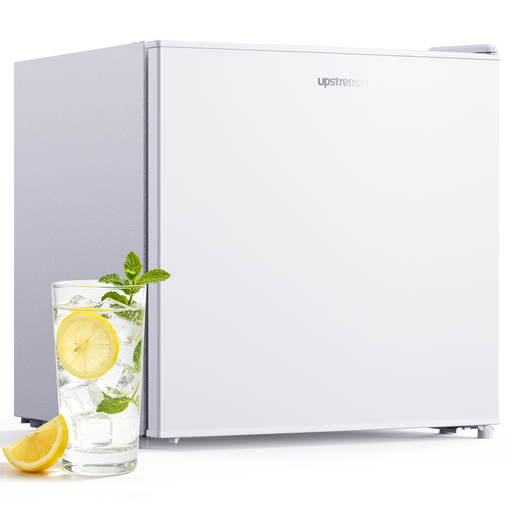
Upstreman UF35 mini freezer, 35 l
Its compact size could suit a space-limited home; before freezing fresh bread rolls, check for a four-star rating and operation at −18 °C.
The product details list a capacity of 35 l, dimensions of 47.5 × 44.2 × 48.8 cm and a temperature range of −21 °C to −8 °C. A removable interior shelf is also listed.
View at Joybuy
 No image available
AUCMA chest freezer, 95 l, convertible
The larger capacity could be useful if you need room for other food as well as bread rolls. Before freezing fresh food, check that the specific appliance has a four-star rating.
The product details list a capacity of 95 l, energy class E, a removable basket and a defrost drain. The model is described as switchable between fridge and freezer modes.
View at Joybuy
 No image available
COMFEE' RCU40WH2(E) mini freezer, 31 l
The 31 l size is an option for storing regular portions when space is limited. Before freezing fresh bread rolls, check for a four-star rating and the recommended temperature setting.
Annual energy consumption is listed as 147 kWh. The product details also list a reversible door and adjustable feet.
View at Joybuy
 No image available
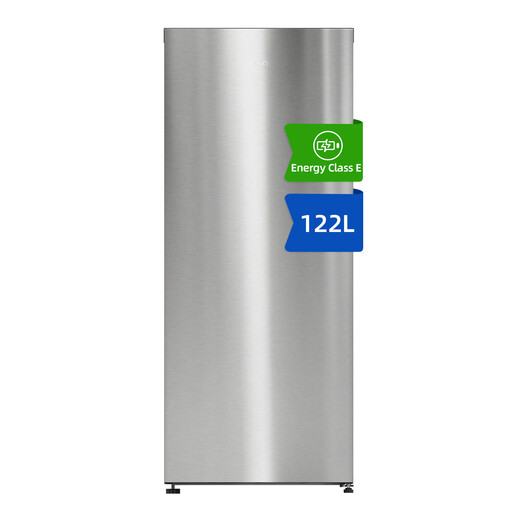
CHiQ JR122WSD freezer, 122 l, No-Frost
This larger model could suit you if you regularly need extra freezer space. For fresh bread rolls, check for a four-star rating and operation at −18 °C.
The product details list a capacity of 122 l, No-Frost, Multi-Airflow and 39 dB. Energy class E is listed.
View at Joybuy
 No image available
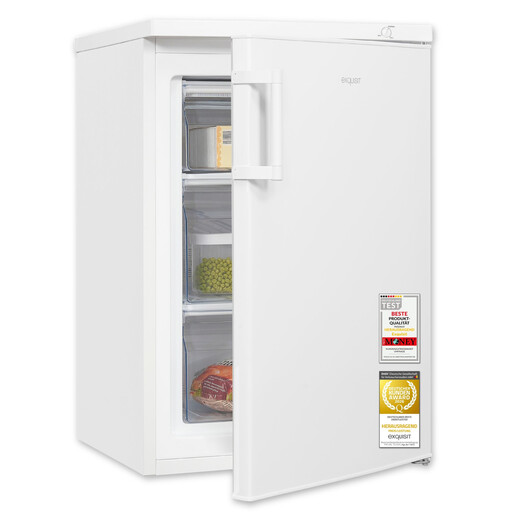
Exquisit GS581-H-010E freezer, 85 l
Three drawers let you store portions separately. Before freezing fresh bread rolls, check that the specific model has a four-star rating.
The product details list a capacity of 85 l, three transparent drawers and a freezing capacity of 4 kg per 24 hours. Manual defrosting is required if frost exceeds 5 mm.
View at Joybuy
Frequently asked questions
Do I need a separate freezer for bread rolls?
No, not if your existing four-star freezer compartment is suitable for freezing and has enough room for the portions you plan to store. The Verbraucherzentrale recommends choosing freezer capacity to suit your needs and warns against appliances that are unnecessarily large.
How should I prepare bread rolls for different mealtimes?
Freeze the bread rolls you need in portions and label the container with its contents, quantity and storage date. The Verbraucherzentrale recommends this labelling. You can defrost baked goods as needed or heat them straight from frozen in the oven.
How can I check a freezer’s energy consumption?
Compare the annual energy consumption in kWh on the EU energy label, ideally for appliances of a similar size. The Verbraucherzentrale notes that an oversized appliance could use unnecessary electricity; the stated figure isn’t a measurement of what it will use in your home.
Do I need to defrost a mini freezer?
It depends on the defrosting method of the specific model. The Exquisit GB60-150E weiss is listed as requiring manual defrosting; Liebherr describes SmartFrost on the Fe 1003 Pure as reducing frost build-up, not as NoFrost.
Which energy label applies to freezers?
The EU energy label applies to the freezers it covers. The European Commission has used the A to G scale since 1 March 2021; the label includes information such as annual energy consumption and capacity. According to the European Commission, the label must also be visible when products are sold online.


