Families with larger quantities to freeze
If you regularly freeze other foods as well as rolls, you’ll need enough usable space that’s easy to organise. The Verbraucherzentrale recommends choosing an appliance size to suit your actual needs.


You don’t need an extra appliance to freeze rolls for a family meal if your existing freezer compartment is suitable and has enough room for the portions. A **** compartment can freeze fresh food; if you regularly store larger quantities, a compact or larger freezer, or a chest freezer, may be worth considering. The key factors are the capacity you need, the space available and the annual energy consumption of the specific model.
If you regularly freeze other foods as well as rolls, you’ll need enough usable space that’s easy to organise. The Verbraucherzentrale recommends choosing an appliance size to suit your actual needs.
If you’re only preparing food for the occasional meal, first check whether your existing compartment is suitable for freezing fresh food and has enough room. The BZfE recommends a **** compartment for this.
If you’re weighing up energy use and size, compare the stated annual consumption of specific appliances with their freezer capacity, rather than focusing only on external dimensions or appliance type.
First check whether your existing compartment can freeze fresh food and has enough room for the portions you need. Only if you need extra freezer space should you compare the usable capacity, installation dimensions and kWh/year of suitable appliances.
| What you need | What to look for | Who should consider this? |
|---|---|---|
| Room for frozen food | Compare the usable capacity in litres, the internal layout and the external dimensions with the quantities you actually plan to store. | If I regularly freeze other family favourites as well as rolls, I need enough usable space. Around 36% of consumers prioritise storage space. |
| Do I need another appliance? | Check the star rating and available space in your existing compartment; according to the BZfE, a **** compartment can freeze fresh food. | If I only freeze rolls for occasional meals, I’d like to use my existing freezer space first. Around 29% of consumers mainly want to know whether they need an extra appliance. |
| Annual energy consumption | Compare the kWh/year and freezer capacity of suitable models; you’ll also need your own electricity tariff to calculate the cost in euros. | If I’m going to run an appliance all the time, I want to assess its energy use in relation to the space I need. Around 21% of consumers focus mainly on ongoing electricity costs. |
| Defrosting and access | Check whether the specific model has NoFrost, how its drawers are arranged and how much room you need to open the door. | If I want to take out individual portions and spend as little time as possible defrosting, ease of use matters. Around 14% of consumers prioritise this convenience. |
A good fit if: The compartment is suitable for fresh food and has room for your portions of rolls.
The trade-off: You won’t need another appliance, but the space you use won’t be available for other frozen food.
A good fit if: You regularly need a little extra freezer space but have limited room for an appliance.
The trade-off: A compact design doesn’t automatically mean low annual energy use; compare the figures for the specific model.
A good fit if: You regularly need room for family-sized supplies as well as rolls, and you have space for the appliance.
The trade-off: According to the Verbraucherzentrale, an appliance that’s too large for your needs can use more electricity than necessary.
A good fit if: You need to store larger quantities and have a suitable place for the appliance, and quick access to individual portions is less important.
The trade-off: The Verbraucherzentrale says chest freezers are more energy-efficient than upright freezers; when buying, you should still compare the capacity and kWh/year of specific models.
An oversized freezer can use more electricity than necessary if you don’t need the extra space regularly. The Verbraucherzentrale highlights this point.
First work out how many rolls and what other food you plan to freeze regularly, then compare the quantity with your existing freezer space.
The size of an appliance alone doesn’t tell you how much energy it uses each year.
Compare the kWh/year and usable capacity of the specific models, and choose a size that suits your actual needs.
You’ll also need to allow for the space taken up by the open door. Exquisit gives a depth of 107 cm with the door open for the GS81-040C weiss; this figure applies to this variant only.
Measure the space and the route for bringing the appliance in, and check the door’s opening clearance and the service conditions for the specific model before ordering.
A chest freezer may have an advantage in terms of energy use, but accessing individual portions of rolls calls for a different kind of organisation.
First decide how you’ll take out your frozen food and where the appliance can go. Then compare the capacity and kWh/year of the models you’re considering.
The GS51NAWCV is a larger freestanding model and an example of an appliance for family-sized supplies; the figures refer to this model.
The manufacturer’s details for two Bosch models show differences in size and features; they don’t describe every appliance in the range.
The FNe 1404 Pure is a compact model with NoFrost; the details apply to this appliance.
The GS81-040C weiss is a compact freestanding model. The technical details apply to this version.
These compact, freestanding freezers provide extra storage space and, depending on your needs, can hold portions of rolls as well as other frozen food.
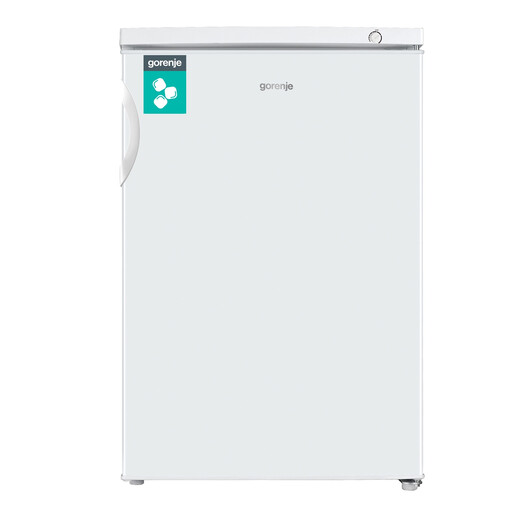 No image available
A 4-star compartment is listed for freezing fresh rolls and providing extra freezer space.
Usable capacity: 85 l.
Energy consumption: 131 kWh/year; energy class D.
Freezing capacity: 4 kg/24 h.
Manual defrosting is required.
 No image available
This compact appliance is rated as a 4-star freezer and may suit smaller portions of rolls.
Capacity: 31 l.
Energy consumption: 147 kWh/year; energy class E.
The door hinge is reversible.
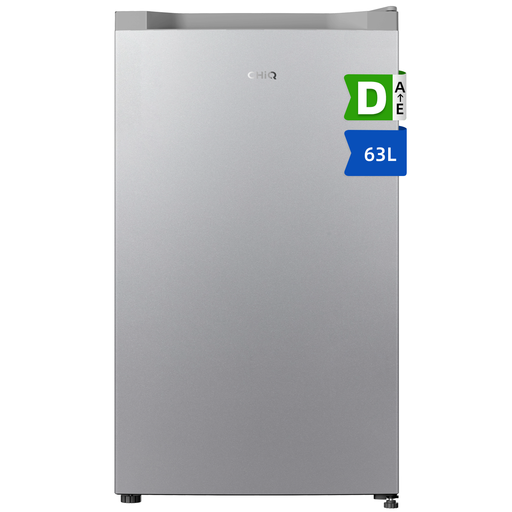 No image available
This 4-star freezer provides extra space for portioned frozen food.
Capacity: 63 l; width: 47 cm.
Energy class D.
Manual defrosting is specified.
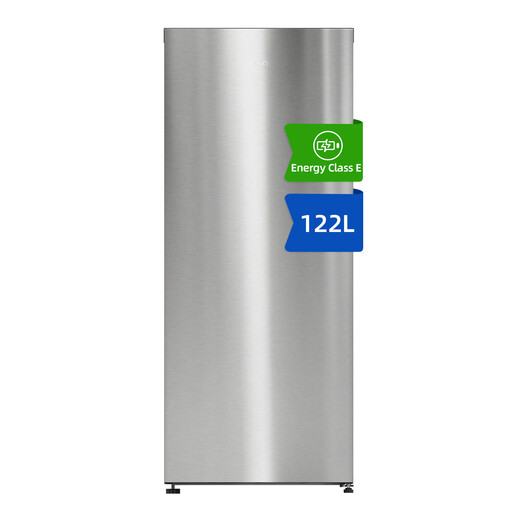 No image available
If you need extra freezer space without manual defrosting, this 4-star model is listed as having No-Frost.
Capacity: 122 l; width: 47,5 cm.
No-Frost and Multi-Airflow are specified.
Energy class E.
 No image available
This appliance is rated as a 4-star freezer and has three separate storage compartments for frozen food.
Capacity: 60 l; three compartments.
The door is reversible.
Yes, as long as the compartment is suitable and has enough room. According to the BZfE, a **** compartment can freeze fresh food; * and ** compartments are for short-term storage only.
Pack the rolls in suitable freezer containers or bags, and label them with the contents and date frozen. The Verbraucherzentrale recommends defrosting only the amount you need; baked goods can be warmed through in the oven.
Measure the space where the appliance will go and the route for bringing it in, and allow for the space needed to open the door. Exquisit lists a depth of 107 cm with the door open for the GS81-040C weiss; don’t assume this figure applies to other models.
Compare the kWh/year and freezer capacity of appliances that suit your needs. The Verbraucherzentrale recommends choosing an appliance size to match your requirements; you’ll also need your electricity tariff to work out the cost in euros.