Households with a large berry harvest
When lots of berries ripen in a short time, you’ll need enough freezer space and a clear area for pre-freezing. The Federal Centre for Nutrition recommends processing ripe fruit as soon as possible.


If you regularly want to take out individual, labelled portions of berries, an upright freezer with drawers is a natural place to start. For larger harvests and enough floor space, a chest freezer could also be an option. Choose the capacity to suit your biggest harvest and the rest of your frozen food, compare the annual energy consumption of specific models and check whether there’s room for a tray to pre-freeze the berries. The Federal Centre for Nutrition recommends pre-freezing and labelling; the German Consumer Advice Centre advises choosing a freezer that’s no larger than you need.
When lots of berries ripen in a short time, you’ll need enough freezer space and a clear area for pre-freezing. The Federal Centre for Nutrition recommends processing ripe fruit as soon as possible.
If you don’t always eat at the same time, it helps to store small portions separately and label containers with their contents, quantity and date. The Federal Centre for Nutrition recommends labelling them to make it easier to see what you have later.
If you need extra freezer space but have little room, make sure the appliance’s external dimensions and opening clearance suit its location. The German Consumer Advice Centre also points out that an oversized appliance can use more electricity than necessary.
A good fit if: You often want to take out individual, labelled portions.
Things to consider: Check whether a tray for pre-freezing will fit in a compartment. The German Consumer Advice Centre notes that chest freezers can generally be more energy-efficient, so compare the energy consumption figures for specific models.
A good fit if: You have larger harvests at once and enough space at home for a chest freezer.
Things to consider: You’ll need to organise small portions yourself using baskets or containers. Compare the usable capacity and annual energy consumption of each model.
A good fit if: Your harvest is modest and there’s enough room for both your frozen food and a tray for pre-freezing.
Things to consider: An additional appliance needs space and runs continuously; a smaller capacity doesn’t automatically mean lower electricity consumption.
The buying considerations below are for people who want to freeze berries from their own garden to eat later. The German Consumer Advice Centre recommends choosing an appliance to suit your needs and comparing its stated annual energy consumption; the Federal Centre for Nutrition recommends pre-freezing and labelling.
| Buying consideration | What to check when buying | Who is this important for? |
|---|---|---|
| Harvest size and pre-freezing space | Compare your largest harvest, existing frozen food and usable capacity; check whether a tray will fit. | When lots of my berries ripen at once, I need room for the harvest and a clear area to pre-freeze them. Around 33% of consumers say harvest size and pre-freezing space are their main considerations. |
| Finding individual portions later | Check the drawers or baskets and how easy they are to access, taking your portion sizes and containers into account. | When I only want to take out a small portion later, I value clear, separate storage. Around 27% of consumers prioritise easy access to individual portions. |
| Energy consumption during continuous use | For appliances of a suitable size, compare the stated consumption in kWh/year. | If the appliance will run outside the berry season too, I want to take its electricity consumption into account when choosing. Around 20% of consumers say running costs are their main consideration. |
| Finding the right place for it | Measure the external dimensions and the space needed to open it; if it will be in a cold room, check the minimum ambient temperature for the specific model. | If there’s only one suitable spot, the appliance needs to fit there with enough room to open it. Around 20% of consumers say the available space is the deciding factor. |
A bigger appliance isn’t automatically the right choice: the German Consumer Advice Centre warns that an oversized freezer can use more electricity than necessary.
Estimate the size of your biggest harvest separately from the freezer space you’ll use all year round. Then compare suitable usable capacities and their stated annual energy consumption.
Beko describes MinFrost on the FSE1175N and FS127940N models as reducing ice build-up, not preventing frost altogether.
Check the defrosting system on the exact model, and don’t assume that reduced ice build-up means you’ll never need to defrost it.
If berries go straight into a large container without pre-freezing, it can be harder to take out individual portions later.
Before you buy, check whether a tray for pre-freezing will fit. The Federal Centre for Nutrition also recommends labelling the containers after transferring the berries, with their contents, quantity and date.
Without separate portions, dividing and packing the berries later can take extra effort.
The FSE1175N and FS127940N are freestanding upright freezers in different sizes.
The FNa 6635 Plus NoFrost is a freestanding upright freezer with drawer access.
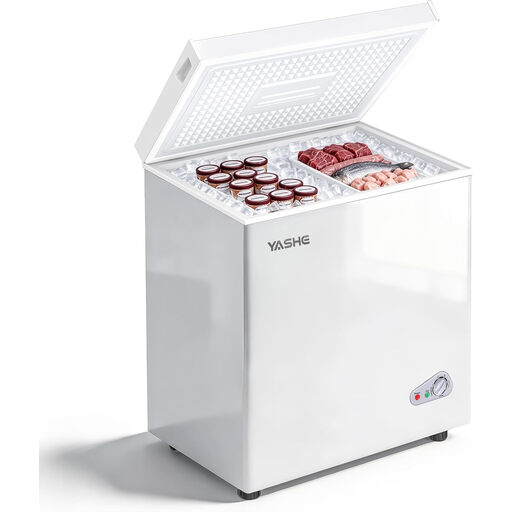
The HCE200C is a freestanding chest freezer with storage accessed from the top.
This selection includes chest freezers for storing harvests, as well as a compact upright freezer with drawers for keeping portions separate.
 No image available
This chest freezer is an option if you want to store a larger harvest separately.
150 l usable capacity; two removable baskets; six temperature settings; Fast-Freeze function; stated annual energy consumption: 157 kWh.
 No image available
The more compact capacity may suit you if you need extra freezer space for smaller harvests; check that the baskets and containers work for the way you organise your portions.
95 l capacity; one removable basket; switches between fridge and freezer modes; energy efficiency class E; stated annual energy consumption: 165 kWh; external dimensions: 550 × 475 × 848 mm.
 No image available
The larger stated capacity could be a good option if you need room for a bigger harvest and other frozen food.
197 l capacity; one removable basket; switches between fridge and freezer modes; energy efficiency class E; stated annual energy consumption: 197 kWh; external dimensions: 816 × 554 × 848 mm.
 No image available
A chest freezer with a wire basket could suit you if you’re storing larger quantities and want to organise the contents in the basket.
141 l usable capacity; FastFreeze; freezing capacity: 8 kg/24 h; stated annual energy consumption: 182 kWh; one wire basket; external dimensions: 606 × 559 × 858 mm. According to the product description, FreezeProtect is suitable for ambient temperatures down to −15 °C.
 No image available
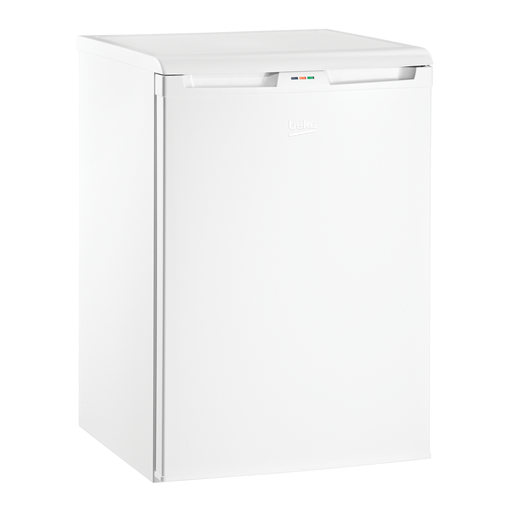
This compact upright freezer with drawers could suit households that want to store individual portions of berries separately.
95 l capacity; two drawers and one compartment with a transparent flap; MinFrost; noise level: 37 dB; energy efficiency class E; dimensions: 54 × 59 × 84 cm.
First, spread the prepared berries out on a tray and pre-freeze them, then transfer them to bags or containers. The Federal Centre for Nutrition recommends noting the contents, quantity and date on the packaging.
As a rule of thumb, the Federal Centre for Nutrition recommends using fruit and vegetables by the next season. This is a guide for planning storage, not a guaranteed shelf life for every individual portion.
No. Freezing alone doesn’t make berries safe to eat raw from a hygiene perspective. The Federal Institute for Risk Assessment warns that frozen berries can cause foodborne infections and recommends that people who want to protect themselves heat them thoroughly before eating. This is not a claim that there is a general legal requirement to cook them.
The EU energy label for freezers shows details including the efficiency class, consumption in kWh/year, capacity and noise level. The German Consumer Advice Centre notes that standardised consumption figures may differ from the energy used where you install the appliance, and that the former plus classes are no longer the current comparison scale for this type of appliance.
In Germany, your statutory rights against the seller are separate from any manufacturer’s guarantee. The German Consumer Advice Centre explains that repair rights applying to cooling appliances such as chest freezers have been in force since 31 July 2026; whether you have a specific claim depends on the fault and the circumstances of the purchase.