You won’t need an extra freezer if your existing compartment has enough room for family-sized portions and pre-freezing. If you regularly have larger harvests, a freezer cabinet makes it easier to access separate portions, while a chest freezer offers one large, uninterrupted storage space. Compare freezing capacity, usable volume, dimensions and annual energy consumption rather than choosing by design alone.
Who might benefit from an additional freezer?
Families with a large berry harvest
If you’re freezing a lot of berries in a short time, consider the freezing capacity for new batches as well as the storage space available. The Verbraucherzentrale and the Federal Centre for Nutrition offer guidance on planning and freezing.
Families who prepare individual dessert portions
If you want to portion berries for different meals, a flat surface for pre-freezing and a well-organised interior make them easier to access later. The Federal Centre for Nutrition recommends freezing berries spaced out on a tray first.
Households with limited space
If you’re considering an additional appliance, first check whether your existing compartment is big enough. When buying a new appliance, consider its external dimensions and the annual energy consumption shown on the energy label, as well as the space available.
What should you look for when choosing one?
First check whether your existing freezer compartment has enough room to pre-freeze and store your harvest. If not, the freezing capacity and volume should suit the size of your harvest, the space available and ongoing energy consumption.
Existing freezer compartment
A good fit if: you’ll still have enough room for family-sized portions and a flat tray once your other food is stored.
The trade-off: You won’t have another appliance running all the time, but space may be tight after a large harvest.
Freezer cabinet
A good fit if: you want to take out portions of berries regularly and the drawers and height suit your household.
The trade-off: The Verbraucherzentrale notes that chest freezers can be more energy-efficient, so compare the consumption of the specific models you’re considering.
Chest freezer
A good fit if: you need one large storage space for big harvests and other supplies, and you have room for a top-opening appliance.
The trade-off: Baskets and labels help you keep smaller portions organised and find them again in the large interior.
| Buying priority |
What to look for |
Who is this particularly important to? |
| Freezing harvests in batches |
Compare the freezing capacity in kg/24 h and usable freezer volume separately with the amount you expect to harvest. |
If a lot of fresh produce comes in at once during a short harvest season, I want to know whether the appliance can handle the batches. Around 36% of consumers prioritising large harvest batches say this is their main concern. |
| Accessing individual portions |
Check that a flat tray for pre-freezing and labelled containers will fit inside. |
For family meals, I want to be able to find and take out individual portions of berries easily. Around 29% of consumers prioritise access to individual portions. |
| Energy consumption |
Compare annual consumption in kWh for appliances with a suitable volume; you can calculate your own costs using your electricity tariff. |
If I’m going to have another appliance running all the time, its stated annual energy consumption matters to me. Around 21% of consumers whose main concern is energy use say this is their priority. |
| Space for the appliance |
Check the external dimensions, delivery route, door opening or lid clearance, and the installation requirements for the specific model. |
If space is limited, I want to know in advance whether the appliance will fit in its intended spot and whether I’ll be able to open it. Around 14% of consumers name available space as their main concern. |
Which buying decisions could cause problems?
-
Choosing the largest capacity you can find
An appliance keeps running even when there’s less food in it after the harvest. An unnecessarily large capacity may therefore use more electricity than you need.
Estimate the size of your typical harvests and the food you already store before comparing volume and annual energy consumption. The Verbraucherzentrale recommends choosing an appliance size that suits your needs.
-
Assuming storage space is the same as space for pre-freezing
Storage space alone isn’t enough if you want to take out berries individually: they first need to be spread out on a flat surface to pre-freeze.
The Federal Centre for Nutrition recommends freezing prepared berries spaced out on a tray, then transferring them to a bag or container. Make sure you have a suitable clear surface for this.
-
Assuming a chest freezer or NoFrost will solve every everyday problem
A chest freezer offers one large storage space, while drawers can make it easier to access individual portions. NoFrost is a convenience feature, not proof that berries are hygienically safe.
Choose a design to suit your harvest size, access needs and available space, and compare the details for the specific model.
-
Assuming frozen berries are automatically germ-free
Deep-freezing does not kill noroviruses. The German Federal Institute for Risk Assessment recommends heating frozen berries thoroughly and evenly before eating them.
Don’t treat frozen berries as germ-free. Follow the German Federal Institute for Risk Assessment’s advice when eating them.
Freezer brands to consider
Bosch
The Series 4 range includes upright freezers with drawers and flexible interiors; the details below relate to the GSN33VWEP model.
- Bosch Home Appliances Germany lists a 225 l capacity, a freezing capacity of 19.0 kg/24 h, NoFrost and 229 kWh/year for the GSN33VWEP.
- These figures apply to this model only. They don’t prove that it’s suitable for berries in general, and they can’t be applied to other Bosch appliances.
Liebherr
The brand’s upright freezers offer a range of convenience features; the FNd 5036 is one example with NoFrost and SuperFrost.
- Liebherr lists a total volume of 238 l and a noise level of 36 dB for the FNd 5036.
- The stated installation temperature of up to −15 °C applies to this model. Check the installation requirements for the room you have in mind.
Haier
Chest freezers offer one large storage space; the HCE420D is an example of a particularly large model.
- Haier Germany lists a capacity of 418 l and external dimensions of 132 × 75 × 89 cm (W × D × H) for the HCE420D.
- Make sure the dimensions and capacity suit your actual needs and the space available.
Exquisit
The range includes compact freezer cabinets and chest freezers for different spaces.
- Exquisit lists a capacity of 87 l, dimensions of 54.5 × 85 × 58 cm and energy consumption of 105.04 kWh/year for the GS81-040C weiss.
- The capacity may be limited for larger harvests; these details apply only to this model, not other appliances from the brand.
Beko
Beko offers upright freezers such as the RFNM200T40WN, a NoFrost model.
- Beko Germany lists a width of 54 cm for this model.
- The model page gives a capacity of 168 l in the heading and 177 l in the technical section. Before buying, check the EU product information sheet for the exact model identifier.
Freezers at Joybuy
The selection below includes a portable cooling and freezing solution, as well as chest freezers and freezer cabinets. Depending on your needs, compare freezing capacity, interior layout and dimensions in particular.
 No image available
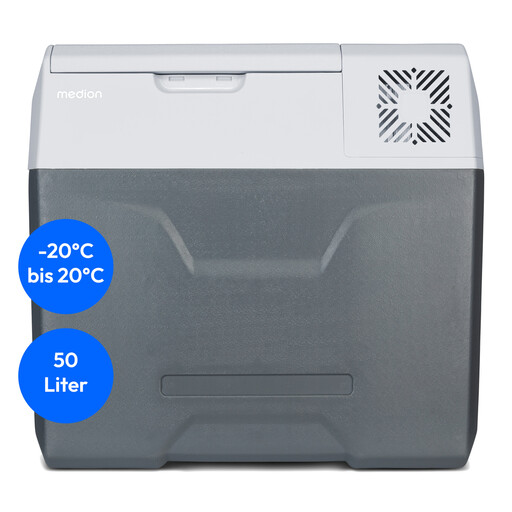
MEDION MD13112 Portable Electric Compressor Cool Box, 50L
This compressor cool box is described as a fridge and freezer; check whether its interior is big enough for the portions of berries you plan to store.
The product description gives a usable volume of 47 l, while the title says 50 L. Before buying, check which figure reflects the available storage space.
The stated temperature range is −20 °C to 20 °C. Power supplies of 230 V, 12 V and 24 V are listed.
View at Joybuy
 No image available
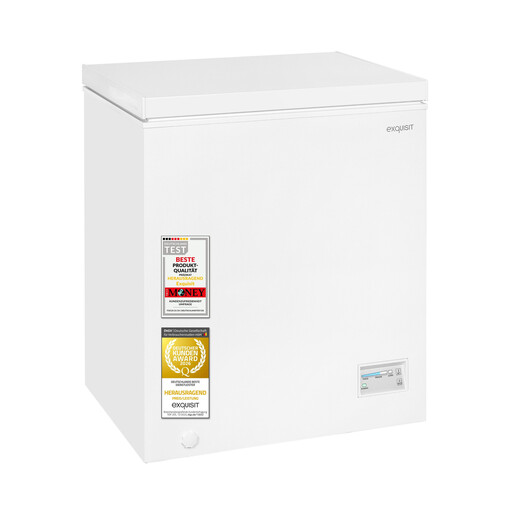
Exquisit Chest Freezer, 142 l
A chest freezer could be a good choice if you need one large storage space for harvests; the removable basket helps you keep things organised.
It has a stated usable volume of 142 l and a freezing capacity of up to 7 kg/24 h. A fast-freeze function is also listed.
Defrosting is manual.
View at Joybuy
 No image available
Exquisit GS581-H-010E Freezer Cabinet, 85 l
A compact freezer cabinet with three drawers could suit separate portions of berries, as long as its capacity is right for your harvest.
The stated usable volume is 85 l and the freezing capacity is 4.0 kg/24 h. The door is described as reversible.
Defrosting is recommended when more than 5 mm of frost has built up.
View at Joybuy
 No image available
homeX FSN2041E-S Freestanding Freezer, 204L, NoFrost
Six drawers and compartments can make it easier to store family-sized portions separately.
The stated volume is 204 l. NoFrost, a Super-Frost function and a 4-star freezer compartment are also listed.
The product title gives a noise level of 39 dB and energy rating E.
View at Joybuy
 No image available
AUCMA Chest Freezer, 141 l, Convertible
The description says the freezer can switch between fridge and freezer modes; check that the intended use suits your needs.
It has a stated capacity of 141 l, a 4-star freezer compartment and a removable basket.
Energy rating E and annual consumption of 179 kWh are listed. The external dimensions are 632 × 554 × 848 mm.
View at Joybuy
Frequently asked questions
How should I freeze home-grown berries for a family meal later on?
To make berries easy to take out individually, the Federal Centre for Nutrition recommends pre-freezing the prepared fruit spaced out on a tray. Then divide them into suitable freezer bags or containers, and label each with its contents, quantity and date.
What temperature should I use for storage?
The Verbraucherzentrale gives −18 °C as the optimum temperature for a freezer cabinet or chest freezer. This is consumer advice, not a legal minimum requirement set here for every appliance.
Does freezing make berries safe from germs for an uncooked dessert?
No. According to the German Federal Institute for Risk Assessment, deep-freezing does not kill noroviruses. The institute recommends heating frozen berries thoroughly and evenly before eating them. A freezer is no substitute for food hygiene.
How do I compare energy consumption?
The German Environment Agency notes that the EU energy label shows annual consumption in kilowatt-hours. To estimate your own costs, multiply this figure by your electricity price per kilowatt-hour.
Which energy label scale applies to freezers?
The EU scale from A to G applies to household freezers covered by the regulations. The European Commission gives 1 March 2021 as the start date for the rescaled label; A+++ belongs to the previous system and shouldn’t be used to compare new appliances.


