Lunch portion-preppers with an existing freezer compartment
If you freeze just a few individual portions, first check whether your current compartment has enough room for the week’s lunches.


You don’t necessarily need a separate freezer just for lunch portions. If your existing freezer compartment can freeze fresh food and has enough room for your portions as well as your other supplies, it may be all you need. If you regularly run out of space, choose an appliance that suits your usable capacity, layout, annual energy consumption and available floor space. A larger model gives you more room to spare, but takes up space and may use electricity unnecessarily if it’s bigger than you need.
If you freeze just a few individual portions, first check whether your current compartment has enough room for the week’s lunches.
If you regularly prepare meals in advance, you may want extra space that’s easy to access, without opting for an unnecessarily large appliance.
If you store other supplies as well as lunch portions, you’ll need to weigh up capacity, energy consumption and the space available.
A good fit if: You freeze just a few portions for the week and your compartment is suitable for the job.
Consider: There may be limited room for both your portions and other supplies.
A good fit if: You regularly run out of space for individual portions, but a large freestanding appliance would take up too much room.
Consider: A small footprint doesn’t necessarily mean low energy consumption, so compare the figures for each model.
A good fit if: You regularly freeze larger quantities of food as well as your lunch portions.
Consider: The usable capacity, energy consumption and dimensions all need to suit your needs and the space available.
A good fit if: You want to store larger quantities of food and have room for a chest freezer.
Consider: Germany’s consumer advice centre considers chest freezers more energy-efficient than upright freezers. Also think about whether you can organise individual lunch portions easily.
| Priority | What to check when buying | Who is this especially important to? |
|---|---|---|
| Suitable capacity | Compare the space in your existing compartment, the number of portions, your other supplies and the usable capacity. Germany’s consumer advice centre recommends choosing an appliance size to match your actual needs. | If I’m only preparing a few lunch portions, I first want to know whether my existing compartment has room for them as well as my other supplies. Around 40% of consumers put finding the right capacity and deciding whether they need an additional appliance first. |
| Freezing performance and portions | Check for a four-star compartment or a stated capacity for freezing fresh food. EU Regulations (EU) 2019/2016 and (EU) 2019/2019 set out the requirements for freezer compartments and freezing capacity. | For cooled mashed potato, I need a compartment that can freeze fresh food and has room for separate containers. Around 30% of consumers prioritise freezing performance and portioning. |
| Energy consumption | Compare the annual consumption in kWh and the volume shown on the EU energy label for specific models. The European Commission lists both as energy-label information. | If an additional appliance will be running all the time, I want to take its stated energy consumption into account when choosing one. Around 20% of consumers focus mainly on ongoing electricity costs. |
| Defrosting and available space | Check the defrosting method and the dimensions of the specific model. If space is tight, also check the door hinge and how much room the door needs to open. | If I have limited space or want to keep defrosting to a minimum, I need to know whether the appliance will fit where I plan to put it and what maintenance it requires. Around 10% of consumers put this convenience first. |
An oversized appliance takes up space and may use electricity unnecessarily. Germany’s consumer advice centre recommends choosing an appliance to suit the amount of food you actually store.
First check whether your existing compartment, if it’s suitable for freezing, has enough room for your separate portions for the week.
Size alone doesn’t tell you how much electricity a particular appliance uses.
Compare the stated annual consumption in kWh and usable capacity of the models that could meet your needs.
AEG says LowFrost reduces ice build-up in the AEG ATB48D1AW; Siemens describes the GS51NAWCV as a NoFrost model. The terms therefore refer to different appliance features.
Check the defrosting method for the exact model. LowFrost doesn’t mean you’ll never need to defrost it.
A LowFrost appliance may still need defrosting from time to time.
A freezer at home won’t keep a prepared lunch portion chilled during transport. Germany’s Federal Institute for Risk Assessment warns that germs can multiply if food is defrosted incorrectly or kept at unsuitable temperatures.
Make separate plans for defrosting your portion and keeping it chilled until you eat it.
The freestanding ATB48D1AW under-counter freezer is a compact option, with 85 l of usable capacity and three drawers.
The freestanding GS51NAWCV is a larger model for households with other supplies to store.
The freestanding GSN54AWCV is a high-capacity option for lunch portions and other supplies.
The GN 50Vd26 Plus NoFrost is an upright freezer with 238 l of usable capacity.
The selection includes compact and larger freestanding freezers. For the specific model you’re considering, check whether its stated four-star compartment or freezing capacity is suitable for freezing freshly prepared mashed potato.
 No image available
For households that need extra freezer space as well as room for lunch portions. Check that it’s suitable for freezing fresh food.
NoFrost; three freezer drawers and two shelves; LED display; reversible door; alarm function; stated temperature range: −14 °C to −22 °C; energy class C.
 No image available
A compact option for storing portions separately. The four-star compartment is a key feature to check when choosing a freezer for fresh food.
Three drawers; manual temperature control; reversible door; white finish.
 No image available
For households looking for extra freezer space alongside their lunch portions. Check that its stated features are suitable for freezing fresh food.
NoFrost; Super Freeze function; 39 dB; silver finish; energy class E.
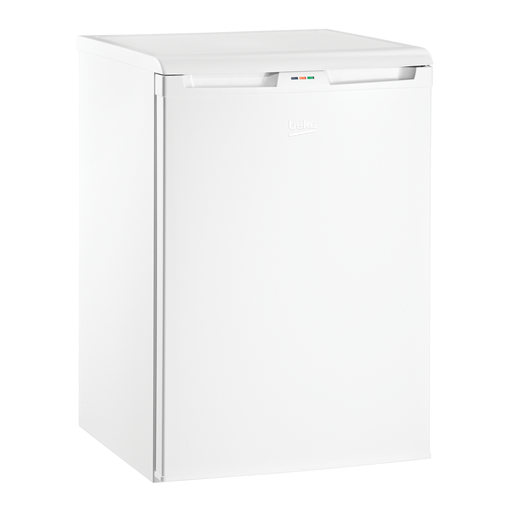 No image available
The under-counter design could suit a smaller space. Check that the specific compartment is suitable for freshly prepared food.
MinFrost to reduce ice build-up; 37 dB; white finish; energy class E.
 No image available
A compact option for a few portions stored separately. When choosing a freezer for fresh food, check that it has a four-star compartment.
Reversible door; adjustable feet; 147 kWh per year; white finish; energy class E.
Yes, cooked food can generally be frozen. If your mashed potato contains milk, its texture may change after defrosting, so try freezing a small portion first.
Cool the mashed potato quickly and hygienically, then portion it into suitable containers and label them with the contents and date. Germany’s consumer advice centre gives up to three months as a general guide for cooked food, not as a tested shelf life for every mashed potato recipe.
If possible, defrost it in the fridge and keep the prepared meal sufficiently chilled during transport and until you eat it. For longer journeys or warm weather, Germany’s Federal Institute for Risk Assessment recommends using a cool bag. A freezer at home won’t keep your food chilled while you’re on the move.
The label includes the energy efficiency class, annual energy consumption in kWh and freezer volume. Compare these details for the specific models that could suit your needs.
Old electrical appliances must be collected separately. Germany’s Federal Environment Agency says that local collection centres generally accept them free of charge; returns to a particular retailer are subject to that retailer’s terms and conditions.