What should you look for when buying?
Existing four-star freezer compartment
A good fit if: you’re only adding a few portions and there’s enough space and freezing capacity.
Consider: you won’t need another appliance, but the specific compartment must be suitable for freezing fresh food.
Small upright freezer with drawers
A good fit if: you regularly take out individual, labelled portions and have limited floor space.
Consider: drawers make it easier to organise your food, but even a small appliance needs space and uses electricity over time.
Larger upright freezer
A good fit if: you need space for other food and larger batches as well as sauce, and find drawers practical.
Consider: extra storage can be useful if you need it, but takes up room. An oversized appliance may also use more electricity than necessary.
Chest freezer
A good fit if: you freeze larger quantities and have enough floor space.
Consider: smaller individual containers can be harder to organise and reach; compare models with a similar usable capacity.
Whichever option you choose, make sure there’s room for the largest batch you’ll freeze at one time and that the freezer compartment is suitable for fresh food. The European Union describes a four-star compartment as a freezer compartment for storage at −18 °C that meets the requirements for freezing capacity; the amount you need to freeze in 24 hours depends on the size of your batch.
The percentages in the table relate to each shopper’s main buying priority in this usage scenario.
| Priority |
What to check when buying |
Who is this important to? |
| Finding portions quickly |
Check that the drawers and internal dimensions work with your own freezer-safe containers. |
If I only take out one meal at a time and at different times, I want to be able to reach the right container without searching for ages. Around 36% of consumers prioritise quick access to individual portions. |
| Space and usable capacity |
Consider the external dimensions, clearance for opening the door and the number of litres you actually need. |
When space is limited, I want to store enough sauce without having to make room for an unnecessarily large appliance. Around 29% of consumers prioritise a suitable footprint and usable capacity. |
| Freezing larger batches |
Compare the weight of your largest batch with the freezing capacity in kg/24 h; litres indicate storage space. |
If several fresh portions are going in at once, the stated freezing capacity needs to be suitable for that batch. Around 21% of consumers prioritise freezing capacity for larger quantities of food. |
| Energy use and maintenance |
Compare kWh/year for appliances with a suitable usable capacity, and check whether the model has the NoFrost feature you want. |
If you run an additional appliance, you’ll want to take account of its annual energy use and the effort involved in defrosting. Around 14% of consumers put running costs and maintenance first. |
Joybuy products for portioned food
The models below include compact freezers, fridge freezers and larger upright freezers for storing food in portions.
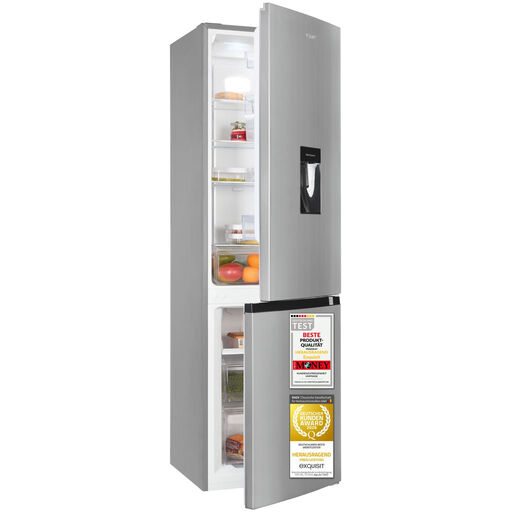 Image unavailable
exquisit KGC5265-70-NF-WS-040C inox look
A fridge freezer could be a good choice if you want fridge and freezer space in a single appliance.
The product name lists a total usable capacity of 251 l, energy class C, 39 dB(A), No Frost and a fast-freeze function; the 251 l figure is not a stated freezer capacity. Before freezing fresh sauce, check that the specific model has a four-star freezer compartment and confirm its freezing capacity.
View at Joybuy
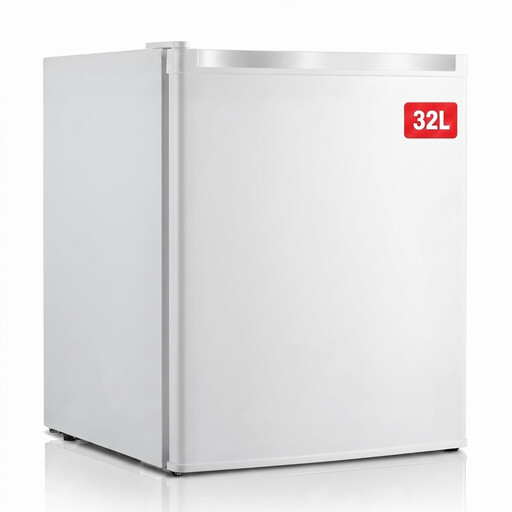 Image unavailable
32 l mini freezer
Its compact size could suit a limited space and a few extra portions.
The product name lists 32 l, seven temperature settings, a reversible door and 43 dB. For fresh sauce, check that the freezer compartment is rated four stars as required, and find out its stated freezing capacity in kg/24 h.
View at Joybuy
 Image unavailable
Upstreman UF35, 35 l
This compact model is an option if you have limited space for extra frozen portions.
The product name lists 35 l, a four-star rating, reversible doors and 41 dB. Also check the model’s freezing capacity in kg/24 h to make sure it can handle the largest batch you’ll freeze at one time.
View at Joybuy
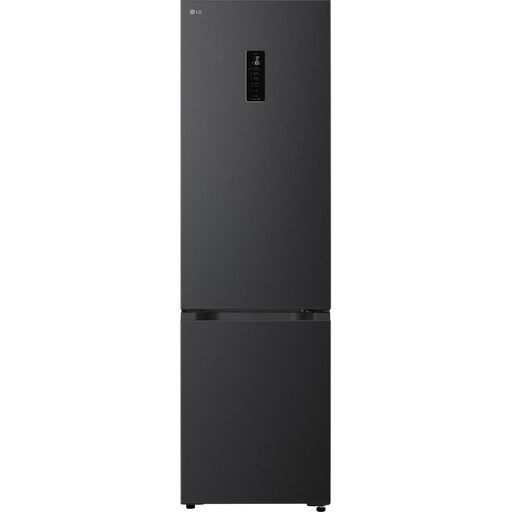 Image unavailable
LG GBBS727AEV Fit&Max, 375 l
A fridge freezer could be a good choice if you need fridge and freezer space in the same appliance.
The product name lists a total capacity of 375 l, energy class A and a black finish. Before choosing it for fresh sauce, check that the freezer compartment is rated four stars and find out its capacity; the total capacity alone doesn’t tell you how much freezer space is available.
View at Joybuy
 Image unavailable
homeX FSN2041E-S, 204 l
A larger upright freezer could be a good option if you need space for other food as well as individual portions of sauce.
The product name lists 204 l, NoFrost, Super Freeze, 39 dB and energy class E. Before freezing fresh sauce, check that the specific compartment has a four-star rating and find out the freezing capacity in kg/24 h for your batch.
View at Joybuy
Frequently asked questions
How should I prepare tomato sauce for freezing in portions?
If you’re storing cooked sauce for longer, cool it quickly. The German Federal Institute for Risk Assessment recommends cooling hot food quickly to below 7 °C. Use freezer-safe containers, label them with their contents and storage date, and leave room for the sauce to expand. When reheating it later, the German Federal Institute for Risk Assessment recommends heating it to at least 70 °C for two minutes throughout.
Can I freeze sauce in an existing freezer compartment?
Yes, provided the compartment is suitable for freezing fresh food and has enough space and freezing capacity for the new batch. Check the four-star rating and the appliance specifications: a compartment designed to store food that’s already frozen isn’t necessarily suitable for larger batches of fresh food.
What should I check before installing a freezer and when defrosting it?
Measure the appliance, the clearance needed to open the door and the route for moving it into place, and follow the manufacturer’s installation instructions. If your appliance doesn’t defrost automatically, don’t let a layer of ice build up, as this can affect energy use. NoFrost is only available on models specifically listed with this feature.
Which details on the energy label are useful for comparing appliances?
Compare the energy efficiency class with the model’s energy use in kWh/year and its usable capacity. The European Union lists refrigeration and freezing as product categories that require energy labelling; the energy label must also be clearly visible when products are sold online. For freezing fresh batches, the freezing capacity in kg/24 h is important too.
What happens to an old freezer?
Old electrical appliances must not be put in household rubbish. According to the German Federal Ministry for the Environment, online retailers also have take-back obligations. When buying, check whether your old appliance can be collected as part of the specific delivery and what conditions apply.


