For a few pastry portions, your existing freezer compartment is often enough, provided it is suitable for freezing fresh food; according to the Federal Centre for Nutrition, a four-star compartment can do the job. If you regularly freeze individual portions, a freezer with well-organised, easy-to-reach compartments may be a better fit. A chest freezer is more suited to larger stocks and needs space to open, as well as a good system for keeping things organised. When comparing specific appliances, look at usable capacity, dimensions, annual energy consumption and whether the location is suitable, rather than choosing based on the design or energy-efficiency class alone.
Which option is right for you?
Occasional hosts
If you’re preparing just a few portions for a get-together, start by checking whether your existing freezer compartment has enough suitable space. The Federal Centre for Nutrition explains which freezer compartments can actually freeze fresh food.
Those who regularly prepare individual portions
If you often freeze pastries individually, separate compartments can make them easier to sort and find. The Federation of German Consumer Organisations recommends labelling frozen food with its contents and the date it was frozen.
Households with larger food stocks
If you freeze other foods as well as pastries, consider capacity, available space and energy consumption together. The Federation of German Consumer Organisations and the European Commission highlight choosing the right appliance size and checking the energy label as important points of comparison.
What should you consider when buying?
Existing freezer compartment
A good fit if: you’re freezing just a few portions and already have enough space.
Consider: Not every freezer compartment is suitable for freezing fresh food, so check its star rating.
Compact freezer
A good fit if: you want to store portions separately on a regular basis but don’t plan to keep a large stock.
Consider: Check that your containers will fit in the drawers; a smaller appliance isn’t automatically more energy-efficient.
Larger upright freezer
A good fit if: you regularly freeze other foods or larger quantities as well as pastries.
Consider: More capacity takes up more floor space and can use unnecessary energy if the appliance is larger than you need.
Chest freezer
A good fit if: you can store larger stocks over the long term and don’t need to take out individual portions all the time.
Consider: Allow space to open the lid and plan how you’ll organise the contents so you can find smaller portions again.
| Buying criterion |
What to look for |
Who should pay particular attention? |
| Organising portions |
Compare drawer dimensions with your freezer containers; note down the contents and date frozen. |
If I want to find and take out individual pieces quickly for a get-together, separate compartments are important. Around 33% of consumers prioritise easy access to portioned food stocks. |
| Choosing the right appliance size |
Measure your existing freezer space and containers, then compare usable capacity and external dimensions. |
If I only freeze pastries occasionally, I want enough space without having to buy an oversized extra appliance. Around 27% of consumers prioritise having the right amount of freezer space. |
| Energy consumption |
For appliances of a suitable size, compare the annual consumption in kWh on the EU energy label. |
If I run an appliance between get-togethers too, I pay attention to its ongoing energy consumption. Around 20% of consumers put low running costs first. |
| Freezing and maintenance |
Check the star rating on your existing freezer compartment; for appliances, compare freezing capacity and the exact defrosting system. |
If I regularly freeze fresh portions and want to minimise the effort involved in defrosting, I check that the appliance is suitable and look at its defrosting system. Around 20% of consumers prioritise effective freezing and ease of maintenance. |
Avoid common buying mistakes
-
Buying a large extra appliance straight away for the occasional pastry get-together
A suitable freezer compartment you already have may be enough for a few portions. An appliance that’s too large takes up space and can use unnecessary energy.
First, check how much you plan to freeze, the size of your containers and how much space you have. Only size up to a separate appliance if you regularly run out of room.
-
Using the energy-efficiency class or appliance design as a substitute for comparing models
The EU energy label shows information including annual energy consumption and capacity. How you use an appliance and where you place it also affect its actual energy consumption.
Compare suitably sized appliances using their specific figures in kWh per year. You’ll also need your own electricity tariff to work out your personal energy costs.
-
Assuming MinFrost means the same as NoFrost
Beko describes MinFrost on the FSE1074N as a technology that reduces ice build-up; Bosch describes the GSN29VWEP as a NoFrost appliance. The two terms don’t mean the same thing.
Check the defrosting details for the exact model rather than assuming that a similar-sounding name means it never needs defrosting.
-
Checking only the external dimensions and the closed door
Drawers divide up the internal space, and an appliance needs extra room when the door is open. For the Exquisit GS81-040C weiss, the manufacturer states a depth of 107 cm with the door open.
Measure your containers, the route for moving the appliance, the space where it will stand and the clearance needed in front of the open door.
Brands and models to consider
Exquisit
The GS81-040C weiss is an example of a compact upright freezer with separate drawers.
- According to the manufacturer, this model has a capacity of 87 l, three drawers and a four-star freezer compartment.
- The door needs 107 cm of clearance when open; check the space in front of the appliance.
Bosch
The GSN29VWEP is an upright freezer for households storing more than just individual pastry portions.
- Bosch lists a capacity of 200 l, NoFrost and a freezing capacity of 16,0 kg in 24 hours for this model.
- At the stated dimensions of 161 × 60 × 65 cm, the appliance needs to fit the space available.
Beko
The FSE1074N under-counter freezer and the HS210530N chest freezer represent two different designs.
- Beko describes MinFrost on the FSE1074N as reducing ice build-up; the manufacturer lists a capacity of 104 l for the HS210530N chest freezer.
- MinFrost doesn’t mean the same as NoFrost. Check the exact defrosting details and the specification sheet for the model you choose.
Bomann
The GS 7343 is an upright freezer with several compartments for keeping food stocks organised.
- The manufacturer lists a capacity of 161 l, three drawers, two open compartments, Total No Frost and a four-star rating for this model.
- Check that the usable capacity, layout and external dimensions suit your actual needs.
Haier
The H4F272WDH1 is a larger upright appliance for storing more substantial food stocks.
- Haier lists a capacity of 276 l, four drawers, Total No Frost and energy-efficiency class D for this model.
- The extra capacity only makes sense if you’ll actually use the additional freezer space.
Freezers for pastry portions and food stocks
This selection features freestanding freezers for pastry portions and other food stocks. Pay particular attention to whether the usable capacity, layout and floor space suit the amount you plan to freeze.
 No image available
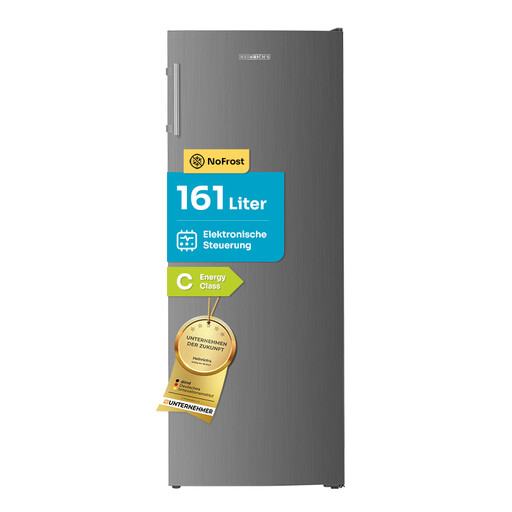
Heinrich´s freezer, 161 l, Inox, energy class C
For regularly organised food stocks, provided the capacity and floor space suit your needs.
161 l; three freezer drawers; No-Frost technology; four-star rating; freezing capacity 7,8 kg/24 h.
View at Joybuy
 No image available
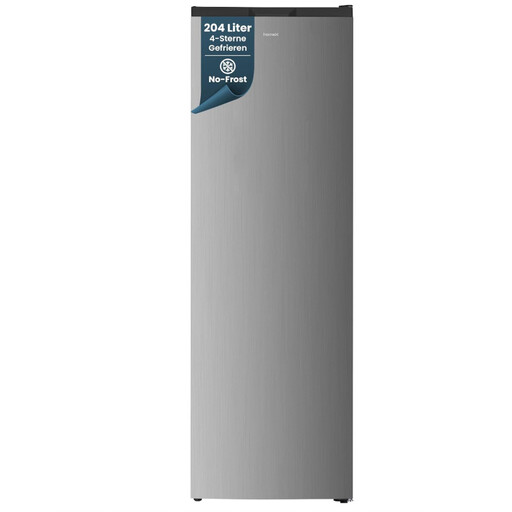
homeX FSN2041E-S freezer, 204 l, energy class E
For larger quantities and separate storage areas, if the capacity is right for your household.
204 l; NoFrost; six drawers and compartments; four-star rating; Super-Frost function; 39 dB.
View at Joybuy
 No image available
COMFEE' RCU40WH2(E) mini freezer, 31 l, energy class E
For limited floor space and small quantities; its stated capacity is limited for freezing larger batches.
31 l; four-star rating; freezes up to 2 kg in 24 hours; 147 kWh/year; reversible door; adjustable feet.
View at Joybuy
 No image available
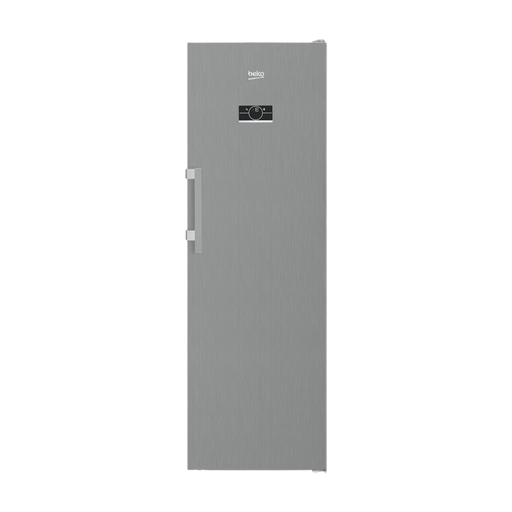
Beko B7RFNE315XP freezer, 286 l, energy class D
For larger food stocks and regularly freezing bigger quantities, if you have enough floor space.
286 l usable capacity; No Frost; fast-freeze function; freezing capacity 17 kg/24 h; five drawers, three compartments and two door shelves.
View at Joybuy
 No image available
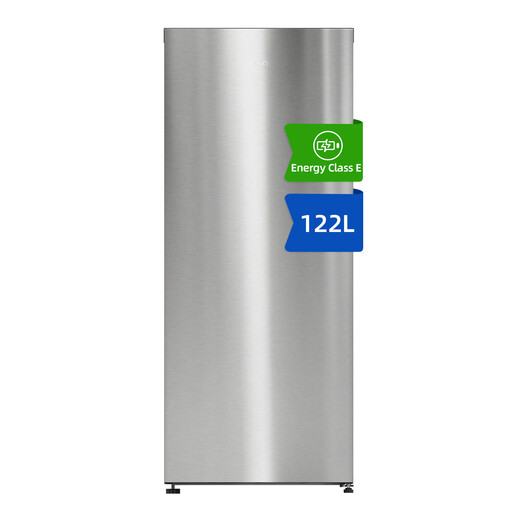
CHiQ JR122WSD freezer, 122 l, energy class E
For keeping food stocks separate, if a 122-l appliance suits the available space and the amount you plan to freeze.
122 l; four-star rating; No-Frost technology; Multi-Airflow; switchable cooling mode; inverter compressor; 39 dB.
View at Joybuy
Frequently asked questions
Can I freeze fresh pastry portions in any freezer compartment?
No. The Federal Centre for Nutrition distinguishes between storing frozen food and freezing fresh food: in fridge-freezer compartments, only a four-star compartment is suitable for this. Check the rating on your existing compartment before considering an extra appliance.
How can I keep portions organised for a get-together?
Use suitable freezer containers and note down the contents and the date you put them in the freezer. The Federation of German Consumer Organisations points out that baked goods can go straight into the oven; if they have delicate fillings, also follow the preparation and storage instructions for the specific pastry.
Does a new freezer in Germany need an EU energy label?
Household freezers covered by EU regulations must meet energy-labelling requirements. The label shows information including the energy-efficiency class, annual energy consumption, freezing capacity and noise levels. For the specific model, check the energy label or its entry in the European Commission’s EPREL database.
What should I do with an old freezer?
According to the German Environment Agency, old electrical appliances can be handed in free of charge at municipal collection points or recycling centres. Return options are also available through retailers and online retailers that are required to accept them. If you’re having a new appliance delivered, check the specific conditions for taking away your old one before placing your order.
Are a manufacturer’s guarantee and statutory consumer rights the same thing?
No. Your statutory rights entitle you to raise issues with the seller if goods are faulty; a guarantee is an additional, voluntary offer subject to its own terms and conditions. Check who to contact if you need to make a claim and what conditions apply to any advertised guarantee.


