For a few portions of blanched peas, you probably won’t need an extra appliance if your four-star freezer compartment has enough room. If you regularly run out of space, the amount you need to store, how easily you can reach individual portions, the space available and energy use will help you decide whether a compact freezer, upright freezer or chest freezer is right for you. Freezing food at home doesn’t keep a perishable lunchbox chilled while you’re out and about.
Which solution is right for you?
Weekly batch cookers short on space
You freeze small amounts for several working days and want to reach individual portions without having to make room for an unnecessarily large extra appliance. The Verbraucherzentrale recommends choosing an appliance size that matches your actual needs.
Meal-prep households with plenty to store
Alongside peas, you store other prepared meals and need separate freezer space that’s easy to access. A well-organised interior can help you keep different foods apart.
Those stocking up on a harvest
You occasionally blanch larger quantities at once and need to make room both for new food and for what’s already stored. The Bundeszentrum für Ernährung recommends measuring out the amounts you need and freezing them in portions.
What should you look for when buying?
Existing four-star freezer compartment
A good fit if: You prepare just a few lunch portions and have enough space in the compartment to store the peas separately.
The trade-off: You won’t need extra floor space, but the available room and freezing capacity are limited by the existing compartment.
Compact freezer
A good fit if: Your existing compartment isn’t big enough and you only want to freeze modest amounts or a small extra supply.
The trade-off: According to the manufacturer, the Severin GB 8886 has a capacity of 32 l and a freezing capacity of 2 kg per 24 hours. It doesn’t have NoFrost and its stated annual energy consumption is 148 kWh.
Upright freezer with drawers
A good fit if: You regularly store different prepared meals and want to find individual portions quickly.
The trade-off: Check the drawer layout, floor space needed and annual energy consumption for the specific model. NoFrost is a feature that varies by model and isn’t, on its own, a reason to choose a larger capacity.
Chest freezer
A good fit if: As well as weekly portions, you regularly freeze larger harvests or substantial quantities of food.
The trade-off: A chest freezer needs space for its top-opening lid. Organise small portions so you can find them easily inside.
The Verbraucherzentrale recommends choosing an appliance size that matches your needs, while the Bundeszentrum für Ernährung advises measuring out the quantities you need and freezing them in portions.
| What matters |
What to look for when buying |
Who is it most relevant to? |
| Accessing individual portions |
Check there’s room for flat, label-friendly portions and that the interior layout suits your needs. |
If I want to take out one portion for each working day, I need a well-organised interior. Around 40% of consumers are likely to prioritise easy access to portions. |
| Freezing larger quantities |
Compare usable capacity in litres and the stated freezing capacity in kg per 24 hours. |
If I freeze lots of fresh portions in one batch, there needs to be room for them alongside the food already stored. Around 30% of consumers are likely to prioritise capacity for freezing larger quantities. |
| Taking ongoing energy use into account |
Compare the kWh per year shown on the energy label with the capacity you need. |
If an extra appliance is running all the time, I want to weigh its annual energy use against the space I actually need. Around 20% of consumers are likely to put ongoing energy costs first. |
| Finding a suitable place for the appliance |
Check the appliance dimensions, clearance for opening the door or lid, and the installation guidance for the specific model. |
When space is limited, I need to check in advance that the appliance and its open door or lid will fit in the space available. Around 10% of consumers are likely to prioritise where the appliance will go. |
Common buying and usage mistakes
-
Buying a large extra appliance too soon for a few weeks’ worth of portions
An appliance that’s much larger than you need may use more energy than necessary. A compact extra appliance isn’t automatically the most energy-efficient option either.
First, check whether your existing freezer compartment is suitable for freezing fresh food and has enough room. If you need to, compare the usable capacity and kWh per year figures for specific models.
-
Choosing a chest freezer just for its capacity when you need daily access to individual portions
Plenty of storage space and quick access to a single lunch portion are two different requirements.
Choose the type of appliance to suit the amount you’ll store and how often you’ll take food out, and pack the peas in portions. Searching and sorting can take longer in a deep chest freezer; a static model may also need defrosting.
-
Assuming the energy label rating reflects your household’s actual energy use
The kWh per year figure on the energy label is based on standardised conditions. How you use the appliance and where you place it can affect its energy use at home.
Compare the annual figures for specific models alongside the capacity you need, and follow the manufacturer’s installation guidance.
-
Forgetting to keep food chilled after taking it out of the freezer
Frozen peas won’t automatically keep a perishable prepared meal sufficiently chilled while it’s being transported.
Plan how to keep the whole lunchbox chilled until it’s time to eat, taking its ingredients and the conditions during transport into account.
Key brands and model examples
Severin
The GB 8886 compact freezer is a specific example of a small additional freezer.
- For the GB 8886, Severin lists a capacity of 32 l, a four-star freezer compartment and a freezing capacity of 2 kg per 24 hours.
- According to the manufacturer, this model doesn’t have NoFrost and uses 148 kWh per year. These figures apply to the GB 8886.
Bosch
The GSN33VWEP upright freezer is an example of a freestanding model with a divided interior.
- Bosch lists a capacity of 225 l, NoFrost and four drawers for this model.
- The stated annual energy consumption of 229 kWh applies to the GSN33VWEP; it doesn’t represent other Bosch appliances.
Siemens
The GS51NAWCV is an example of a larger freestanding upright freezer.
- For this model, Siemens lists a capacity of 290 l, a freezing capacity of 21 kg per 24 hours, NoFrost and energy consumption of 161 kWh per year.
- This capacity may be more than you need if you’re only storing a few portions of peas.
Beko
The HSM14550 chest freezer is an alternative to an appliance with drawers.
- Beko describes this model as a freestanding chest freezer with a capacity of 148 l and a static cooling system.
- If you’ll be taking out small lunch portions frequently, remember to plan how you’ll organise them in the deep interior.
Liebherr
The FNd 522i is a specific example of a freestanding upright freezer with NoFrost.
- Liebherr lists a capacity of 277 l and a noise level of 36 dB for this model. According to the manufacturer, its model-specific FrostProtect feature makes it suitable for ambient temperatures down to −15 °C.
- The temperature figure and features apply to the FNd 522i and shouldn’t be assumed to apply to other models or every installation location.
Freezers for portioned food
This Joybuy selection includes upright freezers and chest freezers for storing portions separately or keeping larger quantities. For each model, check that it’s explicitly suitable for freezing fresh food.
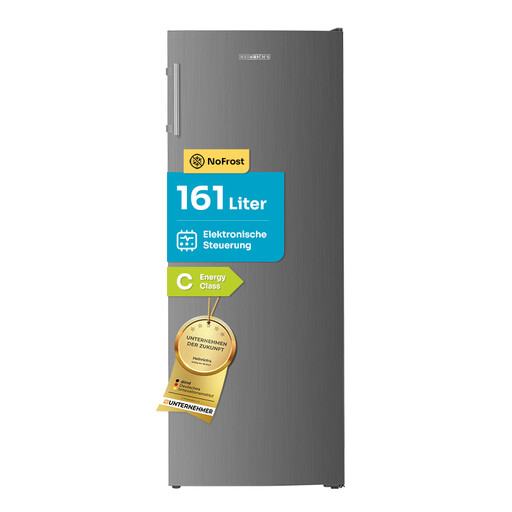 Image unavailable
Heinrich’s upright freezer, 161 l
The separate compartments can help you keep different foods organised; check that the appliance is rated for freezing fresh food.
161 l; NoFrost; three freezer drawers and two shelves; Fast-Freeze function down to −22 °C according to the product description.
View at Joybuy
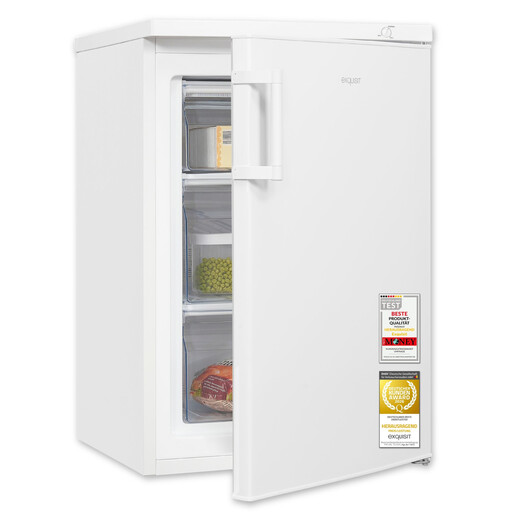 Image unavailable
Exquisit GS581-H-010E, 85 l
The four-star freezer compartment is rated for freezing fresh food, while three drawers provide separate storage for portions.
85 l; freezing capacity of 4,0 kg per 24 hours; three drawers; reversible door.
View at Joybuy
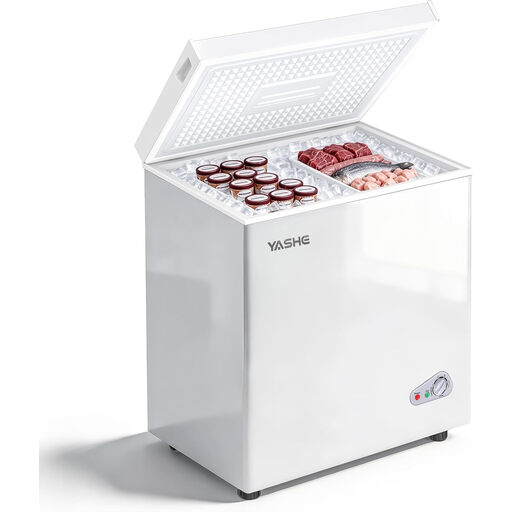 Image unavailable
YASHE BC-150Q-EU chest freezer, 150 l
The removable baskets can help keep smaller supplies separate; before freezing freshly blanched peas, check that the appliance is rated for freezing fresh food.
150 l; two removable baskets; six temperature settings; Fast-Freeze function according to the product description.
View at Joybuy
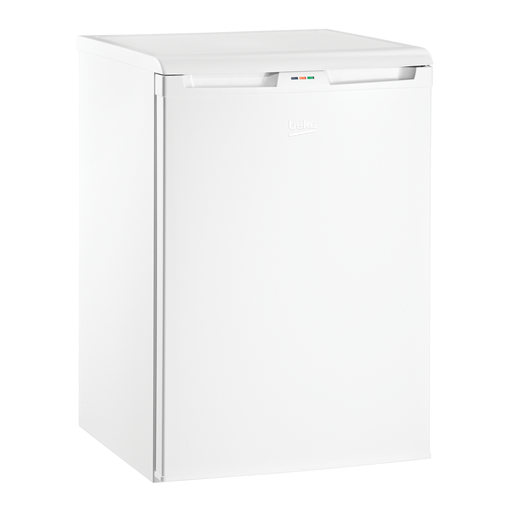 Image unavailable
Beko FSE1074N b100 under-counter freezer, 95 l
The drawers and flap compartment can help keep smaller supplies organised; for fresh peas, check the specific appliance’s stated freezing function.
95 l; two drawers and a compartment with a transparent flap; reversible door; energy efficiency class E.
View at Joybuy
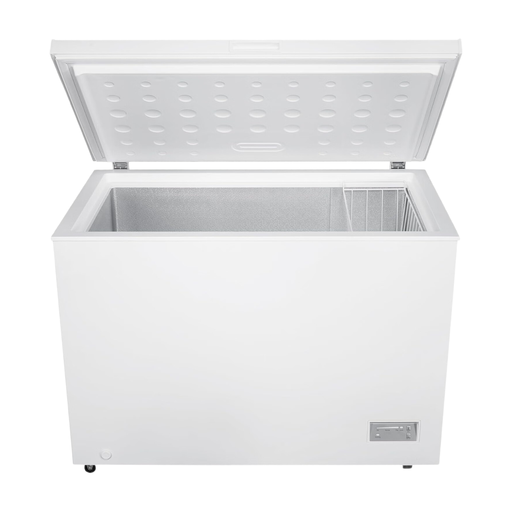 Image unavailable
Beko CF316EWN chest freezer, 308 l
The four-star freezer compartment and stated freezing capacity are relevant for freshly blanched peas. At 308 l, this freezer offers far more space than you need for lunch portions alone, so it’s better suited to households with other supplies to store.
308 l; freezing capacity of 16 kg per 24 hours; one basket; temperature alarm; energy efficiency class E.
View at Joybuy
Frequently asked questions
Can I freeze blanched peas in any freezer compartment?
No. A fridge-freezer compartment should have a four-star rating to be suitable for freezing fresh food; for a separate appliance, check its stated freezing capacity. Cool the blanched peas in iced water before packing them, and use suitable freezer containers.
How should I organise the peas for individual working days?
Measure out the amounts you need before freezing, pack them in suitable freezer containers with as little air as possible, and label each with its contents, quantity and date. Where possible, don’t place newly added food directly on top of food that’s already frozen.
Will a lunchbox stay chilled automatically if the peas were frozen beforehand?
No. The Bundesinstitut für Risikobewertung recommends keeping perishable food chilled when you’re out and about, too. What you need to do to keep the whole lunchbox chilled depends on its ingredients and the conditions during transport; a freezer at home alone won’t keep it chilled until lunchtime.
What should I look for on the energy label when buying online in Germany?
The European Commission Representation in Germany explains how the rescaled EU energy label for fridges and freezers applies to online retail. As well as the rating, compare the stated kWh per year and capacity; the standardised energy consumption figure doesn’t guarantee how much energy the appliance will use in your home.


