
Lieferung heute & morgen

Qualitätsgarantie

Willkommens-Angebote freischalten: KOSTENLOSE Lieferung | Bis zu 80 % RABATT | Kostenlose 30-Tage-JoyPlus-Testphase
App herunterladen
A freezer keeps supplies, frozen food and prepared meals neatly organised. However, choosing the right model is often more complicated than it first appears: a large litre capacity says little about the storage space you can actually use, the energy efficiency class alone does not reveal annual electricity costs, and a low decibel rating is only meaningful in the right operating environment.
As a Joybuy Product Recommendation Officer, I filter the most important specifications and explain what households, singles, flat-sharers and small families should consider when buying a freezer.
A freezer with a nominal capacity of 200 litres does not automatically provide 200 litres of freely usable storage. Drawers, flaps and technical components reduce the interior volume. Always check the net capacity. A 200-litre freezer may be suitable for a family, while a 100-litre freezer can be sufficient for singles or as an additional appliance.
The design also affects how the space can be used:
The energy efficiency class is useful for comparison, but ongoing costs depend primarily on the stated annual energy consumption in kWh. Two appliances in class E can use different amounts of electricity depending on their size, insulation and usage.
For a rough calculation:
Annual consumption in kWh × your electricity price per kWh = estimated annual electricity costs
Actual consumption depends on the installation location, ambient temperature, loading and how often the door is opened. An energy-efficient freezer should therefore not be judged by its letter rating alone. A model in energy efficiency class E can still be a practical choice for many households if its capacity and consumption match their needs.
A NoFrost freezer reduces ice build-up and generally eliminates the need for manual defrosting. However, the interior, door seal and ventilation areas still need to be cleaned regularly. Appliances with Low Frost or MinFrost systems can also reduce ice formation, but depending on the model, they may still require occasional defrosting.
Do not plan solely according to household size; also consider your shopping and cooking habits. Anyone who regularly batch-cooks or stores large quantities of meat, vegetables and ready meals will need more space and a well-organised interior.
A drawer freezer makes it easier to organise food by category. In a chest freezer, removable baskets are useful, although smaller packages stored at the bottom can be harder to reach.
Freezing capacity is usually stated in kilograms per 24 hours. It indicates how much fresh food the appliance can freeze under the specified conditions. A fast-freeze function, also known as Super Freeze, temporarily lowers the temperature when larger quantities of fresh food are added.
Check the user manual carefully: the function should not remain switched on permanently, as this can increase energy consumption. Fresh food should be added in portions with some space between items to allow the cold air to circulate.
A quiet freezer is particularly valuable in open-plan kitchens, studio flats and shared homes. Ratings such as 36, 38, 39 or 40 dB are based on standardised operating conditions. You may also notice compressor start-up, air circulation and vibrations.
Before buying, check the following:
Some models are specified as suitable for unheated rooms up to a particular ambient temperature. Compare this information with the conditions at the intended installation location.
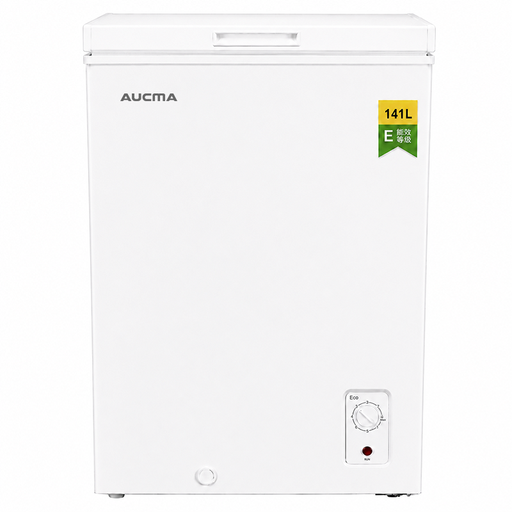
Why it’s a good fit: For singles, small households, offices or holiday homes, this compact upright freezer offers manageable storage in a footprint of 47.5 × 45 × 85 cm.
The 60-litre net capacity, two transparent drawers and an additional compartment make the available storage easy to understand.
4-star freezer rating, freezing capacity of 2.8 kg per 24 hours, reversible door hinge and an operating noise level of 40 dB.
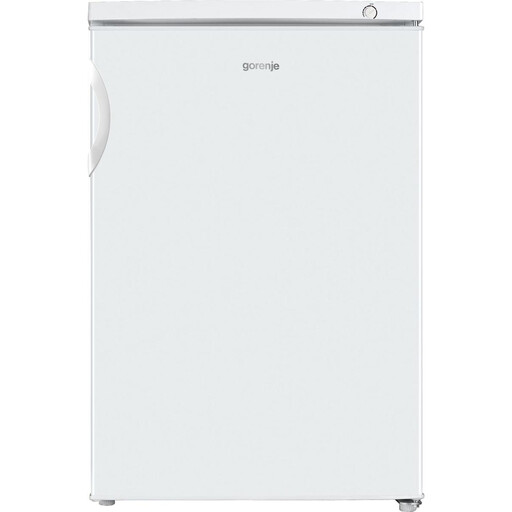
Why it’s a good fit: This appliance is designed for households that want better organisation than a small chest freezer can provide but have limited space available.
The stated net capacity of 85 litres is made practical by three transparent drawers.
Energy efficiency class D, 131 kWh annual consumption according to the product information, EcoMode and 15 hours of storage time in the event of a power cut.
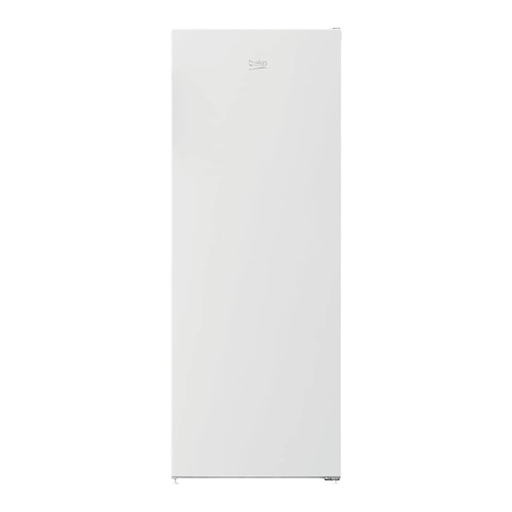
Why it’s a good fit: A practical option for families or flat-shares looking for around 177 litres of storage and automatic defrosting.
NoFrost, a temperature alarm and a fast-freeze function are listed as specific features rather than vague marketing claims.
177 litres of net capacity, three drawers, two compartments, reversible door hinge and 40 dB.
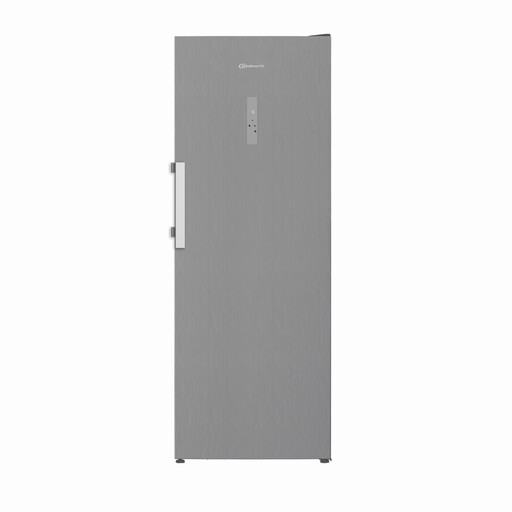
Why it’s a good fit: Large families, extensive batch cooking and centralised food storage benefit from the 404 litres of net capacity.
Six drawers, NoFrost and the stated freezing capacity of 19 kg per 24 hours clearly demonstrate its suitability for large quantities.
404 litres, energy efficiency class D, 38 dB, fast-freeze function and annual consumption of 233 kWh according to the product data.
We have put together a complete, up-to-date selection of products that meet these selection criteria and the applicable safety requirements for Germany.
Place the appliance on a level, dry surface and observe the clearances specified in the user manual. After transportation, a freezer should remain upright for several hours before being connected, depending on the manufacturer’s instructions. Do not cover the ventilation openings.
For reliable operation:
Consumption depends on the model, size, ambient temperature and usage. The key figure is the stated annual consumption in kWh. Multiply this value by your personal electricity price. A larger appliance does not automatically use more electricity than a smaller model, as the design and insulation also play an important role.
A specific service life cannot be guaranteed. The compressor, door seal, electronics, installation conditions and maintenance all affect how long the appliance remains in service. Regular cleaning, adequate ventilation and avoiding unnecessarily low temperature settings can support reliable operation. Always check the warranty and service information provided by the manufacturer.
An upright freezer usually offers easier access and well-organised storage in drawers. A chest freezer can be a good choice for large or bulky supplies, but it requires more floor space and careful organisation. For flats, shared homes and narrow kitchens, a small upright freezer is often easier to integrate.