
Lieferung heute & morgen

Qualitätsgarantie

Willkommens-Angebote freischalten: KOSTENLOSE Lieferung | Bis zu 80 % RABATT | Kostenlose 30-Tage-JoyPlus-Testphase
App herunterladen
Freezer bags are a staple in many households. They’re useful for portioning meat, vegetables, baked goods, soups and prepared meals, while making efficient use of freezer space. However, products can vary considerably in film thickness, closure type, capacity and pack size.
If you focus only on the price per bag, you could end up with bags that aren’t suitable for liquids, are difficult to label or tear when filled with large portions. The following points will help you choose freezer bags that suit your needs.
The capacity in litres indicates the maximum volume. In practice, dimensions such as 16 × 25 cm or 29 × 44 cm, as well as the width of the opening, are also important. A narrow bag with a seemingly adequate capacity can be awkward to fill with larger foods.
A simple clip, a press seal and a double seal are all different to use. When storing liquids, make sure the closure is fully sealed and, where possible, keep the bag upright. Freezer bags with a double seal provide an extra line of closure for soups or marinades. However, a bag will only be leakproof if it’s undamaged and not overfilled.
Not every food storage or sandwich bag is suitable for freezing. Paper bags, for example, are intended for dry foods in the fridge, not for liquids or long-term freezer storage. For plastic bags, check the information on food use, temperature resistance and material composition.
To keep your freezer organised, it’s worth matching portion sizes to the meals you typically prepare. One-litre bags make it easy to portion individual servings. Two- and three-litre models are suitable for family meals or multiple portions. For particularly large foods, consider XXL freezer bags with a capacity of 4 or 6 litres.
The dimensions also determine whether a loaf of bread, a large portion of vegetables or a whole joint will actually fit. A wide opening reduces the risk of solid foods damaging the film as you put them in.
Multi-layer films can offer greater tear resistance than simple, thin films. Selected pely models are described as having a 3-layer film and remaining flexible down to -40 °C. These details come from the relevant product information and shouldn’t be assumed to apply to all freezer bags.
If you prefer BPA-free freezer bags, look for an explicit statement about the material from the manufacturer. The packaging or product description should also state that the bags are food-safe or suitable for contact with food.
A write-on panel makes it easier to keep things organised. Write the contents and freezing date directly on the bag so you can use older portions first. A gusseted base is particularly handy for liquids, as it allows the bag to stand upright while you fill it.
A clip or press seal is often sufficient for dry or solid foods. For soups, stocks and marinades, resealable freezer bags with a safety or double seal are more practical. Before freezing, press out as much air as possible without stretching the bag too far.
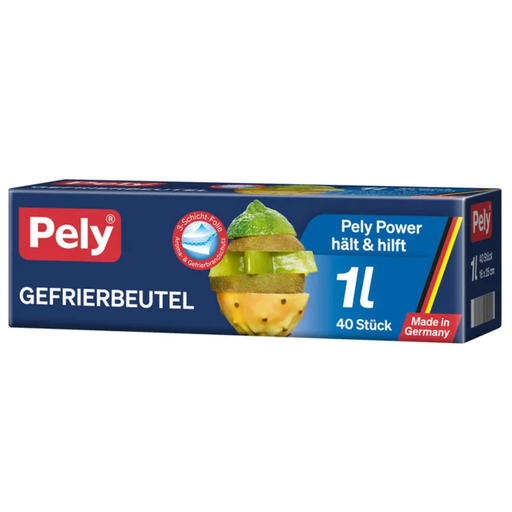
Why this product suits this profile: The 1-litre size is handy for everyday portions, leftovers, fruit and vegetables. With 40 bags, the pack provides a manageable supply for regular household use.
The product details specify dimensions of 16 × 25 cm, BPA-free 3-layer film and a write-on panel. This makes it easier to assess the size, material and labelling features.
1-litre capacity, 40 bags per pack and, according to the product details, flexibility down to -40 °C.
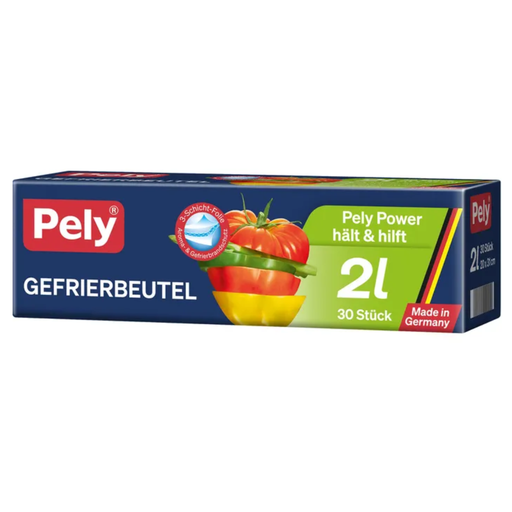
Why this product suits this profile: The 2-litre capacity gives you more room for medium-sized family portions, vegetable stocks and meal-prep dishes, without needing to move straight up to an XXL size.
The product details specify dimensions of 20 × 31 cm, 3-layer film, BPA-free material and a write-on panel. This makes it easier to check the details before you buy.
30 bags, stated flexibility down to -40 °C and, according to the product description, protection against tears and leaks.
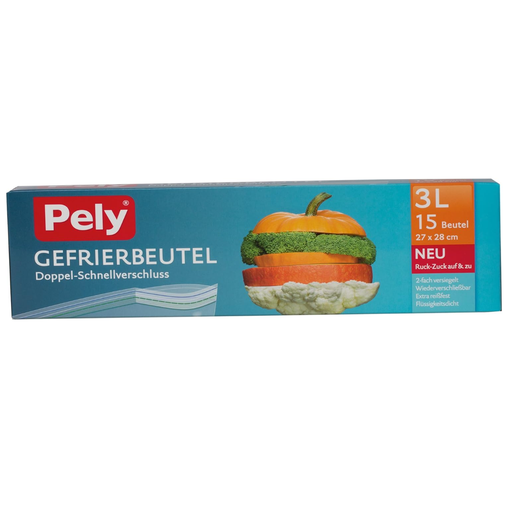
Why this product suits this profile: The 3-litre capacity and double seal make these bags suitable for soups, stocks, marinades and larger family portions.
The double seal is clearly specified and helps reduce the risk of a bag being left incompletely closed. Even so, store the bag upright and avoid overfilling it.
3-litre capacity, double seal, PE material and a write-on panel, according to the product description.
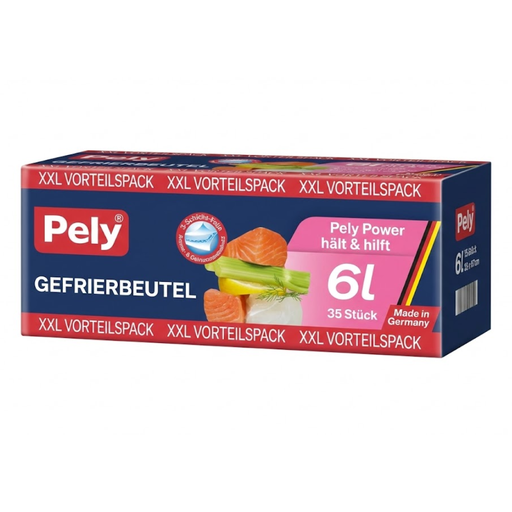
Why this product suits this profile: With a 6-litre capacity and 35 bags in the pack, this option is aimed at people who regularly freeze large quantities, whole poultry portions, dough or home-grown produce.
The dimensions of 29 × 44 cm and extra-wide opening are clearly specified, making it easier to check in advance whether larger foods will fit.
35 bags per value pack, 6-litre capacity and, according to the product details, 3-layer film made from BPA-free material.
We’ve put together a complete, regularly updated list of products that meet these strict selection criteria and fully comply with the safety regulations in force in the EU.
Before filling the bags, make sure food has cooled, been portioned and is as dry as possible. Liquids need enough room to expand, so leave some space at the top and seal the bag carefully. Flat portions usually freeze more compactly and are easier to stack.
Label each bag with its contents and the date. Sharp bones, hard edges or frozen points can damage the film, so wrap delicate foods accordingly. Plastic bags should also be kept out of reach of babies and children, as they can pose a suffocation risk.
1L freezer bags are often large enough for individual portions, leftovers and smaller ingredients. 2L freezer bags give you more room for main meals with sides or multiple portions.
According to the relevant product details, models with a double seal are intended for liquids such as soups, stocks and marinades. Don’t overfill the bag; make sure it’s fully sealed and, where possible, freeze it upright.
Storage time depends on the food, temperature, packaging quality and the amount of air in the bag. Always follow the recommendations for the particular type of food. Damaged, leaking or badly misshapen bags shouldn’t be reused.