
Lieferung heute & morgen

Qualitätsgarantie

Willkommens-Angebote freischalten: KOSTENLOSE Lieferung | Bis zu 80 % RABATT | Kostenlose 30-Tage-JoyPlus-Testphase
App herunterladen
Freezer bags are a staple in many UK households. They help you portion meat, vegetables, bread, soups and prepared meals, while making the most of the space in your freezer. However, an offer that seems inexpensive does not always provide the right solution. The key factors are not just the number of bags and the price per litre, but also capacity, film thickness, closure type and labelling options.
This buying guide explains what households, families, meal-preppers, bulk buyers, and catering and hospitality businesses should look out for.
A 1-litre freezer bag is usually suitable for smaller portions, fruit, vegetables or leftovers. However, how much it can hold in practice also depends on its shape and opening. A narrow bag may be less convenient to fill than one with a wider opening.
For larger foods such as loaves of bread, joints of meat or whole poultry, 4-litre or 6-litre freezer bags are a better choice. If you regularly freeze family-sized portions or surplus produce, check the dimensions too. Examples include 20 × 31 cm for 2-litre bags, 25 × 38 cm for 4-litre bags and 29 × 44 cm for 6-litre bags.
A simple knot or clip may be enough for dry foods. For soups, marinades and sauces, a freezer bag with a double seal or a model with a safety zip is more practical. Even so, avoid overfilling the bag. Liquids expand as they freeze, so they need enough room.
Before freezing, try to squeeze out as much air as possible and keep the sealing area clean. A closure alone is no substitute for careful handling.
A bulk pack of freezer bags can be a good option for families, bulk buyers and businesses. However, compare the price per bag alongside the material, size and closure. A pack of 100 small bags is not automatically cheaper than 30 sturdier, higher-capacity bags if you regularly freeze larger portions.
The right size depends on the portions you typically freeze:
The stated capacity is a guide. For the best fit, check the width, height and opening too.
Extra-strong freezer bags are often made from multi-layer plastic film. The pely models described here use optimised 3-layer film. Several variants are listed as flexible down to -40 °C. This is particularly useful if bags will be kept in the freezer for a long time or moved around frequently.
If you are looking for BPA-free freezer bags, check the material details for the specific product. Several pely models are listed as having BPA-free film. Do not use damaged or torn bags to store food.
A writing panel makes it easier to stay organised: you can note the contents and freezing date directly on the bag. A freezer bag with a clip may be enough for dry foods. For liquids, a zip closure, safety seal or double seal is better suited to the job.
Stand-up bags can be filled upright. This can be useful for soups, sauces and marinades, but you should still check the seal carefully.
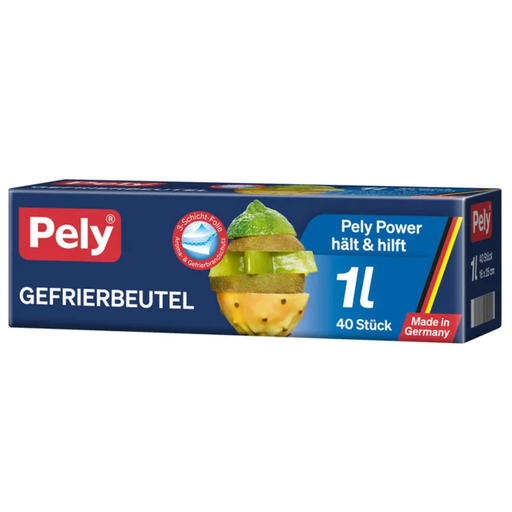
Why this product suits this profile: The 1-litre size is designed for everyday portions, leftovers and smaller ingredients. The pack contains 40 bags.
The product details specify dimensions of 16 × 25 cm, 3-layer film, a writing panel and suitability down to -40 °C. This makes it easier to assess the size and material before buying.
BPA-free 3-layer film, 40 bags per pack and a writable area.
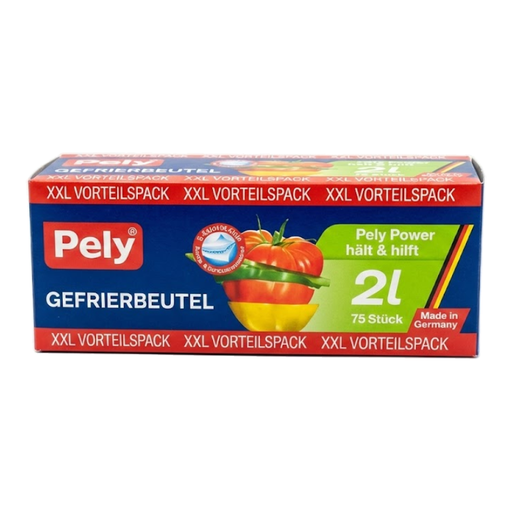
Why this product suits this profile: The 2-litre size offers a medium capacity in a bulk pack, making it suitable for family portions, meal prep and storing supplies.
The wide opening makes filling easier. The stated 3-layer film and writing panel help combine durability with organised food storage.
75 bags, 20 × 31 cm and extra-strong 3-layer film, according to the product details.
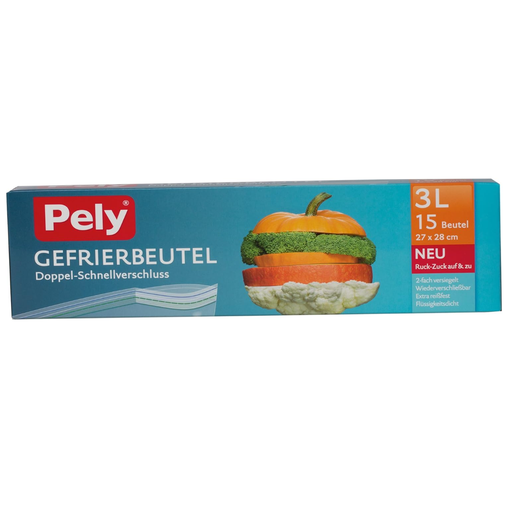
Why this product suits this profile: This 3-litre bag is designed for people who freeze soups, sauces, marinades or larger prepared meals.
The double seal is designed to close securely. The stand-up base helps you fill the bag upright, but take care not to exceed its capacity.
3-litre capacity, double seal and stand-up base for liquids and larger portions.
We’ve put together a complete, regularly updated list of products that meet these strict selection criteria and fully comply with the safety regulations in force in the EU.
A 1-litre freezer bag is often enough for an individual portion. For meals for two or larger portions, 2-litre or 3-litre freezer bags are usually a better fit. For bread, large cuts of meat or substantial harvests, consider 4-litre and 6-litre options.
According to the product details, freezer bags with zip closures or double seals can be designed for soups, sauces and marinades. It is still important to keep the sealing area clean, leave enough room and hold the bag upright while filling it. Check each bag for leaks before freezing.
How long they last depends on the film thickness, closure, contents and how they are handled. Extra-strong freezer bags with 3-layer film may be designed for the intended use in the freezer. After use, check disposable bags for damage and discard them if they are torn or leaking. Always follow the specific product and packaging instructions.