
Lieferung heute & morgen

Qualitätsgarantie

Willkommens-Angebote freischalten: KOSTENLOSE Lieferung | Bis zu 80 % RABATT | Kostenlose 30-Tage-JoyPlus-Testphase
App herunterladen
A freezer provides extra space for frozen food, provisions and larger shopping trips. The choice ranges from compact mini freezers and classic upright freezers to chest freezers and fridge freezers. However, many products appear more similar at first glance than they really are.
Three common buying misconceptions can lead to unnecessary costs:
The stated net capacity in litres is more important than the external dimensions alone. An upright freezer with drawers makes it easier to organise food, while a chest freezer often provides one large, continuous storage area. This can be practical for bulky packs, but makes it harder to keep track of many smaller items.
As a rough guide:
If you are specifically looking for a 200-litre freezer, you should consider the number of drawers, flaps and compartments as well as the capacity. Transparent fronts make it easier to check the contents without leaving the door open for long.
A freezer with a 4-star compartment is designed for the long-term storage of frozen food. This classification indicates temperatures of around −18 °C or below. You should also check the freezing capacity in kilograms per 24 hours if you often freeze fresh food.
A fast-freeze function temporarily lowers the temperature further. It is particularly useful when adding large quantities of fresh food at once. Once freezing is complete, the function should be switched off in accordance with the instruction manual, unless it ends automatically.
The energy efficiency class is shown on a scale from A to G. You should also compare annual consumption, for example 196 kWh or 222 kWh. For a realistic estimate, you can multiply this figure by your electricity tariff.
The noise level in dB(A) is also relevant. Appliances producing 36 to 40 dB(A) may be suitable for open-plan kitchens, living areas or flats where the sleeping area is nearby. However, how loud an appliance seems in practice depends on the room acoustics and installation position.
For basements, garages or holiday homes, you should check the climate class or permitted ambient temperature range. Not every freezer works in unheated rooms. For example, the Beko FS127940N is specified for operation at ambient temperatures as low as −15 °C. The CHiQ JR263LGE, by contrast, has a stated range of 16 to 38 °C; according to the product information, this fridge is not intended for use in a garage or outdoors.
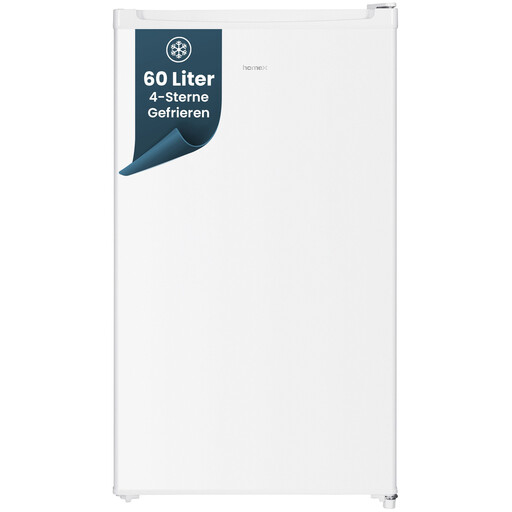
Why this product suits this profile: With 60 litres of net capacity, this compact appliance is suitable for singles, small households or as an additional freezer in the basement.
The 4-star rating and stated freezing capacity of up to 2.8 kg in 24 hours make its suitability for frozen food clearer than a simple marketing claim.
Two transparent drawers, an additional compartment, reversible door and a noise level of 40 dB(A).
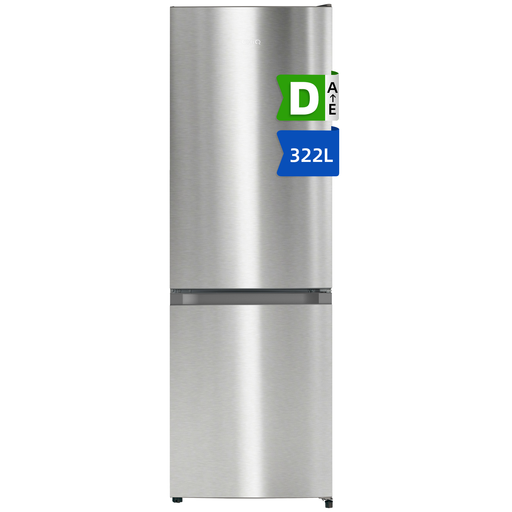
Why this product suits this profile: This fridge freezer combines 226 litres of fridge space and 96 litres of freezer space with Total No Frost, making it suitable for households that use both sections regularly.
The product data lists No Frost, annual consumption of 196 kWh and 37 dB(A) separately. This allows you to assess maintenance, energy use and noise level specifically.
322 litres of total net capacity, fast-freeze function and climate classes N, SN, ST and T according to the product information.
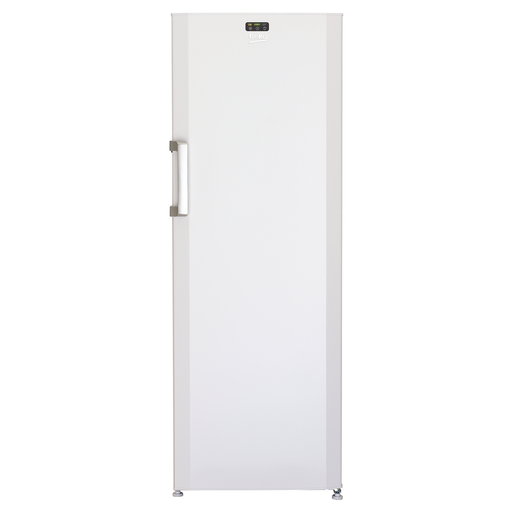
Why this product suits this profile: This upright freezer is aimed at families and users who want to store larger provisions separately from the fridge.
The reversible door makes installation easier. According to the product information, MinFrost can reduce ice formation but does not eliminate the need for manual defrosting altogether.
244 litres of net capacity, five drawers, two flap compartments, fast-freeze function and 36 dB(A).
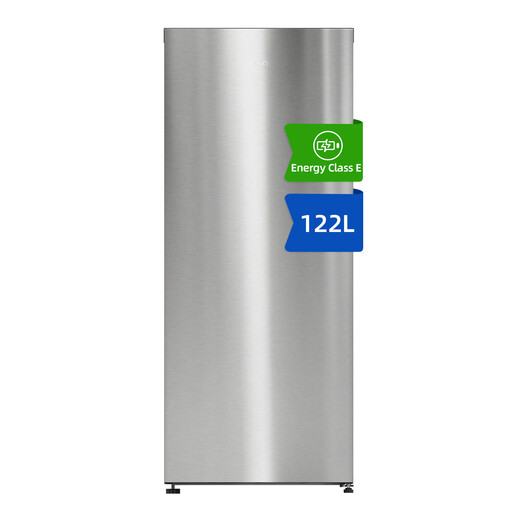
Why this product suits this profile: At 47.5 cm wide, this 122-litre appliance fits into smaller kitchens, utility rooms or offices and can also be used as a fridge when requirements change.
No Frost technology reduces maintenance. At the same time, you should check before buying whether 122 litres will be enough for your personal requirements.
4-star freezing performance, 39 dB(A), reversible door and several operating modes, including fridge and soft-freeze modes.
We have put together a complete, regularly updated list of products that fully meet these strict selection criteria and the safety regulations applicable in the EU.
Before ordering, measure the width, height and depth of the space available. Also take the door opening angle, clearance from the wall and the required air circulation into account. A reversible door can be crucial in a compact kitchen layout.
With a chest freezer, check whether the lid can be opened fully and whether baskets or dividers are included. For a flat or open-plan kitchen, the noise level is more important than it is in a separate basement room. A fridge with a freezer compartment or a fridge freezer may be a better choice if there is no room for a separate freezer.
There is no fixed rule. For occasional storage, 50 to 80 litres per person is often enough. Anyone who regularly batch-cooks, freezes seasonal food or stores multipacks will need more accordingly. The key is to ensure that the drawers and compartments remain easy to organise in everyday use.
A genuine No Frost system normally does not require manual defrosting of the freezer compartment. However, cleaning the interior, removing dirt and checking the door seal are still necessary. Low Frost or MinFrost appliances may still need to be defrosted occasionally.
The service life depends on factors including the compressor, usage, ambient temperature, maintenance and ventilation. Blocked air circulation over an extended period or a leaking door seal can increase energy consumption and impair cooling performance. You should therefore check the manufacturer’s specifications, warranty terms and the availability of replacement parts.