You don’t need your own freezer if the compartment you already have is suitable for freezing new food and has enough room for labelled portions. If you regularly run short of space, a table-top freezer is better suited to a small footprint, drawers make it easier to organise different supplies, and a chest freezer may be worth considering for genuinely large shared quantities. In each case, check the usable capacity, freezing capacity, installation dimensions and annual energy consumption. For storage, the consumer advice centre recommends −18 °C; the Federal Institute for Risk Assessment advises cooling hot food quickly to below 7 °C for longer-term storage.
Which type of freezer is right for you?
Limited space in a shared kitchen
If you’re freezing relatively small portions of compote, first check whether the freezer compartment you already have is suitable and has enough capacity. An additional table-top freezer is only an option if you have a suitable space for it. The consumer advice centre and the Federal Environment Agency offer guidance on assessing your needs and continuing to use existing appliances.
Larger quantities of compote on a regular basis
If you regularly prepare several portions, consider the appliance’s capacity for freezing newly added food as well as its storage space. The consumer advice centre and Bosch Home Appliances Germany highlight this in their guidance on freezers.
Separate supplies for several people
In shared storage space, labelled portions that are easy to identify make it simpler to find your supplies again. The Federal Centre for Nutrition recommends labelling packaging with its contents, quantity and date; Exquisit describes drawers as a useful organising feature of its GS81-040C.
What should you look for when choosing?
First check whether the freezer compartment you already have can freeze new portions. Only compare additional appliances if you’re short of space.
| Requirement |
What to check when buying |
Who is this particularly important to? |
| Space and an additional appliance |
Check the available space in your existing compartment, as well as the appliance dimensions, door clearance and delivery route. |
If I only freeze small portions occasionally, I don’t want to add another appliance unless the existing compartment isn’t big enough. Around 36% of consumers therefore put space requirements and the need for an additional appliance first. |
| Freezing new portions |
Check that the appliance is suitable for fresh food and compare its freezing capacity in kg/24 h with the quantity you plan to freeze. |
If I have several new portions to freeze at once, I want to know that the appliance can actually freeze them, rather than just store food that’s already frozen. Around 29% of consumers prioritise freezing capacity for new portions of compote. |
| Organisation and identification |
Check the compartment layout and choose suitable freezer containers; label each container with its contents, quantity and date. |
When compartments are shared, I want to clearly identify my portions and find them again quickly. Around 21% of consumers prioritise storing portions separately and labelling them. |
| Energy use and noise |
Compare kWh/year, usable capacity and dB(A) on the EU energy label, and agree how the electricity costs will be split. |
If an additional appliance will be running all the time, I want to compare its stated annual energy consumption and noise level in advance. Around 14% of consumers prioritise running costs and noise. |
Avoid common mistakes when choosing
-
Focusing only on capacity and external dimensions
The space in front of the door can be just as important as the floor space available. Exquisit states that the GS81-040C has a depth of 107 cm with the door open.
Measure the space where the appliance will go and the route it needs to take to get there, and check how far the door opens. Also follow the installation and ventilation clearances specified in the manual for the model you choose.
-
Confusing a storage compartment with a freezer compartment
A compartment used to store food that’s already frozen isn’t necessarily suitable for freezing freshly prepared compote.
Check specifically whether your existing compartment or a new appliance is suitable for freezing fresh food. For subsequent frozen storage, the consumer advice centre recommends −18 °C.
-
Choosing an appliance based only on size or style
An appliance that’s too large can use more electricity than necessary. A chest freezer without drawers also means you’ll need to organise lots of separate portions yourself.
Compare the usable capacity you need with the stated kWh/year, and choose an interior layout that works for the portions you’ll be storing together.
Key brands at a glance
Beko
Beko offers compact freestanding table-top freezers. For the FSE1074N, Beko lists a usable capacity of 95 l and dimensions of 54 × 84 × 59 cm (W × H × D).
- Beko lists a reversible door and MinFrost technology to reduce ice build-up for the FSE1074N.
- This model uses static cooling and isn’t listed as NoFrost. The claim that it reduces ice build-up comes from the manufacturer.
Bosch
Bosch offers table-top freezers with features that vary by model. The following specifications apply exclusively to the GTV15NWEB.
- Bosch Home Appliances Germany lists a usable capacity of 83 l, SuperFreezing and a freezing capacity of 4.0 kg/24 h.
- For this model, the manufacturer states an annual energy consumption of 164 kWh and a noise level of 39 dB(A); the GTV15NWEB isn’t listed as NoFrost.
Exquisit
According to Exquisit, the GS81-040C weiss upright freezer has a usable capacity of 87 l and three freezer drawers.
- Exquisit lists this model as a four-star appliance and states an annual energy consumption of 105.04 kWh.
- With the door open, its depth is 107 cm according to the manufacturer. A reversible door hinge is available separately.
Liebherr
Liebherr offers compact freezers such as the 92 l FNe 1404, as well as larger models such as the 160 l FNd 4224.
- Liebherr lists both models as NoFrost. The manufacturer states that the FNe 1404 is 55 cm wide and 60.7 cm deep, while the FNd 4224 is 59.7 cm wide and 67.5 cm deep.
- According to the manufacturer, NoFrost can reduce the need to defrost, but a larger appliance won’t necessarily suit your available space or actual needs.
Haier
According to Haier, the HCE200C chest freezer has a usable capacity of 196 l, making it suitable for larger shared supplies.
- Haier lists external dimensions of 91.5 × 55.5 × 84.5 cm.
- This model has no drawers. If you have lots of small portions belonging to different people, consider whether its open interior will work for the way you want to organise them.
Freezers at Joybuy
This selection of Joybuy products includes freezers for extra storage space, from compact mini freezers to larger upright models.
 No image available
Heinrich´s freezer, 161 l
The multiple drawers give you separate spaces for organising different supplies.
161 l usable capacity; NoFrost; 3 freezer drawers and 2 additional drawers.
The title lists a quick-freeze function at −22 °C, a reversible door hinge and energy efficiency class C.
View at Joybuy
 No image available
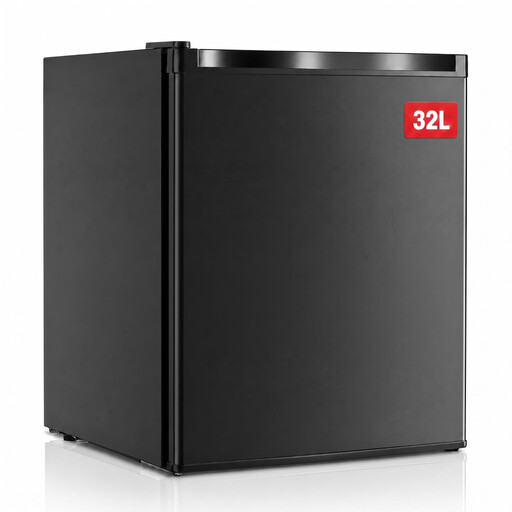
Mini freezer, 32 l
This compact model is an option if you only need a little extra storage space; before buying, check specifically that it’s suitable for freezing fresh food.
32 l usable capacity; 7 temperature settings ranging from −10 °C to −22 °C.
The stated external dimensions are 45.4 × 44.3 × 49.5 cm; the noise level is listed as 43 dB.
The door hinge is reversible.
View at Joybuy
 No image available
Upstreman UF35, 35 l, white
This mini freezer could suit a small extra supply, provided the compartment is specifically suitable for freezing new food.
35 l usable capacity; four-star rating; reversible door hinge.
The stated noise level is 41 dB.
View at Joybuy
 No image available
homeX FSN2041E-S, 204 l
The larger capacity and multiple compartments give you room to store supplies separately, but the appliance will also need more floor space.
204 l usable capacity; NoFrost; four-star compartment and Super-Freeze function.
The description lists six shelves or drawers. The stated noise level is 39 dB; energy efficiency class E.
View at Joybuy
 No image available
COMFEE' RCU40WH2(E), 31 l
This compact appliance could suit smaller quantities; its stated freezing capacity is useful when comparing models if you plan to freeze several new portions at once.
31 l usable capacity; four-star rating; freezing capacity of up to 2 kg/24 h.
The stated annual energy consumption is 147 kWh. The door hinge is reversible; energy efficiency class E.
View at Joybuy
Frequently asked questions
How should I prepare cooked apple compote for freezing?
Cool the compote quickly and divide it into portions in freezer-safe containers. The Federal Institute for Risk Assessment advises cooling hot food quickly to below 7 °C for longer-term storage; several shallow dishes can help with larger quantities. Label the containers with their contents, quantity and date. Leave room for liquids to expand; the consumer advice centre suggests filling containers to no more than three-quarters full.
What should you agree on before installing a freezer in a shared kitchen?
Measure the space where the appliance will go, the route for moving it and the clearance needed for the open door. Discuss floor space, compartment allocation, cleaning and electricity costs with the other people who use the kitchen. The required installation and ventilation clearances depend on the manual for the specific model.
How can I check an appliance’s energy use, and what should I look at after buying?
The EU energy label shows details including kWh per year, volume and noise level. According to the consumer advice centre, actual energy use also depends on how the appliance is used and where it’s installed. For the specific offer, also check what’s included, the warranty and any installation or door-hinge services offered.
What labelling and disposal rules apply to freezers?
Covered household refrigerators and freezers carry the EU energy label, with a scale from A to G. Waste electrical appliances must not go in household rubbish; they’re collected separately, and local collection points generally accept them free of charge.


