Households with different mealtimes
You want to find and take out pre-prepared portions of baked goods individually, without rearranging your entire stash.


For the occasional small batch, your existing freezer compartment may be enough, provided there’s room to store portions separately. If you need more space regularly, a suitably sized upright freezer with well-organised compartments is an obvious choice. A chest freezer is better suited to larger stores: the Verbraucherzentrale describes chest freezers as more energy-efficient than upright freezers, but if you’ll be taking out individual portions frequently, check the basket layout of the model you’re considering. Compare usable capacity, kWh/year, external dimensions and installation requirements, and wrap and label suitable baked goods individually.
You want to find and take out pre-prepared portions of baked goods individually, without rearranging your entire stash.
You freeze larger batches of baking regularly, so you need to consider usable capacity, storage layout and freezing capacity together.
You’re weighing up an existing freezer compartment or a compact extra appliance against the space it takes up and its ongoing electricity use.
A good fit if: you freeze small amounts occasionally and have room in your existing freezer compartment to store portions separately.
The trade-off: You won’t need an extra appliance, but space may be limited if you regularly freeze larger quantities.
A good fit if: you want to take out individual portions regularly but don’t need to store large quantities.
The trade-off: A smaller appliance isn’t automatically more energy-efficient; compare usable capacity and annual energy consumption.
A good fit if: you need room for other supplies or larger batches of baking, as well as baked goods, in separate compartments.
The trade-off: More capacity means larger external dimensions. Check what you need and compare each model’s stated energy consumption and freezing capacity.
A good fit if: you can store larger quantities and have enough room to organise them at the installation site.
The trade-off: The Verbraucherzentrale describes chest freezers as more energy-efficient than upright freezers. If you’ll be taking out individual portions frequently, check the basket layout of the model you’re considering and compare its kWh/year.
| What matters | What should you check before buying? | Who is it especially important for? |
|---|---|---|
| Finding individual portions | Check the drawers and usable internal dimensions; make room for your own containers and clear labels. | If I need individual pieces at different mealtimes, I want to be able to take them out without searching for ages. Around 33% of consumers put quick access to individual items first. |
| Storage capacity | Compare the portions you need at one time and any other frozen food with the usable capacity and container dimensions. | If I regularly store larger batches of baking and other supplies, I need enough capacity without an appliance that’s permanently bigger than necessary. Around 27% of consumers make suitable storage capacity their top buying priority. |
| Energy consumption | Compare the kWh/year and usable capacity on the energy labels of models that are similarly suited to your needs. | If I’m adding another appliance, I want to compare annual energy consumption rather than looking only at the energy efficiency class. Around 20% of consumers put ongoing running costs first. |
| Installation space and maintenance | Check the external dimensions, clearance for opening the appliance and the ambient temperature specified by the manufacturer; compare NoFrost features. | If space is limited or the appliance is going in a cool utility room, it needs to fit and work there. I also want to know how much defrosting it will need. Around 20% of consumers prioritise installation space or maintenance requirements. |
The Verbraucherzentrale points out that an oversized freezer can use more electricity than necessary. However, a smaller appliance isn’t automatically more energy-efficient.
Work out how much space you need at any one time, then compare the usable capacity and kWh/year of suitable models.
NoFrost mainly affects ice build-up and how often you need to defrost the appliance. When comparing energy use, the annual consumption of each model is what matters.
Weigh up the defrosting convenience you want against usable capacity and kWh/year.
The Verbraucherzentrale Rhineland-Palatinate gives meringues and macaroons as examples of baked goods that can become chewy when frozen.
Check whether delicate baked goods and fillings are suitable for freezing. You can wrap and label suitable portions individually.
The FNdi 1624 is an under-counter freezer for limited space and smaller quantities stored separately.
The freestanding GSN29UWEW combines several storage areas with space for extra supplies.
The GS29NEWEV is a freestanding 200-l model with an adjustable interior layout.
The GT 313 105 W is a chest freezer for larger, well-organised stores.
The chest freezer range includes the 196-l HCE200C and the larger 319-l HCE321C.
The range includes compact upright freezers for storing portions of baked goods separately, as well as larger upright models and a chest freezer for bigger supplies.
 No image available
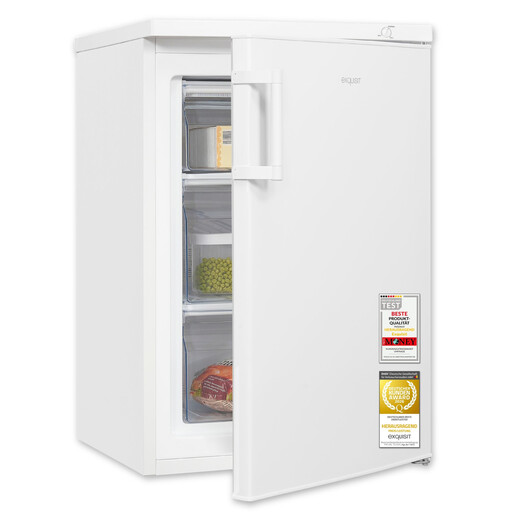
A good fit for smaller quantities if you want to store portions of baked goods in separate drawers.
85 l usable capacity; freezing capacity of 4,0 kg/24 h; three transparent drawers, including one large drawer. The description recommends regular defrosting once more than 5 mm of frost has formed.
 No image available
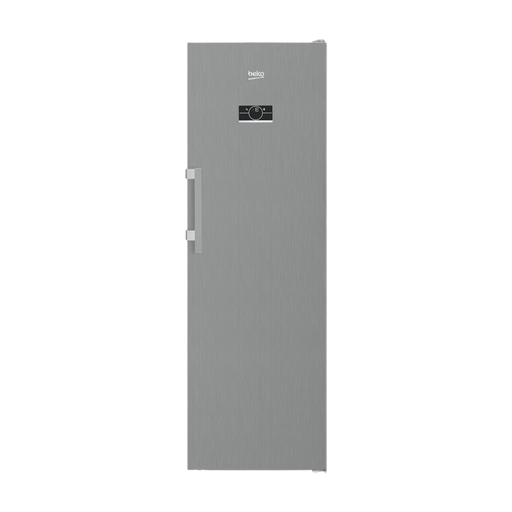
Suitable if you want to spread regular batches of baking and other supplies across several storage areas.
286 l usable capacity; No Frost; freezing capacity of 17 kg/24 h; five drawers, three compartments and two door shelves. Described as suitable for unheated rooms.
 No image available
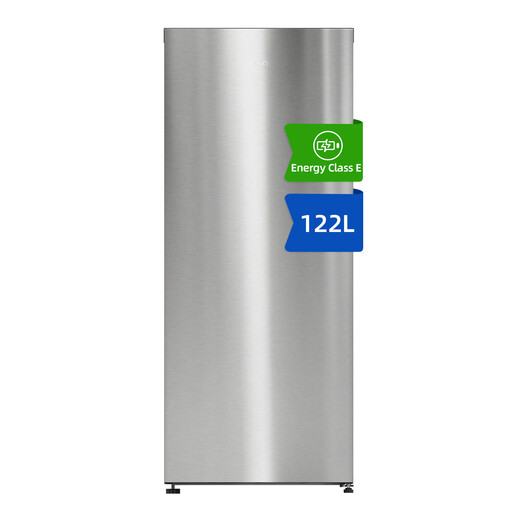
A potential fit if you’re looking for separate drawers and a compact design for portioned supplies.
122 l; four drawers; No Frost and Multi-Airflow. The width is listed as 47,5 cm; according to the description, the cooling function can be switched over.
 No image available
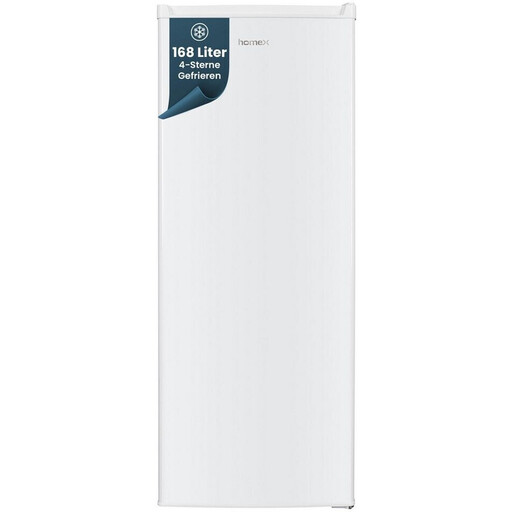
For several portions of baked goods and other supplies that you want to store in separate sections.
168 l; freezing capacity of 7,8 kg/24 h; four drawers and one flap compartment. The door is reversible; noise level is listed as 40 dB and energy efficiency class E.
 No image available
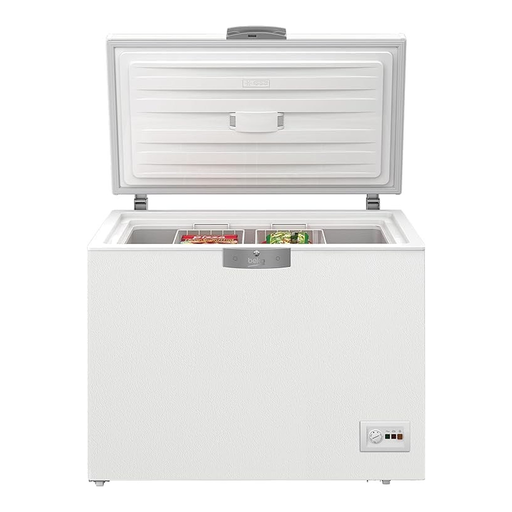
A potential fit for larger quantities if two baskets offer enough separation for your needs.
230 l usable capacity; two freezer baskets; temperature alarm and interior light. For frequent access to individual portions, a chest freezer offers fewer separate access levels than an upright freezer with several drawers.
Not necessarily. For small quantities now and then, a fridge freezer may be enough if there’s room in the freezer compartment to store portions separately. For larger quantities on a regular basis, the Verbraucherzentrale recommends considering a separate freezer.
Pack the portions you want separately in suitable freezer containers or bags, and label them with the contents and date they were frozen. The Federal Centre for Nutrition lists cakes, bread and rolls as examples of foods you can freeze. Check separately whether delicate fillings are suitable.
The Verbraucherzentrale recommends −18 °C as the optimum setting for both upright and chest freezers. This is usage advice, not a general buying criterion for a particular model.
Compare the kWh/year figures on the energy labels of models that suit your needs. Actual energy consumption also depends on how and where you use the appliance.
EU energy labelling rules also apply to online sales of new fridges and freezers that must carry an energy label. According to EU information, the labelling rules don’t apply to second-hand products.
Old electrical appliances must not go in household waste. The German Environment Agency says that when buying a similar replacement, you can return a large old appliance, including when you buy online with delivery. Check the arrangements before placing your order.