If your existing freezer compartment is rated four stars and has enough room for separate portions, you don’t need an extra appliance for banana slices. The German Federal Centre for Nutrition recommends freezing the amount you need in individual portions. If there isn’t enough space, choose an appliance size based on your overall freezing needs and check its dimensions, annual energy consumption and accessibility. A large freezer could be more than you need if you’re only storing a few portions of banana.
Which type of freezer is right for you?
If you freeze bananas in portions
If you want to take out slices at different mealtimes, first check whether your existing four-star freezer compartment has enough room for separate portions. The German Federal Centre for Nutrition recommends freezing the amount you need in individual portions.
Households with limited freezer space
If your existing freezer space isn’t enough but you only store small quantities, a compact appliance could be a good option. The German consumer advice centre recommends choosing a size that suits your actual needs.
Households with other frozen supplies
If you regularly freeze other foods as well as bananas, look for enough capacity and compartments that make it easy to reach what you need. Compare the capacity with the space required for all your frozen supplies.
What should you look for when buying?
The German Federal Centre for Nutrition recommends dividing food into the required portions before freezing. If you’re buying an extra appliance, also consider your overall freezing needs, its ongoing energy consumption and how much effort it takes to defrost.
| What matters to you |
What to check when buying |
Who is this especially important to? |
| Taking out portions separately |
Check there’s room to freeze portions separately and compartments for labelled portions. |
If I want to take out slices at different times, I need separate portions that are easy to find again. Around 38 % of consumers rank easy access to portions as their top priority. |
| The right size and space to install it |
Compare the external dimensions with the space available and the capacity with the amount of food you need to store. |
I want enough space for bananas and my other supplies, without choosing an appliance that’s much larger than I need. The right capacity is the top priority for around 31 % of consumers. |
| Annual energy consumption |
Consider the energy consumption in kWh per year alongside the capacity of the specific model. |
If an extra appliance will be running all the time, I want to weigh its energy consumption against the space I need. Around 23 % of consumers focus first and foremost on ongoing energy consumption when buying. |
| Defrosting effort |
Check the exact model to see whether it has NoFrost or simply reduces ice build-up. |
I want to keep manual defrosting to a minimum, so I check the precise feature description rather than relying on a similar-sounding name. Around 8 % of consumers prioritise low maintenance. |
Avoid common buying mistakes
-
Automatically buying a large freezer for a few portions
An appliance that’s much larger than you need can take up unnecessary space and use more electricity than necessary. The German consumer advice centre recommends checking your needs before buying.
First, measure the space in your existing four-star freezer compartment. Then work out how much extra room you need for all your frozen supplies.
-
Assuming a small freezer is always more energy-efficient
A smaller size alone doesn’t tell you how much energy the appliance will use over a year.
Compare the stated energy consumption in kWh per year with the freezer capacity of the specific models.
-
Confusing MinFrost with NoFrost
On Beko appliances, MinFrost reduces ice build-up. It isn’t the same as NoFrost.
Check the defrosting information for the exact model number before assessing how much maintenance it will need.
A model without NoFrost may need to be defrosted manually later on.
-
Freezing all the slices together in one large, unlabelled portion
According to the German Federal Centre for Nutrition, larger frozen quantities are harder to break apart. Without a label, it can also be more difficult to identify what’s inside later.
Divide the food into portions before freezing, use suitable freezer packaging and label each portion.
A guide to relevant models from leading brands
Severin
The GB 8886 and GS 8868 offer two different sizes to suit different freezing needs. The details below refer to these models.
- Severin lists a 32 l four-star freezer compartment for the GB 8886, and a 161 l capacity, three drawers and NoFrost for the GS 8868.
- The GB 8886 doesn’t have NoFrost. The GS 8868’s larger capacity should suit your overall storage needs.
Beko
The FSE1074N under-counter freezer is a compact freestanding option if you need extra freezer space.
- Beko lists a 95 l freezer capacity, a width of 54 cm and a static cooling system for this model.
- According to Beko, MinFrost reduces ice build-up; it isn’t confirmed as a NoFrost feature.
Bosch
The freestanding GSN29VWEP is an upright option for households that store other supplies as well as bananas.
- Bosch lists a 200 l freezer capacity, 221 kWh per year, NoFrost and alerts for an open door or rising temperature for this model.
- Its capacity may be more than you need if you’re only freezing a few portions of banana. The German consumer advice centre warns against buying an unnecessarily large appliance.
Liebherr
The GN 46Vd25 Plus is an upright option for larger quantities that you want to keep well organised.
- Liebherr lists a 199 l capacity and NoFrost for this model; a SmartDeviceBox can be fitted later.
- According to Liebherr, the SmartDeviceBox isn’t included as standard. Choose a capacity that suits your actual needs.
Joybuy products for portioned supplies
The selection includes compact freezers, an upright freezer, a chest freezer and an under-counter freezer. If you only want to freeze portions of banana, compare the capacity and dimensions with your overall freezer needs.
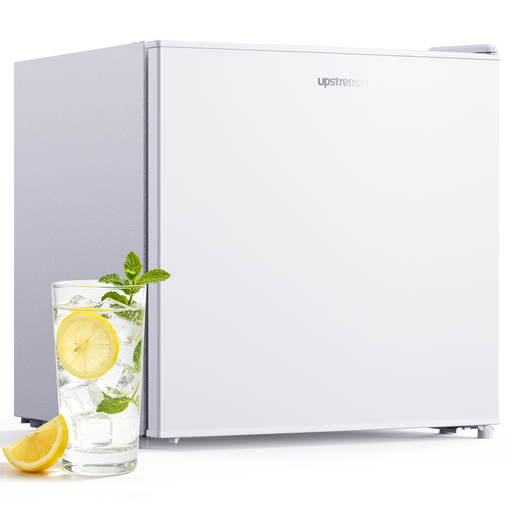 No image available
Upstreman UF35 mini freezer, 35 l, four-star freezer compartment
A compact extra appliance to consider if your existing freezer compartment doesn’t have enough room for separate portions.
35 l; four-star freezer compartment; reversible door.
View at Joybuy
 No image available
COMFEE' RCU40WH2(E) mini freezer, 31 l, four-star freezer compartment
A good option if you’re looking for a small amount of extra freezer space for portions and a few other supplies.
31 l; 147 kWh per year; energy efficiency class E; four-star freezer compartment.
View at Joybuy
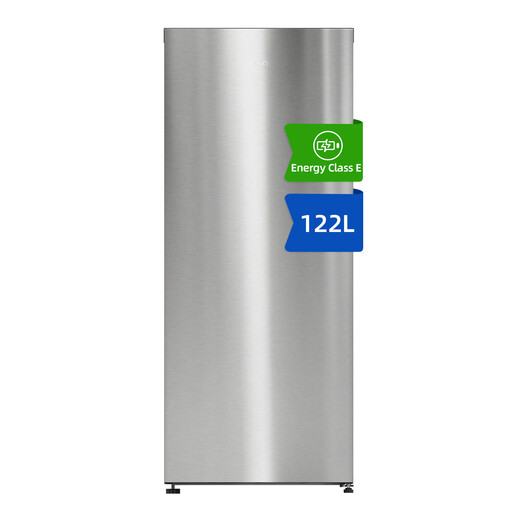 No image available
CHiQ JR122WSD upright freezer, 122 l, NoFrost
An upright model to consider if you regularly freeze other foods as well as bananas.
122 l; four-star freezing; NoFrost; switchable fridge mode.
View at Joybuy
 No image available
CHiQ chest freezer, 99 l, four-star freezing
A good fit if you want to store other supplies in a chest freezer alongside your portions of banana.
99 l; four-star freezing; energy efficiency class E; wire basket.
View at Joybuy
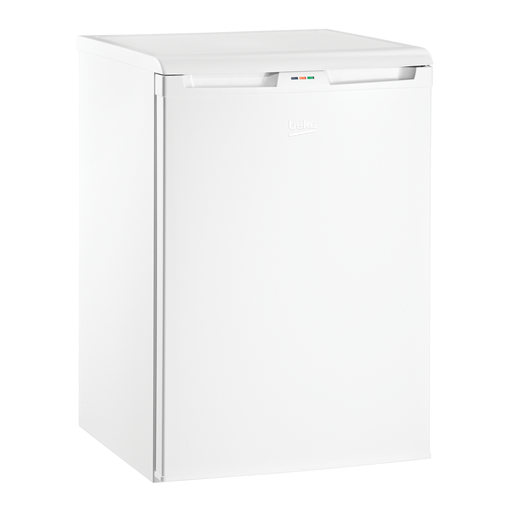 No image available
Beko FSE1074N b100 under-counter freezer, 95 l
An option to consider if your existing freezer compartment isn’t big enough and you’re looking for a freestanding under-counter appliance.
95 l; 54 cm wide; static cooling system. According to Beko, MinFrost reduces ice build-up and isn’t the same as NoFrost.
View at Joybuy
Frequently asked questions
Can you use any freezer compartment to freeze fresh banana slices?
No. According to the German Federal Centre for Nutrition, a four-star compartment is suitable for freezing food. Check the rating of your existing compartment.
How can you keep banana slices separate so you can take them out for different meals?
Divide the amount you need into small portions and label the packaging with the contents, quantity and date. The German Federal Centre for Nutrition recommends splitting larger quantities into portions before freezing. You can prepare thinly sliced bananas for future meals.
What temperature and packaging should you use?
The German consumer advice centre gives −18 °C as the optimum freezing temperature. The German Federal Centre for Nutrition recommends suitable freezer packaging with as little trapped air as possible to help limit quality loss caused by freezer burn.
What information should you compare when checking energy consumption?
Compare the annual energy consumption in kWh with the freezer capacity of the appliances you’re considering. The German consumer advice centre points out that an appliance that’s too large for your needs can use unnecessary electricity.
Which energy efficiency classes appear on the EU label for freezers?
For household refrigerators and freezers, the European Commission describes an EU energy label with classes from A to G. This scale has applied since 1 March 2021. When buying, also compare the annual energy consumption and capacity of each model.


