For a few portions of biscuit dough frozen occasionally, your existing freezer compartment is often enough, provided there’s room for the dough and, if needed, the tray for pre-freezing. A separate chest freezer makes more sense if you regularly freeze several batches or store other supplies. If you’re comparing models, look at usable capacity, the floor space required (including room for the lid) and the specific model’s annual energy consumption, rather than just its energy rating.
Who is a chest freezer right for?
Occasional bakers with a freezer compartment
You freeze individual portions of dough and want to check whether your existing compartment has enough room. The Consumer Advice Centre recommends a separate freezer mainly for storing larger quantities regularly; King Arthur Baking explains how to portion dough ahead for future baking days.
People living alone with limited space
You regularly freeze dough or other food and need to weigh up the freezer’s width and depth, plus the space needed to open the lid, against the room available. Manufacturer specifications for compact models show why it’s worth checking the external dimensions before buying.
Batch bakers
You prepare several batches at a time and need room to store small portions neatly. The Federal Centre for Nutrition recommends measuring out the quantities you need and freezing them in portions.
What should you look for when buying?
Keep using your existing freezer compartment
A good fit if: you only freeze individual portions occasionally and there’s room for the dough and a tray for pre-freezing.
The trade-off: Space is still limited, particularly when you need to pre-freeze dough on a tray.
Compact chest freezer
A good fit if: you regularly freeze several batches or extra supplies, and have enough floor space, including room for the lid.
The trade-off: More freezer space means another appliance running all the time. Consider usable capacity and annual energy consumption together.
Larger chest freezer
A good fit if: you regularly store substantial supplies as well as dough, and have room for a larger appliance.
The trade-off: Extra capacity may go unused if you only freeze small amounts of dough.
| Consideration |
What to check before buying |
Who is it particularly relevant to? |
| Do you need another appliance? |
Check that there’s enough free freezer space for the portions you’re planning to freeze and, if needed, the tray for pre-freezing. |
If I only freeze a few portions now and then, I want to know whether my existing compartment will really be enough. Around 33% of consumers focus on whether they need an additional appliance. |
| Space for the appliance |
Check the external dimensions against the space available, including room to open the lid and any clearance required for the model. |
In a small flat, the freezer needs to fit in its intended space with the lid open. Around 27% of consumers prioritise finding room for an appliance. |
| Energy use |
Compare the kWh per year on the specific model’s energy label with its usable capacity. |
If I run an additional appliance all the time, I want to understand its stated annual energy consumption. Around 20% of consumers base their choice first and foremost on running costs. |
| Organising portions |
Check that the interior, basket and freezing capacity suit the batches you plan to store. |
If you’re preparing for several baking days, you’ll want to take out individual portions and find them easily. Around 20% of consumers prioritise organising batches and portions. |
Avoid common buying mistakes
-
Buying a separate chest freezer straight away for a few portions of dough
Portioned dough may fit in your existing freezer compartment; an additional appliance will run all the time.
First, check how many portions you plan to freeze and how much freezer space is actually available. Only size up to a chest freezer if you regularly need extra capacity.
-
Comparing only capacity or energy rating
External dimensions and stated annual energy consumption vary from model to model. An energy rating alone doesn’t tell you the annual consumption in kWh.
Compare the usable capacity, external dimensions and kWh per year of the same specific model variant. The Federal Environment Agency points to the kWh figure as the source for annual energy consumption.
-
Freezing dough in one large, unlabelled block
A large block is difficult to divide into the quantities you need, and without a label you can lose track of what’s inside and when it was frozen.
Measure out portions for your planned baking days, pack them in freezer-safe packaging and label them with the contents and date. The Federal Centre for Nutrition recommends freezing measured quantities in portions.
A guide to relevant brands
Klarstein
The Iceblokk 51L is a small chest freezer that could provide extra freezer space.
- Klarstein states that the black version has 51 l of usable capacity, a removable basket and a drain valve for manual defrosting.
- It offers less extra space than the 98 to 100 l models mentioned here; this does not imply a comparison of freezing performance.
Exquisit
The GT100-050E weiss is a 99-l chest freezer that the manufacturer also describes as a second appliance.
- Exquisit gives a width of 54,5 cm, a cabinet depth of 48,0 cm, a freezer basket and annual energy consumption of 169 kWh.
- Clearance requirements and actual energy consumption depend on the model and how it is used; manufacturer specifications are not a real-world test.
Beko
The CF100EWN is a chest freezer with 98 l of freezer space.
- According to Beko’s German manufacturer website, the model measures 54,5 × 84,5 × 54,5 cm (W × H × D) and has an energy rating of E.
- Beko describes the cooling system as static. Check the model-specific details about manual defrosting before buying.
Bomann
The GT 7355 weiß is a 100-l model for which the manufacturer states the energy consumption and freezing capacity.
- Bomann gives annual energy consumption of 135 kWh, a removable basket and a freezing capacity of 4,5 kg per 24 hours.
- These figures apply under the relevant test conditions and do not guarantee the same electricity costs in every household.
Liebherr
At 192 l, the CFc 1875 Plus offers a size comparison for larger supplies, rather than being an automatic choice for a few portions of dough.
- Liebherr gives a width of 104 cm and says SmartFrost helps reduce frost build-up.
- The extra space it takes up may be impractical for small amounts of dough; SmartFrost does not mean you never need to defrost it.
Chest freezers at Joybuy
This Joybuy selection includes chest freezers for portioned biscuit dough and extra supplies. Compare usable capacity, external dimensions and stated annual energy consumption with the space you have and the amount you need to freeze.
 No image available
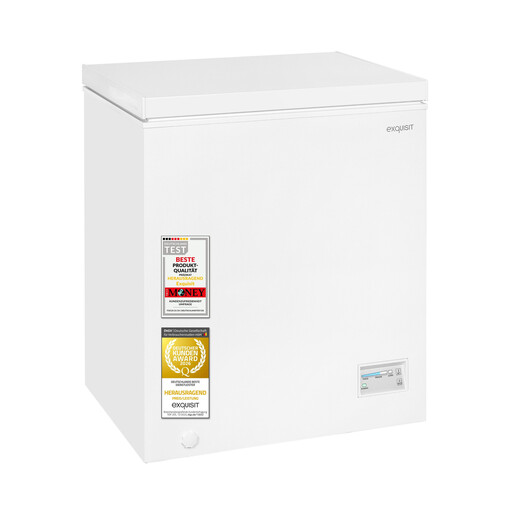
Exquisit chest freezer, 142 l, 4-star freezer compartment
For regularly frozen portions of dough and other supplies, this model offers 142 l of usable capacity and a removable basket.
According to Joybuy product details: freezing capacity of 7 kg per 24 hours, 182 kWh per year and dimensions of 70,5 × 84,5 × 55 cm. Manual defrosting is required.
View at Joybuy
 No image available
AUCMA chest freezer, 141 l, convertible
The removable basket gives you a way to organise individually portioned frozen food and other supplies.
According to Joybuy product details: 141 l capacity, freezing capacity of 8 kg per 24 hours, 179 kWh per year and dimensions of 632 × 554 × 848 mm. The appliance can switch between fridge and freezer modes; energy rating E is stated.
View at Joybuy
 No image available
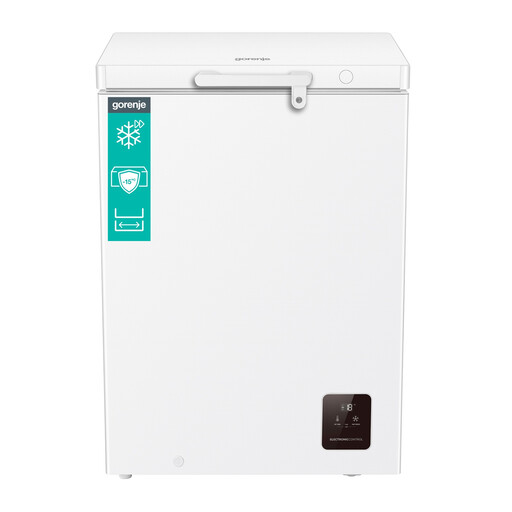
Gorenje FH15E6W5 chest freezer, 141 l
For several portions and extra supplies, this model offers a flexible basket and 141 l of usable capacity.
According to Joybuy product details: 4-star freezer compartment, freezing capacity of 8 kg per 24 hours, 182 kWh per year and dimensions of 606 × 559 × 858 mm. Defrosting is recommended when ice has built up.
View at Joybuy
 No image available
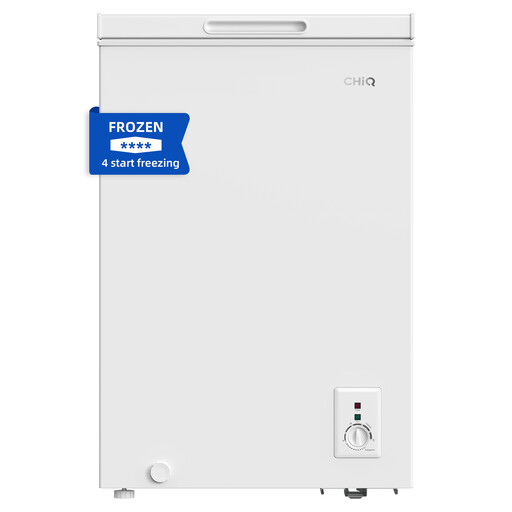
CHiQ chest freezer, 99 l, 4-star freezing
The 99 l capacity and wire basket provide freezer space and a way to organise smaller supplies.
According to Joybuy product details: freezing capacity of 4,5 kg per 24 hours, energy rating E and dimensions of 54,5 × 47,6 × 83,5 cm.
View at Joybuy
 No image available
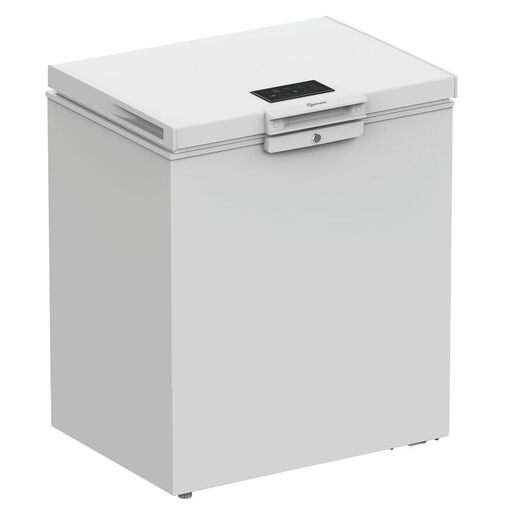
Bauknecht GTE 150MD chest freezer, 142 l
For portioned frozen food and extra supplies, this model offers a basket and 142 l of freezer space.
According to Joybuy product details: freezing capacity of 8 kg per 24 hours and 146 kWh per year. The Multi-Zone function lets you switch between fridge and freezer modes; defrosting is recommended if excessive ice builds up.
View at Joybuy
Frequently asked questions
Can I prepare dough for individual baking days?
Yes, pliable biscuit dough can be prepared in portions and frozen. King Arthur Baking explains how to portion and pre-freeze dough before wrapping and labelling it; the Federal Centre for Nutrition recommends measured portions and suitable freezer packaging. How long it keeps depends on the recipe.
What should I consider when positioning a chest freezer?
Measure the route for moving it and the space where it will stand, including the room needed to open the lid, and follow the model’s instructions. The Federal Environment Agency recommends keeping freezers away from heat sources and direct sunlight, and opening the door only briefly. Any required clearances depend on the appliance.
How can I compare the energy consumption of different chest freezers?
Compare the stated annual energy consumption in kWh for the specific models and take each one’s usable capacity into account. The Federal Environment Agency identifies the annual kWh figure on the EU energy label as a useful point of comparison; actual consumption also depends on where and how the appliance is used.
Which energy label applies to freezers in Germany?
Refrigeration and freezer appliances covered by the rules use the EU energy label under Regulation (EU) 2019/2016. The label, introduced in 2021, runs from A to G and shows annual energy consumption in kWh; older A+++ ratings cannot be directly equated with a new rating.
Can I put an old chest freezer in household rubbish?
No. Old electrical appliances must be disposed of separately. The Federal Environment Agency recommends using local collection points or returning the appliance when you buy a new one. A retailer’s obligation to take back an equivalent old appliance free of charge depends on the conditions set out in § 17 ElektroG; check the arrangements before delivery.


