You don’t need an additional freezer if your labelled portions of carrots will fit alongside your other supplies in a suitable freezer you already have. If you’ll be taking out individual portions regularly, an upright freezer with drawers is handy; for large stocks and enough floor space, a chest freezer may be a good option. Compare your largest fresh batch with the capacity of the specific model in kg/24 h, and check its annual energy consumption in kWh.
Which option suits you?
Batch meal preppers
If you’re preparing lots of portions of carrots in one go, the size of your largest fresh batch, available storage space and a suitable freezing process all matter. The German consumer advice centre recommends taking your needs and the capacity of the specific model into account.
Those sharing out portions
If you cook together but use the carrots on different days, well-organised compartments or baskets and consistent labelling can make things easier. The German Federal Centre for Nutrition recommends noting the contents, quantity and date on the packaging.
Households short on space
If you have limited room for an additional appliance, first check the freezer space you already have, then compare the dimensions with your storage needs. The German consumer advice centre points out that an appliance larger than you need could use more electricity than necessary.
What should you look for when buying?
First compare the largest batch you plan to freeze in one day with the appliance’s freezing capacity. Then consider access to individual portions, available floor space and running costs to find the right design.
| Consideration |
What to check before buying |
Who is this important to? |
| Fresh batch for one day |
Weigh the largest quantity of carrots you plan to freeze and compare it with the capacity of the specific model in kg/24 h. Usable capacity in litres is a separate figure. |
If you’re freezing lots of carrots in one go, the appliance needs to be able to handle your largest fresh batch. Around 31% of consumers prioritise batch capacity. |
| Individual portions |
Check that your containers will fit in the drawers or baskets, and label the contents, quantity and date consistently. |
If you’ll be taking out carrots on different days, you’ll want to find the labelled portions without searching for ages. Around 25% of consumers prioritise easy access to individual portions. |
| Floor space |
Check the specific model’s external dimensions, the space needed to open the door or lid, the delivery route and the required clearance around the appliance. |
If there’s limited room where you plan to put it, the appliance needs to fit with its lid or door open as well. Around 19% of consumers prioritise the space available for the appliance. |
| Energy use and maintenance |
For appliances of a similar size that meet your needs, compare the annual energy consumption in kWh on the EU energy label. Don’t assume NoFrost, static cooling and reduced ice build-up are the same thing. |
If you’ll be using an additional appliance all the time, you’ll want to consider its electricity consumption and how much defrosting it will need. Around 25% of consumers prioritise running costs and maintenance. |
Common buying mistakes
-
Confusing usable capacity with freezing capacity
Litres tell you how much storage space there is, not how much fresh food the appliance can freeze within 24 hours.
Check both figures against the full model name, and weigh your largest planned batch for one day separately.
-
Buying a large chest freezer for just a few portions of carrots
An unnecessarily large appliance may use more electricity than you need and take up extra floor space.
First check the freezer space you already have and factor in all your storage needs, not just the carrots.
An additional appliance will use electricity continuously and take up floor space.
-
Assuming less ice build-up means NoFrost
Liebherr describes SmartFrost on the CFe 2500 as reducing how often you need to defrost; it is not the same as NoFrost. Beko describes the HSM10440 as using static cooling.
Compare the cooling and defrosting technology listed for the full model.
If you choose a model without NoFrost, factor in the defrosting it will need.
-
Comparing an older energy rating with today’s EU label
Since 1 March 2021, the European Commission has used an A-to-G scale for household refrigerators and freezers. This means an earlier A++ rating is not directly comparable.
Check the current EU product information sheet for the specific appliance and compare its annual energy consumption in kWh.
Brands to consider
Bosch
The manufacturer’s specifications for the GSN29VWEP offer an example of a larger upright freezer.
- Bosch lists a capacity of 200 l, NoFrost and a freezing capacity of 16,0 kg/24 h for this model.
- At 161 cm high and 60 cm wide, it needs space; these specifications don’t necessarily apply to other Bosch models.
Liebherr
The range includes compact upright freezers and large chest freezers to suit different storage needs.
- Liebherr lists a capacity of 92 l, NoFrost and FrostProtect for the FNdi 1624; the CFe 2500 is a chest freezer with a capacity of 497 l.
- For the CFe 2500, Liebherr says SmartFrost means defrosting less often, not that defrosting is no longer needed. Its large capacity should suit your overall storage needs.
Beko
The HSM10440 is an example of a compact chest freezer.
- Beko lists a usable capacity of 104 l, a width of 53,7 cm and static cooling for this model.
- These figures alone don’t tell you whether the model can handle a particular fresh batch for one day.
Suitable products at Joybuy
The models below include upright freezers for keeping portions separate and chest freezers for storing larger stocks together.
 No image available
homeX FSN2041E-S, 204 l
An upright design with several compartments may be useful for storing portions separately.
Listed in the product name: 204 l, NoFrost, Super Freeze, 39 dB and energy class E.
View at Joybuy
 No image available
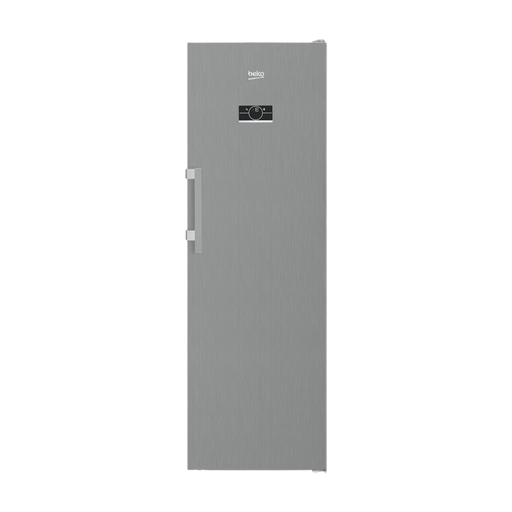
Beko B7RFNE315XP, 286 l
This upright design may suit you if you’re looking for separate storage areas.
Listed in the product name: 286 l, No Frost, Fast Freeze and energy class D.
View at Joybuy
 No image available
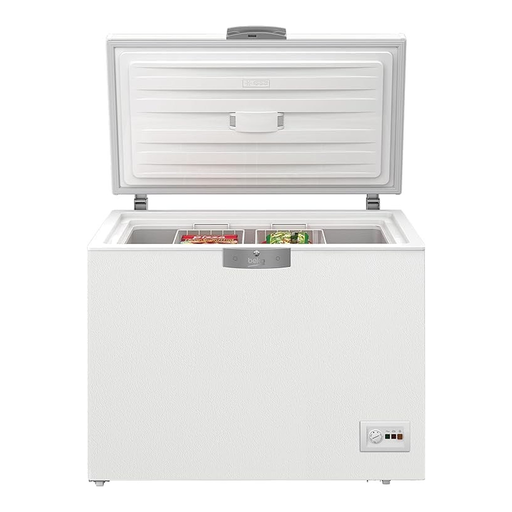
Beko HSM22340, 230 l
A chest freezer may suit you if you have room for one and need a single, spacious storage area.
Listed in the product name: 230 l and two freezer baskets.
View at Joybuy
 No image available
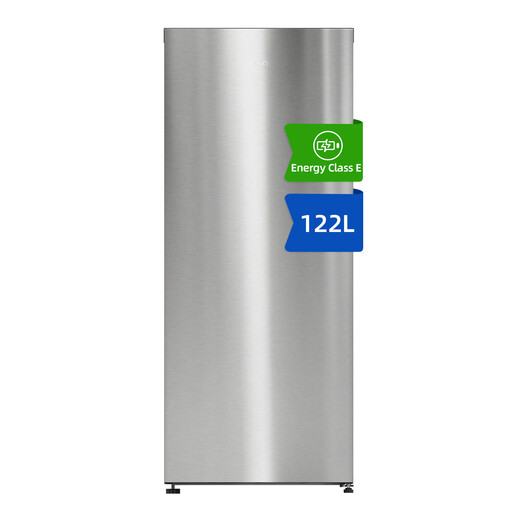
CHiQ JR122WSD, 122 l
This compact upright design may suit you if you have limited floor space.
Listed in the product name: 122 l, No-Frost, Multi-Airflow and energy class E.
View at Joybuy
 No image available
COMFEE' RCU60WH2(E), 60 l
A smaller upright model may be a good option if you only need a little extra storage space.
Listed in the product name: 60 l, three compartments and a reversible door.
View at Joybuy
Frequently asked questions
How should we prepare blanched carrots for shared meal prep?
Wash and prepare the vegetables, blanch them briefly in boiling water, then cool them in iced water. Divide them into suitable portions, pack them in freezer bags or containers with as little air as possible, and note the contents, quantity and date. The German Federal Centre for Nutrition doesn’t specify one standard blanching time for carrots of every size.
How should we store and use the portions of carrots?
The German consumer advice centre recommends −18 °C as the optimum temperature for a freezer. Label the portions consistently so you can identify the contents and date when cooking together; vegetables can be cooked from frozen.
Is there enough capacity for our shared batch?
As well as the usable capacity in litres, check the freezing capacity of the specific model in kg/24 h. Weigh the largest fresh batch you plan to freeze, as storage space and freezing capacity are two different things.
Which figures can help us compare energy consumption?
For appliances of a suitable size, compare the annual energy consumption in kWh on the EU energy label. The German Environment Agency lists annual energy consumption as a label figure; actual household consumption can also depend on how and where the appliance is used.
What should we bear in mind if the freezer is in an unheated room?
Check the permitted ambient temperature range and installation guidance for the exact model rather than assuming it’s suitable based on its design. For example, Liebherr lists FrostProtect for the FNdi 1624, allowing an ambient temperature of down to −15 °C; this manufacturer’s specification applies to that model.


