Which option suits you?

Occasional portion-freezers

If you only freeze carrots now and then for individual meals, first check whether your existing four-star freezer compartment is suitable and has enough free space. Verbraucherzentrale highlights the four-star rating for freezing fresh food, while the Federal Centre for Nutrition recommends measuring out the amount you need into individual portions.

Single households with limited space

If you need extra freezer space but have little room, compare the external dimensions and usable capacity of a compact freezer with what you actually need. Verbraucherzentrale lists small freezers as a possible solution for households with modest requirements.

Regular batch cookers

If you regularly freeze other food as well as carrots, storage space, the interior layout and freezing capacity all matter. Manufacturer specifications for models such as the Gorenje F49DPW can help you make a comparison; they are not measurements taken in a home.

What to consider when choosing

Existing four-star freezer compartment

Suitable if: You want to freeze a few portions and the compartment is suitable for fresh food.

What to consider: The available space and freezing capacity of the existing compartment set the limits.

Compact freezer

Suitable if: You need a separate appliance but only plan to freeze a few portions and have limited space.

What to consider: The interior capacity is limited, and you should compare the stated annual energy consumption with your needs.

Small upright freezer

Suitable if: You want to store several portions or keep other food alongside carrots in an organised way.

What to consider: More storage space takes up more room; capacity alone doesn’t tell you the freezing capacity.

Chest freezer

Suitable if: You can store larger quantities long term and have enough room to position the appliance and open the lid.

What to consider: Verbraucherzentrale says chest freezers use less energy than upright freezers; this isn’t a blanket recommendation for freezing individual portions of carrots.

Criteria What to check when buying Who is this important to?
Using an existing compartment Check the four-star rating, available space and freezing capacity of the specific compartment. If I only freeze carrots occasionally, I want to know first whether my existing compartment is up to the job. Around 31% of consumers are likely to put this question first.
Space available Compare external dimensions, clearance to open the door and usable capacity in litres. If space is limited, I want to fit in an appliance without setting aside more storage space than necessary. Around 25% of consumers are likely to give particular weight to the space it takes up.
Capacity and freezing performance Compare usable capacity, interior layout and kg/24 h separately with the fresh portions you plan to freeze. If I regularly freeze carrots and other food, I need organised storage and enough freezing capacity. Around 25% of consumers are likely to prioritise regular food storage over the smallest possible external dimensions.
Annual energy consumption Consider kWh/year on a comparable energy-label basis, as well as the capacity you actually need. If I’m adding an appliance that will run all the time, I want to weigh its annual energy consumption against the storage space I need. Around 19% of consumers are likely to consider running costs first.

Common mistakes when choosing

  • Assuming the smallest freezer is automatically the most efficient

    A compact design doesn’t automatically mean lower annual energy consumption. The manufacturer states that the Severin GB 8886 uses 148 kWh/year and has a usable capacity of 32 l.

    Only consider appliances with enough space and freezing capacity, and compare their kWh/year figures.

  • Confusing usable capacity with freezing capacity

    Litres describe storage space, while kg/24 h is a separate appliance specification. Gorenje states that the F49DPW has a capacity of 85 l and can freeze 4 kg in 24 hours.

    If you’re freezing several freshly blanched portions, compare both figures separately with the amount you plan to freeze.

  • Buying an extra appliance without checking your existing compartment

    For occasional freezing, Verbraucherzentrale also lists a suitable existing freezer compartment as a possible solution.

    First check the four-star rating, available space and the amount you plan to freeze.

  • Taking a ‘chest freezer’ description at face value

    The Joybuy listing for the Gorenje F49DPW describes it as a chest freezer, which differs from the manufacturer’s information: Gorenje describes the model as an upright freezer with three drawers.

    Check the appliance type and model number against the manufacturer’s details before planning where to put it and how you’ll access it.

Brands and model examples

Beko

The FS166020 is a freestanding under-counter model with 65 l of freezer space.

  • Beko gives its dimensions as 81.8 × 47.5 × 50 cm and says the door hinge is reversible.
  • This model’s static cooling system is not listed as NoFrost.

Liebherr

The Fe 1003 Pure is an under-counter freezer with a total capacity of 75 l.

  • Liebherr gives the dimensions as 68 × 55 × 60.7 cm and includes SmartFrost.
  • According to the manufacturer, SmartFrost reduces ice build-up but doesn’t eliminate the need to defrost completely.

Gorenje

According to the manufacturer, the F49DPW is an upright freezer with a capacity of 85 l.

  • Gorenje lists three drawers and a freezing capacity of 4 kg in 24 hours.
  • The manufacturer states an annual consumption of 131 kWh/year; the model requires manual defrosting. These are manufacturer specifications, not measurements taken in a home.

Severin

The GB 8886 is a compact freezer with a capacity of 32 l.

  • Severin lists a four-star compartment and a freezing capacity of 2 kg in 24 hours.
  • The manufacturer states an annual consumption of 148 kWh/year; it does not have Total NoFrost.

Exquisit

The GB05-040E weiss is a compact freezer with a usable capacity of 33 l.

  • According to the manufacturer, the model measures 44 × 51 × 47.5 cm, has a four-star compartment and can freeze up to 2.4 kg in 24 hours.
  • Before buying, check that its external dimensions and capacity suit the space you have and the containers you plan to use.

Joybuy products for extra freezer space

The following Joybuy models are freestanding freezers that provide extra freezer space; they may be suitable if your existing compartment isn’t large enough.
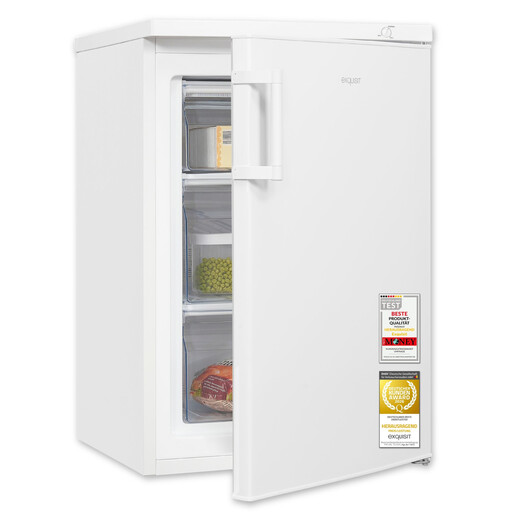
Exquisit GS581-H-010E upright freezer

Exquisit GS581-H-010E upright freezer, 85 l

An option if you want to store other food alongside carrots in an organised way.

The product name lists 85 l, three drawers, a four-star compartment and a reversible door hinge. Manual defrosting is required.

View at Joybuy
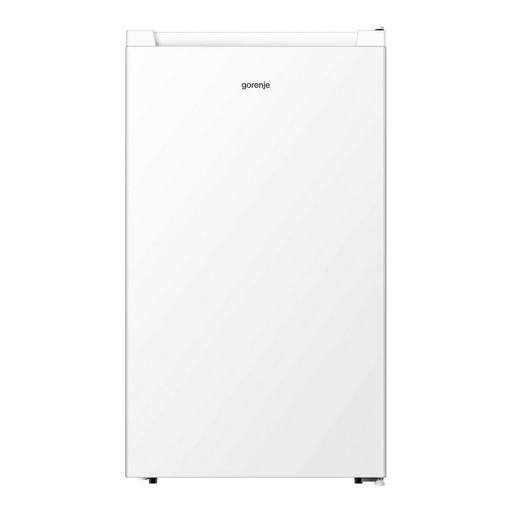
Gorenje F39EPW4 under-counter freezer

Gorenje F39EPW4 under-counter freezer

This under-counter model may suit you if you’re looking for a separate freezer and have space set aside for it.

The product name lists energy class E.

Manual defrosting is required.

View at Joybuy

COMFEE' RCU40WH2(E) mini freezer

COMFEE' RCU40WH2(E) mini freezer, 31 l

Its compact design is an option if you only need to freeze a few portions and space is limited.

The product name lists 31 l, a four-star compartment, a freezing capacity of up to 2 kg in 24 hours, 147 kWh/year and energy class E.

According to the product name, the door is reversible.

View at Joybuy
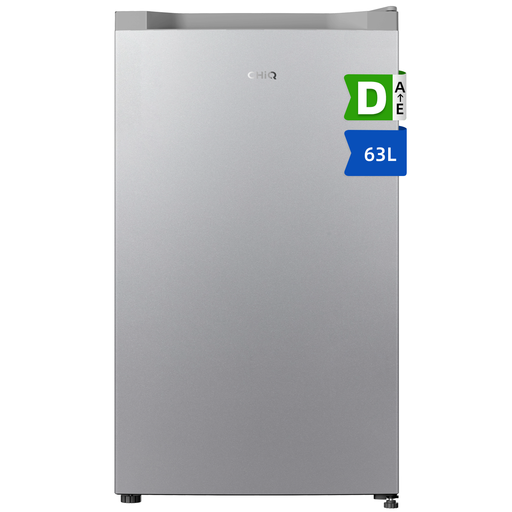
CHiQ JR63DSD upright freezer, 63 l

CHiQ JR63DSD upright freezer, 63 l

A possible choice if you want to store portioned food in a separate appliance but have limited space.

The product name lists 63 l, two drawers, a four-star compartment, a width of 47 cm and energy class D.

Manual defrosting is required.

View at Joybuy

COMFEE' RCU60WH2(E) upright freezer, 60 l

COMFEE' RCU60WH2(E) upright freezer, 60 l

If you’re adding several fresh portions at once, a model with separate storage areas can help you keep everything organised.

The product name lists 60 l, three storage areas and an adjustable temperature. The door is reversible.

View at Joybuy

Frequently asked questions

How should I prepare blanched carrots for individual meals?

Cool the blanched vegetables in iced water, then pack the quantities you need into freezer-safe packaging in individual portions. The Federal Centre for Nutrition recommends leaving as little trapped air as possible, and labelling each pack with its contents, quantity and date.

How can I tell if a small freezer is suitable for freezing fresh food?

Check that it is suitable for fresh food and look at its freezing capacity in kg/24 h, not just its usable capacity. For a fridge-freezer compartment, the four-star rating is relevant; −18 °C is the key target temperature for longer-term storage (Verbraucherzentrale).

What should I consider when positioning and switching on the appliance for the first time?

Follow the instructions for the specific model and check the permitted ambient temperature. For its fridges and freezers, Severin recommends leaving the appliance to stand for at least four hours before switching it on if it has not been kept upright during transport. This is a manufacturer recommendation, not a general rule for every appliance.

How do I compare energy consumption, and what are my rights if the appliance develops a fault?

Compare the stated kWh/year figures; actual consumption also depends on how and where the appliance is used. In Germany, statutory rights against the seller are separate from a voluntary guarantee (Verbraucherzentrale).

Can I put an old freezer in household rubbish?

No. In Germany, old electrical appliances must be handed over to an authorised collection point, such as a municipal recycling centre or a retailer that is obliged to take them back. Retailers’ obligations depend, among other things, on the size of their sales area and whether you’re buying an equivalent new appliance; free collection from your home isn’t automatically offered with every purchase (Federal Ministry for the Environment).