If you only have a few portions of your own, first check whether an existing freezer compartment is big enough; the Verbraucherzentrale advises against choosing an appliance that is much larger than you need. In a house share, a freezer with drawers can make it easier to keep everyone’s food separate, while a chest freezer may suit you if you regularly store larger quantities and have enough space for it. When comparing specific models, check their usable capacity, freezing capacity and annual energy consumption, and agree who will use the appliance.
Which appliance is right for you?
A house share with a shared supply of broccoli
If several people regularly freeze portions, you’ll need enough storage space and a clear way to keep everyone’s food separate. The Verbraucherzentrale offers guidance on choosing a freezer that suits your needs, while the Federal Centre for Nutrition recommends labelling frozen portions with their contents, quantity and date.
Someone with just a few portions of their own
If you only freeze small amounts now and again, start by checking whether an existing freezer compartment is big enough. The Verbraucherzentrale points out that an oversized appliance can use more electricity than necessary.
A kitchen with larger harvests or shopping hauls
When freezing larger batches, you’ll need to consider both the available storage space and the freezing capacity of the appliance. As the Federal Centre for Nutrition explains, portioning and labelling make it easier to manage shared supplies afterwards.
What should you look for when buying?
In a shared kitchen, usable capacity, portion organisation, freezing capacity and annual energy consumption all need to work together. The Verbraucherzentrale recommends choosing an appliance to suit your actual needs.
Existing freezer compartment or a small appliance
A good choice if: you only have a few portions of your own and can first check the freezer space you already have.
Consider: A small appliance takes up less floor space, but offers less room for new batches and won’t necessarily use less electricity.
Upright freezer with drawers
A good choice if: several people want to store labelled portions separately and take them out frequently.
Consider: Drawers can make it easier to keep food organised, but depending on their layout, they may leave less room for larger containers.
Chest freezer
A good choice if: you regularly have larger batches of broccoli and other food to store, and have enough space for the appliance.
Consider: According to the Verbraucherzentrale, a chest freezer generally uses less energy than an upright freezer. For a specific model, though, check its annual figures and make sure everyone agrees how to organise the shared supplies.
| What you need |
What to check when buying |
Who should pay particular attention? |
| Usable capacity that suits your needs |
Work out how much freezer space you need to share and how much room you have; compare the model’s usable capacity and external dimensions. |
If several people are storing broccoli and other food, I need enough space without having to make room for an oversized appliance. Around 33% of consumers prioritise suitable capacity and available space. |
| Separate portions |
Check the appliance’s drawers or baskets and agree on a shared labelling system that includes the contents, quantity and date. |
When we share freezer space, I want to find my portions quickly and easily. Around 27% of consumers prioritise keeping portions clearly organised. |
| Larger batches to freeze |
Compare the stated freezing capacity with the batch you’re planning; don’t put fresh food straight on top of food that is already frozen. |
If we regularly have larger harvests or shopping hauls, I want to know how much fresh food the appliance can freeze at once. Around 20% of consumers prioritise freezing larger quantities. |
| Annual energy consumption |
Compare the stated kWh per year for appliances of a suitable size, and agree how the appliance’s use will be shared in the house. |
If we’re running an extra appliance all the time, I want to take its energy consumption into account alongside the storage space available. Around 20% of consumers pay particular attention to ongoing electricity use. |
Avoiding buying pitfalls
-
Looking only at the capacity in litres
You may not need a large capacity: the Verbraucherzentrale points out that an oversized appliance can use more electricity than necessary. If you only freeze the odd portion, your existing freezer space may be enough.
First work out how much space you need to share and how big your usual batches are. Then compare the usable capacity and external dimensions with the space you have available.
-
Storing broccoli without a label or in unsuitable packaging
Without clear labels, it’s harder to keep track of the contents, quantity and date of portions stored together. The Federal Centre for Nutrition recommends suitable packaging filled with as little air as possible, and labelling it accordingly.
Agree on a shared standard for packaging and labelling, and divide the broccoli into portions for later use.
-
Choosing based on the appliance style alone
According to the Verbraucherzentrale, a chest freezer generally uses less energy than an upright freezer. But when choosing a specific appliance, you’ll also need to consider its size, how easy it is to take food out and its energy figures.
Compare suitable models by their footprint, storage layout and stated annual energy consumption, rather than choosing based only on whether they have drawers or on their style.
Brands to consider
Liebherr
Liebherr’s German product pages list both the FNdi 1624 under-counter freezer and the larger FNd 4625 upright freezer. These are examples of models suited to different space requirements.
- According to Liebherr, both of these models have NoFrost.
- Liebherr lists a total capacity of 199 l and external dimensions of 145,5 × 59,7 × 67,5 cm for the FNd 4625; these details apply to this model only.
Beko
Beko offers the freestanding RFNE312E43WN upright freezer, with a capacity of 275 l for households that need more shared storage.
- Beko’s product page lists a reversible door, which may be useful for certain kitchen layouts.
- Check that the appliance’s dimensions fit the space you have available. Capacity alone doesn’t tell you its energy consumption or whether it’s suitable for a particular batch of food.
Haier
The Haier HCE200C is a 196 l chest freezer, offering an alternative to an upright freezer with drawers.
- Haier lists a Fast-Freeze function and external dimensions of 915 × 555 × 845 mm for this model.
- According to Haier, this chest freezer has no drawers. The manufacturer’s information about its freezing technology is not an independent performance test.
Bauknecht
The Bauknecht GTE 193 A2+ is an example of a smaller chest freezer, with a capacity of 166 l and one basket.
- Bauknecht lists an annual consumption of 190 kWh/year and a freezing capacity figure of 9.5 for this model.
- The product page gives its current energy efficiency class as E. The older model designation “A2+” is not the same as this class.
Freezers at Joybuy
This selection includes upright freezers with drawers and compact appliances for smaller portions. If you only have a little broccoli to freeze, an existing freezer compartment is still an option.
 No image available
Heinrich’s upright freezer, 161 l, Inox
The drawers and shelves can help you keep portions separate in a shared kitchen.
161 l; NoFrost; Fast Freeze; 3 freezer drawers and 2 shelves; energy class C; temperature range −14 °C to −22 °C.
View at Joybuy
 No image available
Exquisit GS581-H-010E, 85 l
The three drawers provide dedicated compartments for keeping labelled portions separate.
85 l; freezing capacity 4,0 kg in 24 hours; 3 transparent drawers; 4-star freezer compartment; reversible door; manual defrost.
View at Joybuy
 No image available
Upstreman UF35 mini freezer, 35 l
This compact appliance could be an option if you only have a few portions and limited storage space; check that it can fit your usual batches.
35 l; 4-star freezing performance; temperature range −21 °C to −8 °C; 41 dB; reversible door; removable inner compartment.
View at Joybuy
 No image available
COMFEE’ RCU40WH2(E) mini freezer, 31 l
The stated freezing capacity can help you check whether the appliance is suitable for the batch you’re planning.
31 l; freezing capacity up to 2 kg in 24 hours; 4-star freezer compartment; 147 kWh/year; energy class E; reversible door; adjustable feet.
View at Joybuy
 No image available
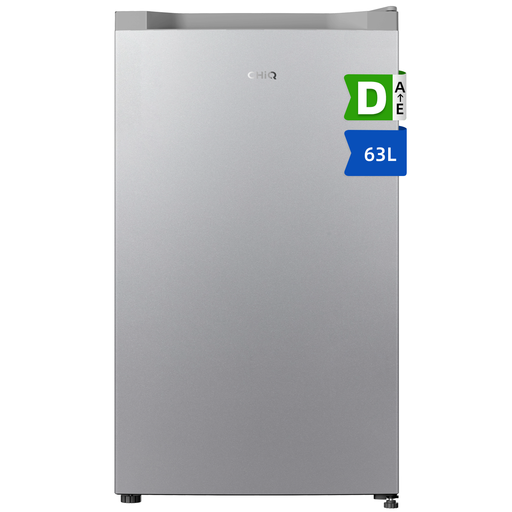
CHiQ JR63DSD upright freezer, 63 l
Two adjustable drawers can help keep labelled portions from a shared house separate.
63 l; 4-star freezing performance; 2 adjustable drawers; 47 cm wide; 38 dB; manual defrost; reversible door; energy class D.
View at Joybuy
Frequently asked questions
How should I prepare blanched broccoli for a shared freezer?
After briefly blanching the broccoli, cool it in iced water and divide it into portions, packing each one in a suitable freezer container with as little air as possible. The Federal Centre for Nutrition recommends writing the contents, quantity and date on each pack; try not to place fresh, unfrozen portions directly on top of food that is already frozen.
What temperature should a freezer be set to?
The Verbraucherzentrale recommends −18 °C as the ideal temperature for an upright or chest freezer. Check how to set and monitor the temperature on the model you choose; if it doesn’t have NoFrost, remember to factor in defrosting too.
How can I tell whether an appliance is right for the batch I want to freeze?
Compare the specific model’s stated freezing capacity with the quantity you want to freeze at one time. Usable capacity and freezing capacity tell you different things: storage space alone won’t tell you how much fresh food the appliance can freeze in one go.
Which details on the energy label are useful when comparing appliances?
The Verbraucherzentrale lists details such as the model, energy efficiency class, annual energy consumption, capacity and noise level on the EU energy label. Compare annual consumption in kWh for appliances that are the right size for your needs.


