For a few lunchbox portions, an existing **** freezer compartment is often enough, provided it is suitable for freezing fresh food and has room for separately stored portions. An extra appliance is more worth considering if space is regularly tight. If so, compare its capacity, annual energy consumption and ease of access with your actual needs. Raw cookie dough should never go into a lunchbox unbaked: the German Federal Institute for Risk Assessment advises against it.
Which type of freezer is right for you?
Those who prepare lunchboxes for the week
Portioning dough in advance means you can take out just the amount you need on baking day. A suitable freezer compartment and labelled containers help you store portions separately. The Federal Centre for Nutrition recommends freezing food in portions once you know how much you will need.
Households with limited freezer space
If your existing compartment is often full but there’s no room in the kitchen for a large freestanding appliance, usable capacity and dimensions are key. Germany’s consumer advice centre points out that a freezer that’s too large for your needs can use unnecessary electricity.
Households with larger stocks of food
If you regularly freeze other foods as well as cookie dough, you’ll need space for different quantities and an interior that’s easy to access. The drawer layout and external dimensions should suit your available space and storage needs.
What should you look for when buying?
Existing **** freezer compartment
A good fit if: you prepare only a few portions and the compartment can freeze fresh food.
The trade-off: Usable space and the need to store portions separately limit how many new portions will fit alongside your existing food.
Compact under-counter freezer
A good fit if: you regularly freeze small quantities and want to store them separately, but have limited floor space.
The trade-off: Check the dimensions of your containers and drawers, as well as annual energy consumption. Compact external dimensions don’t necessarily mean more usable interior space or lower energy use.
Larger freezer
A good fit if: you regularly freeze other foods or larger batches as well as dough.
The trade-off: More capacity takes up more space; an oversized appliance can use unnecessary electricity.
Chest freezer
A good fit if: you regularly freeze larger quantities of food, regardless of your cookie dough, and have a suitable place for it.
The trade-off: You’ll need an interior storage system that makes it easy to take out small portions of dough.
The Federal Centre for Nutrition distinguishes between freezer compartments for storing food and a **** compartment, which can also freeze fresh food. And if you plan to use portions of raw dough, remember: freezing cookie dough doesn’t make it a ready-to-eat snack.
| Priority |
What to check when buying |
Who is it important to? |
| Freezing suitability and safe use |
**** freezer compartment or freezer with a suitable freezing function; space to store portions separately. |
If I’m freezing fresh dough, my compartment needs to be suitable for it and have room for separate portions. For around 33 % of consumers, freezing suitability and safe use come first. |
| Space for weekly portions |
Dimensions, door opening and interior space; will your containers fit in the compartments? |
For my lunchboxes, I want to be able to find small, labelled portions quickly, without the containers taking up too much of my limited space. This is the main concern around space and access for around 27 % of consumers. |
| Energy consumption |
Compare annual consumption in kWh with usable capacity, making sure it suits your needs. |
I don’t want an extra appliance to provide considerably more space than I’ll actually use. Around 20 % of consumers prioritise the energy consumption of an additional freezer. |
| Capacity for other food |
Check the quantities you’ll actually store at the same time, the drawer layout and the dimensions. |
If I regularly put other food in the freezer alongside cookie dough, I need enough capacity and easy-to-reach compartments. This is the main storage-capacity concern for around 20 % of consumers. |
Germany’s consumer advice centre recommends matching your needs and annual energy consumption to the size of the appliance. Consumption figures on the EU energy label are based on standardised conditions; actual consumption also depends on where and how you use the appliance. For portioning, the Federal Centre for Nutrition recommends using suitable containers and freezing food in the quantities you’ll need later.
Which buying mistakes should you avoid?
-
Confusing a *** compartment with one that can freeze fresh food
The temperature rating alone doesn’t mean the compartment is designed for freezing fresh portions of dough. The Federal Centre for Nutrition distinguishes between storing food that’s already frozen and freezing fresh food.
Check the stated freezing function before putting fresh dough in the compartment. Also make sure you don’t place new portions directly on top of food that’s already frozen.
-
Rushing into buying a large extra appliance for a few lunchbox portions
According to Germany’s consumer advice centre, a freezer with much more capacity than you need can use unnecessary electricity.
First check whether your existing **** compartment is enough. If you’re considering an extra appliance, compare the interior space you need with its stated annual consumption in kWh.
-
Assuming MinFrost and NoFrost mean the same thing
Beko describes MinFrost on the FSE1074N as reducing ice build-up and specifies a static cooling system. Liebherr advertises NoFrost on the FNe 1404; these details relate to different models and cooling systems.
Check the specifications for the model you’re considering to see whether manual defrosting is required. Weigh up the effort of defrosting against the appliance’s dimensions and stated energy consumption.
Which brands are worth considering?
Liebherr
The FNe 1404 is a compact under-counter freezer with a total capacity of 92 l and NoFrost.
- Liebherr lists the external dimensions of this model as 85 × 55 × 60,7 cm, with a noise level of 37 dB.
- The NoFrost information comes from the manufacturer. Check that the external dimensions and interior suit your available space and dough containers.
Beko
The freestanding FSE1074N under-counter freezer is described as having static cooling and MinFrost.
- The technical specifications list a freezer capacity of 95 l; the external dimensions are 84 × 54 × 59 cm.
- The same manufacturer page lists 90 l in the product title and 95 l in the technical specifications. Check the data sheet to clarify this discrepancy before comparing capacities. Beko doesn’t describe MinFrost as NoFrost.
Bosch
The GSN29VWEP is a larger freestanding freezer for households that store other food as well as dough.
- Bosch lists this model as having 200 l of freezer capacity, a freezing capacity of 16,0 kg/24 h and NoFrost.
- With external dimensions of 1610 × 600 × 650 mm and annual energy consumption of 221 kWh/year, you’ll need to consider the space available and how much food you actually store.
Haier
The H4F306WAH1 is a large freestanding freezer with a capacity of 301 l and four drawers.
- Haier lists this model as having an A energy efficiency rating and Total No Frost.
- Its external dimensions of 600 × 742 × 1900 mm mean you’ll need plenty of space. The manufacturer’s information relates to this model and isn’t an independent comparison test.
Compact freezers on Joybuy
This selection includes compact freezers with a 4-star rating for freezing fresh portions of dough and storing weekly supplies separately. Compare usable capacity, dimensions and the features that matter to you.
 No image available
Exquisit GS581-H-010E freezer, 85 l
The stated 4-star compartment is relevant if you want to freeze fresh portions of dough and store weekly supplies separately.
85 l; three drawers; manual temperature control; reversible door. Allow for manual defrosting.
View on Joybuy
 No image available
Upstreman UF35 mini freezer, 35 l
The 4-star rating and compact capacity suit small portions of dough when floor space is limited.
35 l; removable internal shelf; reversible door; 41 dB.
View on Joybuy
 No image available
COMFEE' RCU40WH2(E) mini freezer, 31 l
The stated 4-star compartment is suitable for freezing fresh portions; 31 l is ideal for a small stock of food.
31 l; 147 kWh/year; energy efficiency class E; reversible door; adjustable feet.
View on Joybuy
 No image available
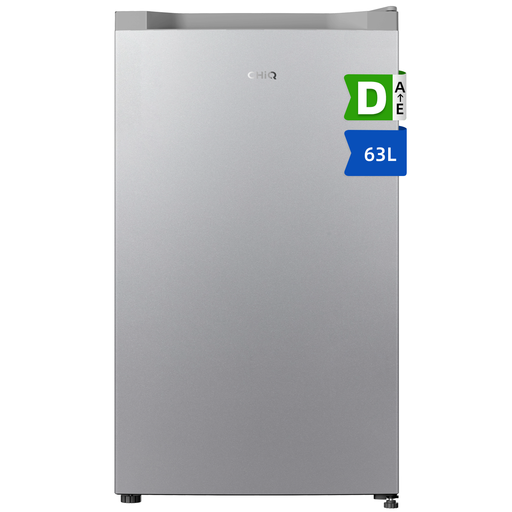
CHiQ JR63DSD freezer, 63 l
The 4-star rating is relevant for fresh portions of dough; two drawers help you keep food stored separately.
63 l; 47 cm wide; two adjustable drawers; 38 dB; energy efficiency class D. Manual defrosting is specified.
View on Joybuy
 No image available
COMFEE' RCU60WH2(E) freezer, 60 l
This freezer with a stated 4-star rating has three storage compartments for small stocks of food and separate portions.
60 l; three compartments; reversible door; freezing capacity up to 6 kg/24 h.
View on Joybuy
Frequently asked questions
Can I freeze fresh cookie dough in any freezer compartment?
No. The Federal Centre for Nutrition distinguishes between storage and freezing: a **** compartment can also freeze fresh food. A *** compartment isn’t automatically designed for freezing fresh food. Check the rating and freezing function of the specific compartment.
How can I keep track of weekly portions?
Freeze the amount you need in individual portions in suitable containers, and label them with the contents, quantity and date. The Federal Centre for Nutrition recommends portioning food when you already know how much you’ll need later. Also check that your containers fit in the compartments.
Is frozen raw cookie dough suitable for a lunchbox?
Not as an unbaked snack. The German Federal Institute for Risk Assessment advises against eating unbaked cookie dough because flour and dough may contain harmful bacteria. Freeze the dough to bake later, and only pack cookies once they’ve been baked.
How do I compare energy consumption and dispose of my old appliance?
Compare the annual consumption in kWh on the EU energy labels of appliances with a suitable capacity, and work out potential electricity costs using your own tariff. Germany’s consumer advice centre points out that actual consumption may differ from the standardised label figures. In Germany, old electrical appliances must not go in household waste; according to the German Environment Agency, local collection points generally accept them free of charge. Check separately whether the retailer will take back your old appliance as part of your specific purchase.


