A few lunch portions
If you only need to freeze a small amount of crumble, first check whether your existing freezer compartment is suitable for freezing and has enough room for your portion containers.


If your existing four-star freezer compartment has room for your cooled portions of crumble, you don’t need to buy an extra appliance just for that. If space is limited, choose between a table-top and an upright freezer based on the size of your containers, how much you want to store and how you’ll access it. Remember to factor in ongoing energy consumption, as Germany’s consumer advice centres recommend when buying appliances. Freezing doesn’t replace cooling hot food quickly to below 7 °C, as recommended by the German Federal Institute for Risk Assessment, or keeping food chilled while you’re out if the ingredients or dish need to be kept cool.
If you only need to freeze a small amount of crumble, first check whether your existing freezer compartment is suitable for freezing and has enough room for your portion containers.
If you prepare several dishes, well-organised compartments or drawers make it easier to grab labelled portions without having to rearrange everything.
If you need extra freezer space, weigh up the appliance’s external dimensions and ongoing energy consumption against the capacity you need.
A good fit if: You’re freezing a few cooled portions and can fit the containers alongside your other frozen food.
The trade-off: You won’t need another appliance, but a lack of space can make it harder to keep portions separate and grab them quickly.
A good fit if: Your existing compartment is too small, but you don’t need a large freezer and have room for a compact appliance.
The trade-off: An extra appliance takes up space and uses electricity continuously.
A good fit if: You regularly freeze other meals as well as crumble and want to keep individual portions organised and easy to access.
The trade-off: More storage space takes up more room; an oversized appliance may use more electricity than necessary.
A good fit if: You store larger quantities of different foods and have room for the appliance and its top-opening lid.
The trade-off: It’s less convenient to grab a small lunch portion than from a drawer, and the actual energy performance depends on the model.
| What matters when buying | What to check | Who it matters most to |
|---|---|---|
| Freezing and keeping food chilled | For a freezer compartment, check that it has a four-star rating; choose containers suitable for freezing and plan how you’ll keep food chilled while you’re out. | When preparing cooled crumble for my lunchbox, I want to be sure my compartment is suitable for freezing and that I’ve thought about keeping it chilled on the way. Around 36% of consumers put these two points first. |
| Finding your portions again | Check that the internal dimensions of the drawers will fit your containers; pack portions individually and label them with the contents and date frozen. | When I’ve prepared several lunch portions, I want to be able to grab a labelled container quickly without rearranging all my food. Around 29% of consumers prioritise this easy access. |
| Space and energy consumption | Check the external dimensions and the capacity you need; compare the annual energy consumption of specific models on the EU energy label. | If an extra appliance needs to fit into a tight space, I want to weigh the extra capacity against its ongoing energy consumption. This is a key consideration for around 21% of consumers. |
| Defrosting effort | Check the defrosting method for the exact model and consider it alongside the capacity and annual energy consumption. | If you use your appliance often, you’ll want to know how much maintenance its stated defrosting method involves before you decide. Around 14% of consumers prioritise keeping defrosting to a minimum. |
Germany’s Federal Centre for Nutrition explains that a four-star compartment can freeze food from fresh; a storage compartment isn’t automatically suitable for this.
Check the star rating on your existing compartment or chosen appliance before planning your weekly portions.
According to Germany’s consumer advice centres, a freezer that’s too large for your needs can use more electricity than necessary.
First measure the available space in your existing four-star compartment and check the size of your containers. Then compare the capacity you need with the annual energy consumption of specific appliances.
Beko lists the RFNM200T40WN as having 168 l, while a Joybuy product listing for this model name gives a capacity of 177 l. This difference could affect your space planning.
Before buying, check the exact variant and its corresponding product data sheet.
The models listed illustrate different appliance sizes and features; each specification applies to the specific model shown.
The GTV15NWEB is a documented example of a compact table-top appliance that provides extra freezer space.
The FNe 1404 is a compact table-top appliance with NoFrost.
The RFNM200T40WN is an upright freezer worth considering for households with other frozen food to store.
The H4F226WDH1 may suit households whose storage needs vary.
The Joybuy appliances below range from compact table-top and mini freezers to larger upright models for storing food separately.
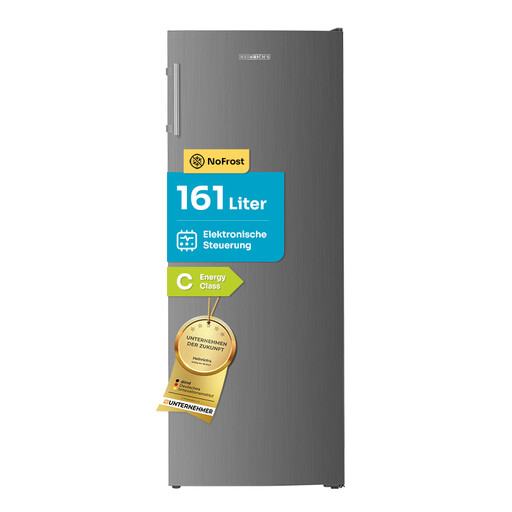 Image unavailable
For households looking to store other food separately as well as lunch portions.
161 l; NoFrost; three freezer drawers and two shelves; temperature range −14 °C to −22 °C; energy efficiency class C.
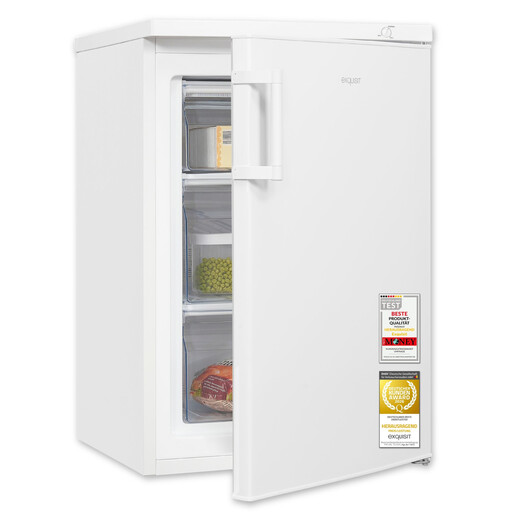 Image unavailable
A compact option if you’re looking for extra freezer space with separate drawers.
85 l; freestanding; three drawers; four-star freezer; manual temperature control; reversible door; white.
The product description states that manual defrosting is required if more than 5 mm of frost builds up.
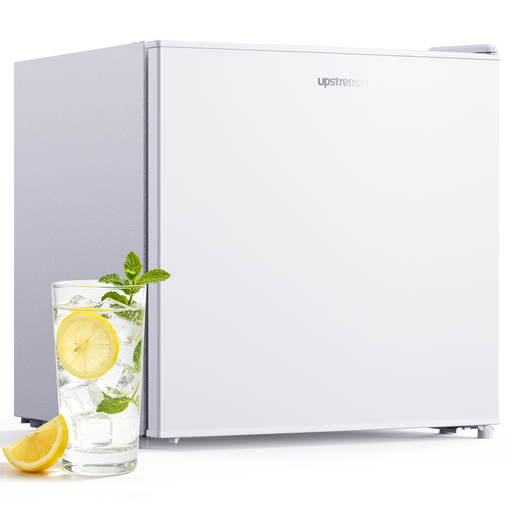 Image unavailable
For smaller amounts of food when you need a compact appliance with a reversible door.
35 l; four-star freezer; reversible doors; 41 dB; white.
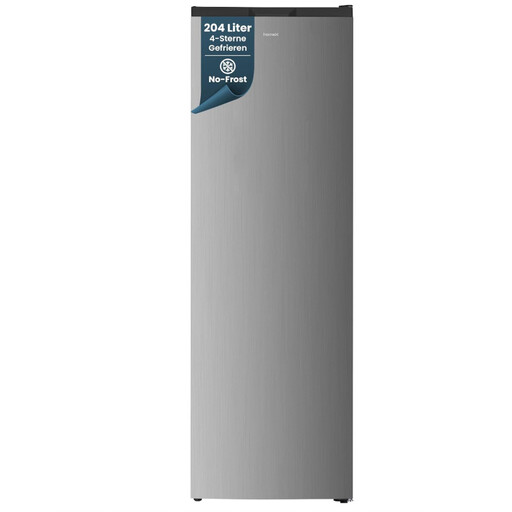 Image unavailable
For households looking to store several portions and other food in a larger upright freezer.
204 l; NoFrost; Super-Freeze function; 39 dB; silver; energy efficiency class E.
 Image unavailable
A compact extra freezer for smaller amounts of food and limited space.
31 l; four-star freezer; reversible door; adjustable feet; 147 kWh per year; white; energy efficiency class E.
Let the crumble cool first. The German Federal Institute for Risk Assessment recommends cooling hot food quickly to below 7 °C for longer-term storage. You’ll then need a freezer compartment or appliance that’s suitable for freezing.
Use containers that are suitable for freezing and sized for your portions, and label them with the contents and date frozen. Before buying an appliance, check that the containers will fit in the compartments or drawers.
If the ingredients or prepared dish need to be kept cool, the German Federal Institute for Risk Assessment recommends keeping them chilled while you’re out, too. A freezer at home won’t keep food cold until you eat it, so plan how you’ll transport it based on the ingredients, your journey and the cooling options available.
Compare the annual consumption in kWh on the EU energy label for the specific appliances. Germany’s Federal Environment Agency lists local recycling options. When buying an equivalent new appliance, you can return a large old appliance free of charge, including with online purchases delivered to your home.