Batch cooks short on kitchen space
If you need extra freezer space for lunch containers but can’t fit a large upright freezer, compare the external dimensions, door clearance and usable compartments.


If your existing four-star freezer compartment can hold all the curry portions you’ve planned, you don’t necessarily need an extra appliance for batch cooking. If there isn’t enough room, the best option will depend mainly on how much you need to freeze at once, the space available, how easily you can reach individual containers and the appliance’s annual energy consumption. Cool cooked food quickly and make sure it stays sufficiently chilled after defrosting until you’re ready to eat it.
If you need extra freezer space for lunch containers but can’t fit a large upright freezer, compare the external dimensions, door clearance and usable compartments.
If you freeze larger batches in one go, look beyond storage capacity: check that the appliance is suitable for freezing fresh food and see how much it can freeze at a time.
If you want to pick out a labelled lunch portion during the week, check the compartment layout and weigh up the defrosting effort when choosing the right appliance.
A good fit if: your weekly portions will fit and the compartment is suitable for freezing fresh food.
Consider: Space may be tight if you’re freezing lots of portions at once.
A good fit if: you need a separate appliance for weekly portions but have limited floor space.
Consider: Check the drawer dimensions and defrosting method; a compact appliance won’t automatically use less energy.
A good fit if: you regularly store other supplies or larger batches as well as lunch portions.
Consider: Measure the available space and compare annual energy consumption; an oversized appliance may use more electricity than necessary.
A good fit if: storing large quantities matters more than being able to reach a particular container every day.
Consider: Check how you’ll keep individual portions accessible and organised in the specific appliance.
| What matters | What to check before buying | Who it matters most to |
|---|---|---|
| Floor space and usable capacity | External dimensions, including door clearance, as well as usable freezer capacity and container dimensions. | If I want to fit in lunch containers without buying an unnecessarily large appliance, getting the right size is my main concern. Around 36% of consumers say space and capacity are their top priorities when buying. |
| Freezing several portions at once | Check the four-star rating and stated freezing capacity in kg/24 h against the amount of food you plan to freeze at the same time. | If I’m dividing up a larger batch, I want to know whether the compartment is suitable for fresh food and can handle the quantity. Around 29% of consumers prioritise being able to freeze several portions when buying. |
| Ongoing electricity consumption | Compare the kWh/year figure on the energy label for appliances of similar size and usable capacity. | If I’m running an extra appliance all year round, I want to factor its stated annual energy consumption into my decision. For around 21% of consumers, running costs are the top priority when buying. |
| Access and defrosting | Check the number and internal dimensions of the compartments, as well as the stated defrosting method. | If I want to take out a particular lunch container during the week, an organised layout and the effort involved in maintenance are key. Around 14% of consumers focus above all on access and defrosting. |
Freshly cooked curry portions need to be frozen properly. The German Federal Centre for Nutrition distinguishes between a four-star compartment and one intended for storing food that has already been frozen.
Before buying, check the rating of the specific freezer compartment and choose a four-star compartment for freezing fresh food.
Unused freezer space can mean extra electricity consumption. The Verbraucherzentrale recommends taking your freezer capacity needs into account when choosing an appliance.
Start by noting the number and dimensions of your portions. Then compare the usable capacity and kWh/year of appliances that suit the amount you plan to store.
An oversized extra appliance may use more electricity over time than you need for the food you plan to store.
The systems differ: Beko describes the FSE1074N as having MinFrost, while Liebherr lists the FNe 1404 as a NoFrost appliance. The Gorenje F49DPW is listed as requiring manual defrosting.
Check the defrosting method for the exact model rather than assuming a particular level of maintenance from a convenience feature’s name alone.
A compartment’s capacity doesn’t tell you whether your containers will fit. Containers that don’t leave enough room for expansion can also be a problem when freezing liquid-rich foods.
Measure your containers and check that they’re suitable for freezing. For liquids, the Verbraucherzentrale recommends filling containers to only three-quarters full.
The F49DPW upright freezer is a compact model for a modest supply of lunch portions.
The FSE1074N under-counter freezer has a compact design, providing extra freezer space.
The FNe 1404 Pure is an under-counter appliance with 92 l of capacity and NoFrost, according to the manufacturer.
The GS51NAWCV iQ500 is a larger upright freezer for storing more supplies.
The options below include compact upright freezers, larger upright models and a chest freezer for storing portioned lunches or larger quantities of food. Before buying, check that the appliance is suitable for fresh food, measure your containers and make sure it will fit in the space available.
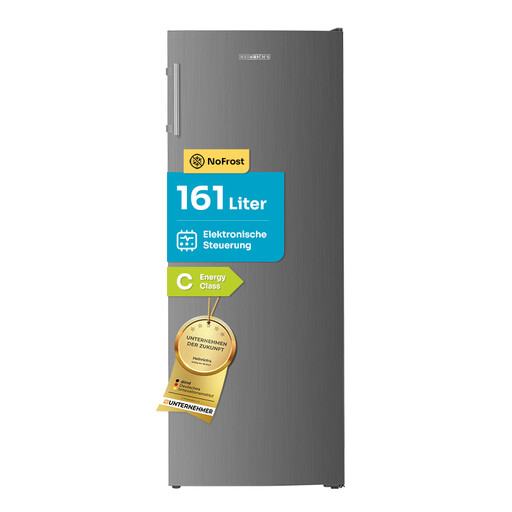 No image available
An option if you want to store larger quantities separately as well as lunch portions.
The product title lists 161 l of capacity, No-Frost, three freezer drawers and two shelves. Before buying, check that the freezer compartment is suitable for freezing fresh food.
 No image available
A chest freezer could be a good choice if you want to build up a supply of portions and can organise your containers so individual ones are easy to reach.
The product title lists 142 l of capacity and a four-star freezer compartment. Manual defrosting is required.
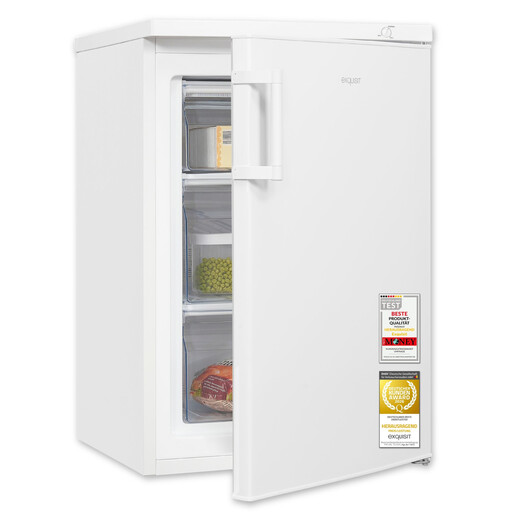 No image available
A compact upright option if you want to keep individual portions in separate compartments.
The product title lists 85 l of capacity, a four-star freezer, three drawers, manual temperature control and a reversible door. Manual defrosting is required.
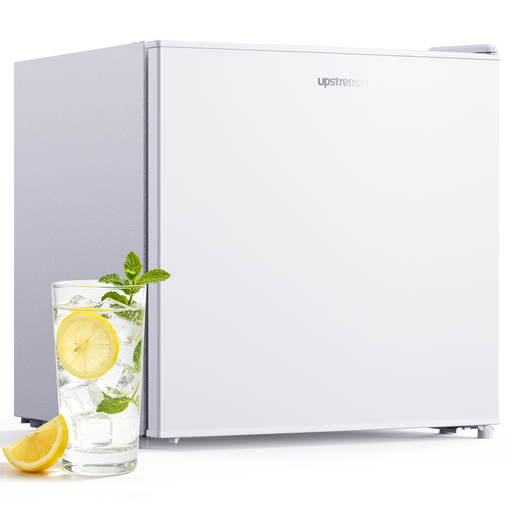 No image available
A small appliance option if space is limited and its modest capacity suits the amount you need to store.
The product title lists a four-star mini freezer with 35 l capacity and a reversible door. The stated noise level is 41 dB.
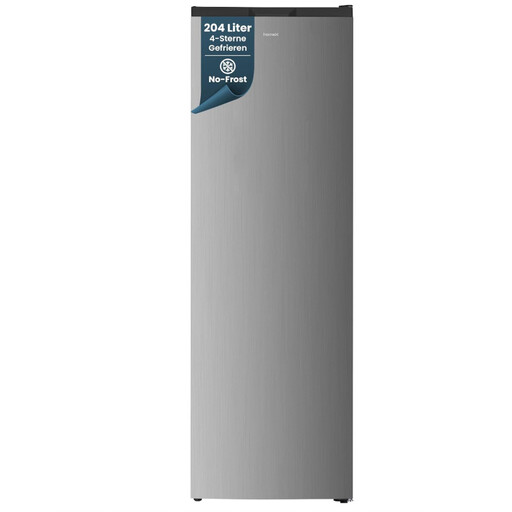 No image available
A larger upright option if you want to store curry portions alongside other supplies.
The product title lists 204 l of capacity, NoFrost, a Super Freeze function and six compartments. The stated noise level is 39 dB and its energy rating is E.
You need a four-star freezer compartment to freeze freshly prepared portions properly. The German Federal Centre for Nutrition describes a three-star compartment as suitable for storing food that is already frozen, not for the same freezing process.
No. Freezing won’t make food safe again if it hasn’t been stored properly beforehand. The German Federal Institute for Risk Assessment points out that Bacillus cereus spores can survive cooking, and poor storage can encourage them to multiply. Cool cooked food quickly.
Use containers that are suitable for freezing and label them with the contents and date. For liquid-rich foods, the Verbraucherzentrale recommends filling containers to only three-quarters full, leaving room for expansion.
Compare the appliance and door dimensions with the space where you plan to put it, and weigh the kWh/year figure on the energy label against the usable capacity you need. The Verbraucherzentrale points out that an appliance larger than you need may use electricity unnecessarily. Also follow the installation instructions for the specific appliance.
Keep perishable food sufficiently chilled until you’re ready to eat it and avoid long breaks in refrigeration while travelling. It’s particularly important to cool curry with rice quickly after cooking; freezing doesn’t replace careful handling beforehand.