People who regularly cook in batches
If you prepare curry for shared meals and want to take out individual portions, consider the drawer layout and whether your containers will fit.


For the occasional portion of curry, your existing freezer compartment may be enough, provided there’s space for the containers and sufficient capacity. The consumer advice centre warns that an oversized appliance can use more electricity than necessary. If you regularly take out individual portions, an upright freezer with drawers could suit you; for larger batches, consider a chest freezer if you have the floor space and easy access. The Federal Institute for Risk Assessment recommends cooling hot food quickly to below 7 °C before storing it for longer.
If you prepare curry for shared meals and want to take out individual portions, consider the drawer layout and whether your containers will fit.
If you only have leftovers occasionally, first check how much room is free in your existing freezer compartment. Compare the appliance dimensions and door opening with the space where you plan to put it.
If you want to freeze lots of containers at once, consider the usable capacity, the freezing capacity of the specific model and whether there’s enough room to load everything at the same time.
A good fit if: you only freeze a few portions now and then, and the containers fit alongside your other food.
The trade-off: you won’t need another appliance, but the capacity and freezing performance of your existing one will limit the size of the batches you can freeze.
A good fit if: you regularly store separate portions and want to find individual containers easily.
The trade-off: the appliance will need extra floor space, so choose a usable capacity that suits the amount of food you actually store.
A good fit if: you often freeze larger amounts at once and have enough floor space, as well as room to open the lid.
The trade-off: baskets and clear labelling become more important if you want to keep track of individual portions.
First work out what matters most to you: keeping things organised, finding space for the appliance, running costs or freezing a larger batch.
| What you need | What to check before buying | Who is it most relevant to? |
|---|---|---|
| Store portions neatly | Compare the usable capacity, the number and dimensions of the drawers, and whether your containers will fit. | I want to find curry containers individually without having to move other food around. Around 40% of consumers prioritise organised storage. |
| Keep space requirements down | Check the free capacity in your existing freezer compartment, the appliance dimensions and how the door or lid opens. | If I only freeze leftovers occasionally, I want to make use of the space I already have first. Around 30% of consumers pay particular attention to floor space and suitable appliance dimensions. |
| Factor in electricity use | Compare the kWh per year and usable capacity on the EU energy label for each model. | For an appliance that runs all the time, annual energy use matters more to me than extra storage space. Around 20% of consumers put running costs first. |
| Freeze larger batches | Check the freezing capacity in kg/24 h, the available compartments and the size of the cooled portions. | If I freeze lots of portions at once, I want to know how much the appliance is rated to freeze. For around 10% of consumers, batch capacity is their main consideration. |
The EU energy label shows information including annual energy consumption and usable capacity. The consumer advice centre recommends choosing an appliance size that matches your actual needs; real-world energy use also depends on how you use it and where it is installed.
Your existing freezer compartment may be enough for a few portions now and then. According to the consumer advice centre, an oversized appliance can use more electricity than necessary and takes up extra space.
First work out how many containers you want to store at once and how much space you already have for them.
The capacity in litres tells you how much storage space is available, but it doesn’t tell you on its own how much a model can freeze in a day.
If you cook larger batches, also check the specific model’s freezing capacity in kg/24 h in its product specifications.
The Federal Institute for Risk Assessment recommends cooling hot food quickly to below 7 °C before storing it for longer.
Divide larger quantities into several shallow portions before chilling.
The appliance type alone won’t tell you how much energy a specific model uses. Usable capacity and installation conditions are also worth comparing.
Compare the annual energy consumption and usable capacity shown on the EU energy label for the models you’re actually considering.
The GS581-051C is an example of a compact appliance for limited floor space and smaller food stocks.
The RFNM200T40WN is an example of a narrower freestanding upright freezer with No Frost.
The GN 50Vd26 Plus NoFrost is an example of a larger upright freezer with drawers for regular food storage.
The GTE 220 is an example of a chest freezer for storing larger quantities of food.
The HCE200C is another chest freezer example for comparing appliance type, usable capacity and space requirements.
This product selection features freestanding upright freezers with drawers, so you can store cooled portions of curry separately.
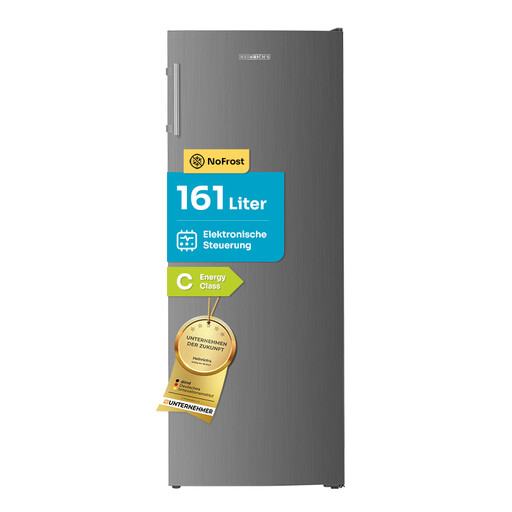 Image unavailable
Three freezer drawers and two compartments give you separate storage options for your portions.
161 l; energy class C; No Frost; fast freezing; three drawers and two compartments; LED display; reversible door; alarm function.
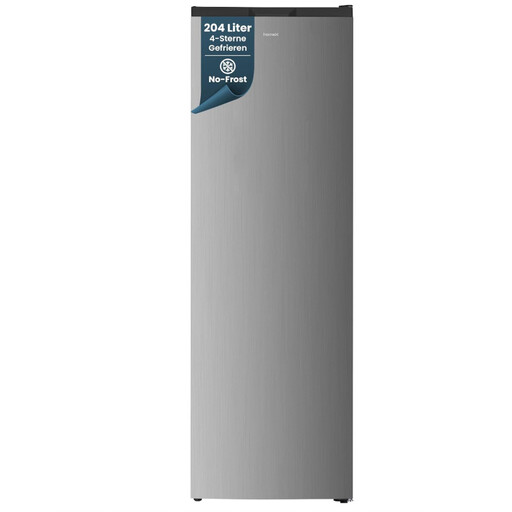 Image unavailable
Multiple drawers and compartments provide separate storage for portions you freeze regularly.
204 l; No Frost; six drawers and compartments; Super-Frost function; 222 kWh/year; 39 dB; energy class E.
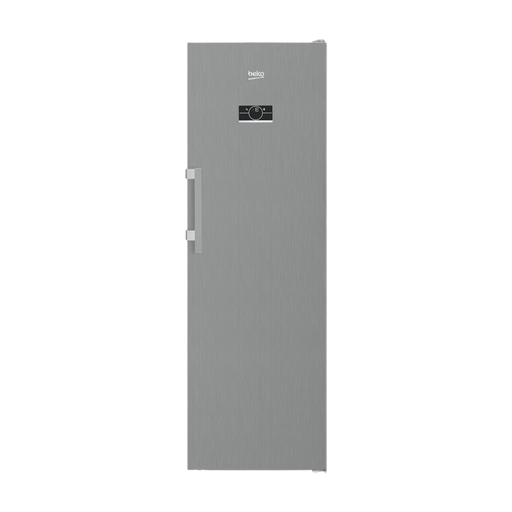 Image unavailable
The stated freezing capacity of 17 kg per 24 hours is useful to consider when choosing a freezer for larger batches.
286 l; No Frost; five drawers plus additional compartments; freezing capacity 17 kg/24 h; Fast Freeze; energy class D.
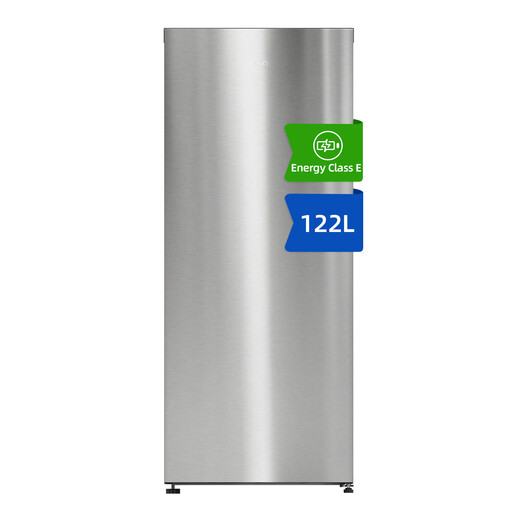 Image unavailable
The stated width of 47.5 cm can help you check whether it will fit in a limited space.
122 l; No Frost; four-star freezing; Multi-Airflow; width 47.5 cm; reversible door; energy class E.
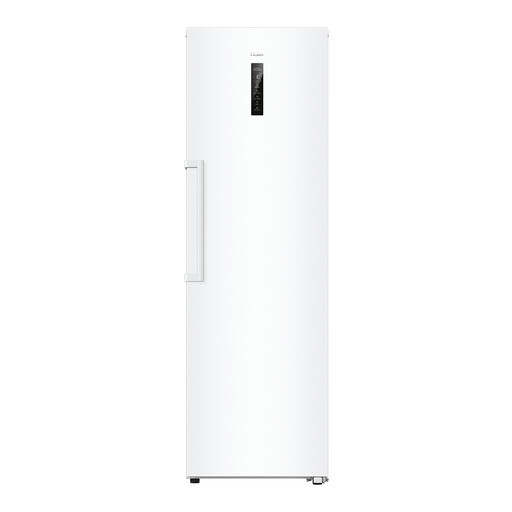 Image unavailable
Four drawers provide separate storage for individually portioned food.
301 l; freestanding; Total No Frost; four drawers; energy class C.
Divide the hot curry into several shallow portions and cool it quickly to below 7 °C. The Federal Institute for Risk Assessment recommends this for hot food that’s going to be stored for longer; putting it in the freezer doesn’t replace cooling it first.
It may be enough if you only freeze a few portions now and then, and the containers fit alongside your existing food with plenty of room. Also check that the appliance’s freezing capacity is suitable for the amount you want to store at once.
The EU energy label includes information such as the energy efficiency class, energy consumption, freezer volume and noise emissions. The European Commission has used the A to G scale since 1 March 2021, so older ratings such as A+++ aren’t directly comparable with the current label.
The consumer advice centre gives up to three months as a guide for cooked food. Label each portion with its contents, quantity and date of freezing. The consumer advice centre also recommends filling containers for liquid-rich foods to no more than three-quarters full.
The consumer advice centre recommends −18 °C as the optimum temperature for an upright or chest freezer. Check the settings and user manual for your specific appliance.